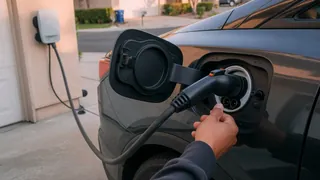
Hummer EV Charge Port Failure
A Hummer EV charge port failure can interrupt charging, trigger warnings on the instrument cluster, or leave the vehicle unable to accept power from a station or wall unit. Because the port is the physical and electrical gateway to the high-voltage system, the causes are usually mechanical, thermal, software-related, or tied to charging compatibility. Understanding the failure modes helps owners distinguish a one-time session fault from a developing condition that needs service attention.
Essential answer
A Hummer EV charge port failure refers to any condition that prevents the vehicle from reliably establishing or completing a charging session through its charge inlet. It can appear as a station connection error, an interrupted session, a charge indicator that does not illuminate, or a vehicle warning about charging equipment. The condition may involve the port contacts, locking actuator, communication pins, or the charge controller that coordinates handshaking with the supply equipment. It is not automatically a failed battery or charging module.
Diagnosis usually begins with the charging environment rather than the port itself. Charging compatibility, station software, cable condition, and connector seating commonly produce the same warnings as a port-side defect. Because high-voltage systems rely on isolation and controlled current flow, the vehicle may suspend charging when it detects unexpected resistance, temperature rise, or interrupted communication. For manufacturer-dependent codes or behavior, confirmation with vehicle-specific diagnostics is required before replacing any component.