How to Deep Clean Car Carpet
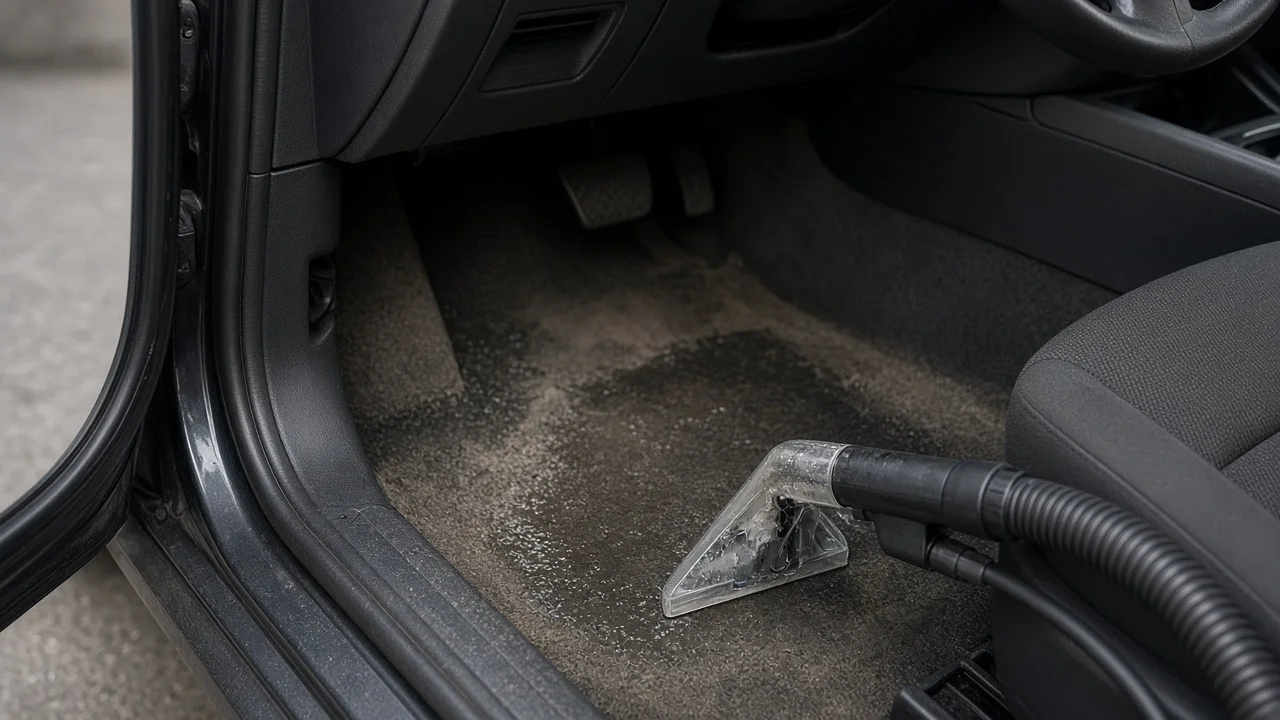
A deep carpet cleaning job does more than lift the stain you can see. It pulls trapped grit, salt, spilled drinks and body oils out of the fiber, then removes the dirty moisture before it soaks the backing material and encourages mildew. The goal is not to wet the carpet until it looks darker and call it done. Effective deep carpet cleaning car work means breaking soil loose with the right product, using controlled water and gentle agitation, extracting residue, and giving the interior enough drying time to prevent odor and corrosion. This approach restores color and texture without turning the floor pan into a long-term moisture trap.
Direct answer
Deep cleaning an automotive carpet means cleaning the full fiber depth, not just the surface nap. The pile holds abrasive dust and fine sand that ordinary vacuuming misses, especially around the seat tracks and heel pad. When a dedicated carpet cleaner or mild upholstery shampoo reaches that layer, it separates oily film from the yarn so the contamination can be lifted away. Deep carpet cleaning car results remain reliable only when the selected cleaner matches the fiber and backing material. A product that is safe on nylon may discolor wool or weaken older felt-backed carpet, so a test area is a practical first step.
The essential answer is controlled chemistry, controlled wetness, and complete extraction. Carpet shampoo alone can leave a sticky residue that attracts more dirt when it dries. A hot-water extractor or a wet-dry vacuum improves the result by pulling suspended soil out rather than pushing it sideways. The job is complete when the extracted water runs nearly clear and the surface no longer feels slick or soapy. Without that final rinse and dry step, the first warm day can release trapped odor from the lower layers, making the cabin smell worse than before the cleaning.
How to proceed
Start by clearing the floor and vacuuming thoroughly with a crevice tool around the seat mounts and console edges. Dry soil removal prevents the first cleaning pass from turning sand into a thin grinding paste along the fiber. Then test the chosen interior cleaner on a hidden part, such as the area under the front seat, to check for dye transfer or texture change. For car carpet deep cleaning, use a sprayer or foam applicator to apply the product evenly, then use a soft-bristle brush for gentle agitation. Hard scrubbing can fuzz the yarn and damage older backing material, so short strokes across the stain and along the nap work better than circular pressure.
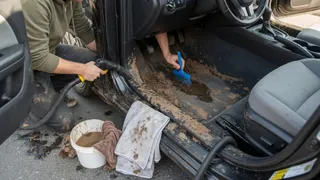
After agitation, extract with a carpet machine or wet-dry vacuum in slow overlapping passes, allowing suction to pull moisture from the pad below the visible carpet. If only a vacuum is available, blot with a clean microfiber towel between passes so residue does not settle back into the pile. Moisture control is critical because the floor pan and wiring channels do not dry quickly. Leave the doors open in a dry, ventilated space and run the climate system only as needed to circulate cabin air. Check under the mat and along the seat base before reinstalling anything; dampness there means the drying time is not finished.