How to Remove Gum From Car Carpet
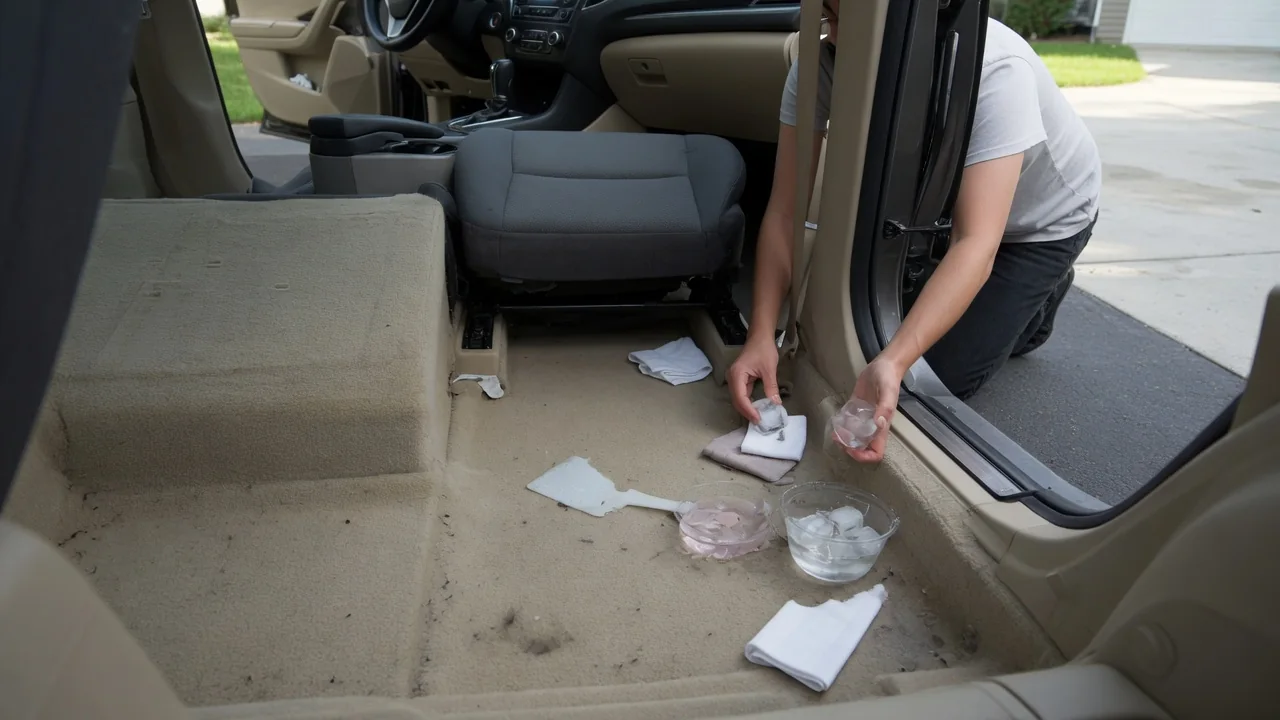
Chewing gum pressed into a vehicle's floor covering looks like a permanent problem, but it usually is not. Learning how to remove gum from car carpet comes down to two ideas: cool the gum until it turns brittle, then clean whatever film remains without soaking the backing. Patience matters more than force, because carpet fibers are damaged far more easily than gum lets go.
Firm up gum
Warm gum is soft and stringy, and in a cabin that has sat in the sun it smears deeper into the pile when rubbed. Cooling changes this. Ice cubes sealed in a plastic bag and held against the wad for several minutes harden it so that it fractures instead of stretching. The bag matters because meltwater would otherwise wet the carpet and the padding beneath, which dries slowly inside a closed vehicle.
You can judge readiness by touch: gum that is cold enough feels hard, no longer dents under a fingernail, and loses its tacky sheen. Thick wads need longer than thin smears, and a hot interior works against you, so parking in shade or running the air conditioning first helps. Carpet type varies too. Dense loop pile in some cargo areas holds gum near the surface, while longer cut pile lets it sink between fibers where the cold takes longer to reach.
Lift gently
Once hardened, the gum should be lifted rather than scraped across the surface. A dull edge such as a plastic putty knife, an old loyalty card or a spoon slides under the rim of the wad and pries it upward in pieces. Working from the outside toward the center keeps fragments from spreading. Sharp blades and wire brushes are poor choices because they cut or fuzz the fibers, leaving a worn patch that outlasts the gum itself.
Watch how the gum behaves as you work. Clean chips that snap away mean the temperature is right; strings or a rubbery stretch mean it has warmed and needs another round with the ice. Pick up loose crumbs promptly with a vacuum so they are not trodden back in once they soften. Tug on the tufts sparingly, since footwell carpet is often molded and bonded to a backing, and fibers pulled out of it do not grow back.
Treat residue
After the bulk is gone, a thin gray or shiny film usually remains on the fiber tips. This residue attracts dirt later, so it deserves attention. A small amount of carpet or upholstery cleaner made for automotive interiors, or a mild solution of dish soap in warm water, loosens it when applied to a cloth rather than poured on the floor. Blot and dab from the edge inward, because scrubbing in circles spreads the film and distorts the pile.
Stubborn traces sometimes respond to white vinegar or a little rubbing alcohol on a cloth, but test any solvent on a hidden spot first, such as under a seat, because dyes and fiber blends differ between vehicles and some may lighten or stiffen. Oily household remedies can dissolve gum yet leave their own stain and odor. Finish by blotting with a cloth dampened in plain water, then pressing dry with a towel so no cleaner is left to attract soil.
Everyday Use and Observations
Where the gum landed affects the job. Driver footwells see heel pressure that grinds gum deep, and nearby heater outlets keep it soft in winter. Rear floors and cargo areas tend to hold gum that has collected grit and pet hair, which hides its true size. Removable floor mats are the easy case: they can be taken out, chilled more thoroughly and cleaned on a flat surface away from seat rails, wiring and trim.
In the days after cleaning, check the spot when the cabin is warm. A patch that feels slightly tacky or darkens faster than its surroundings still carries residue and benefits from another light cleaning pass. Fibers that look flattened usually recover when brushed by hand or with a soft brush once dry. Leaving the doors or windows open for a while helps moisture escape, since dampness trapped under carpet can produce a musty smell long after the gum is forgotten.
Limits and Next Steps
Home methods have limits. Gum that has been heated and walked on for months may be fused through the pile to the backing, and repeated attempts can do more harm than the stain. Light-colored carpet may also keep a shadow from dyes in the gum even when the stickiness is gone. Stop if fibers begin to pull out, color transfers to your cloth or the affected area grows larger; those signs mean the approach is damaging the material.
At that stage a professional detailer is a reasonable next step, since they have steam and extraction equipment and products matched to automotive fabrics. Be cautious with aerosol freeze sprays and strong solvents around electronics, seat wiring and plastic trim, and follow product labels. The owner's manual may also include care guidance for the interior materials in your vehicle. For the future, a set of fitted mats over the carpet makes the next mishap a far simpler cleanup.