Master Power Brakes: How the Master Cylinder and Booster Work Together, and What to Check Before You Buy
The Short Answer
"Master power brakes" usually refers to one of two things. The first is the pairing of a brake master cylinder with a power brake booster, which is the assembly that turns pedal effort into hydraulic pressure at the wheels. The second is Master Power Brakes, an aftermarket supplier known for brake conversion parts and kits, especially for older vehicles. In both cases, the parts that work for you depend on your vehicle's model year, body style, engine, brake layout (disc or drum at each axle) and how much engine vacuum it makes. No single master cylinder or booster suits every car. Treat any part listing as a starting point and confirm the fit against your exact vehicle.
This article explains how the system works, what drives compatibility and what to check before you order. It does not include brand-specific prices, part numbers, test results or kit contents, because none were provided for this guide. Get those details directly from the seller and from the documentation for your vehicle.
What the Master Cylinder and Booster Each Do
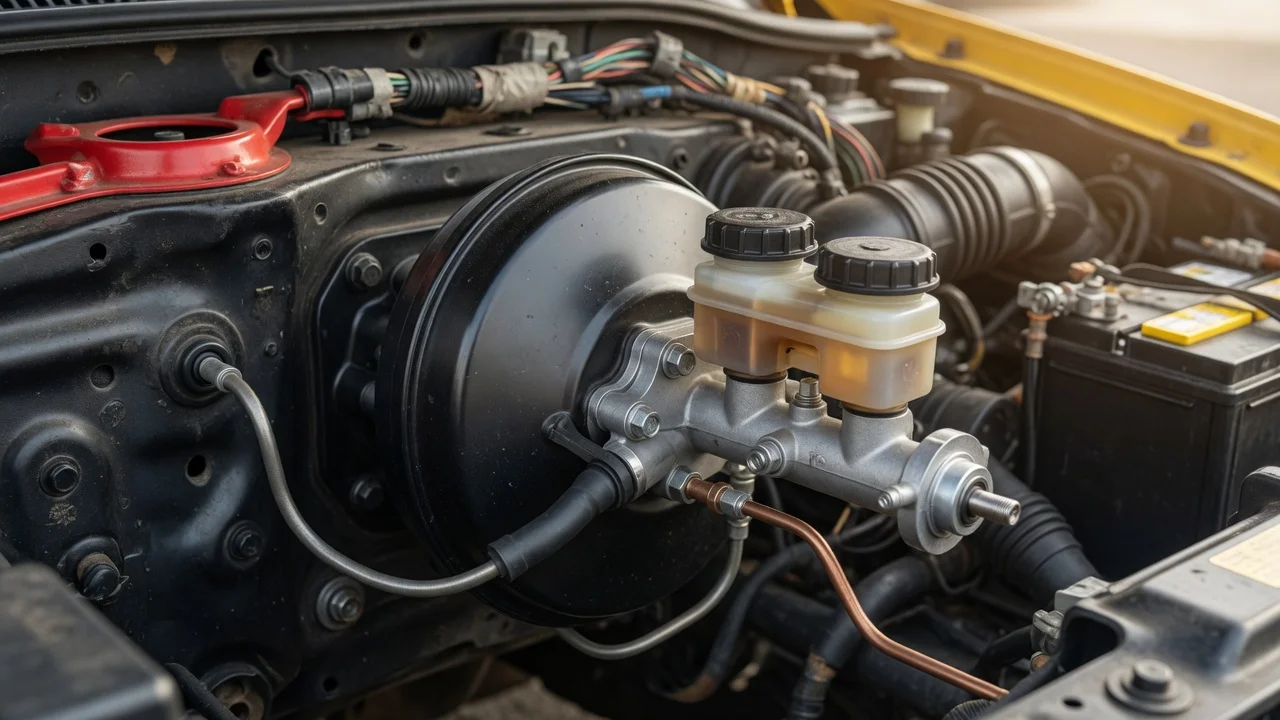
The master cylinder is a hydraulic pump connected to the brake pedal. When you press the pedal, pistons inside it push brake fluid through the lines to the calipers or wheel cylinders. Modern master cylinders are dual-circuit. They split the system into two separate hydraulic circuits, so a leak in one circuit does not take away all braking.
The power brake booster sits between the pedal and the master cylinder. It multiplies the force your foot applies, so you need less pedal effort to get the same stopping power. Without a booster, the system is called manual brakes. Manual systems can stop a car well, but they need more leg effort and are usually built with different pedal geometry.
Types of Power Assist
Vacuum booster: the most common type. It uses engine intake vacuum acting on a diaphragm to add force. Its output depends on how much vacuum the engine produces. Dual-diaphragm vacuum booster: uses two diaphragms to add assist in a smaller diameter. It is often chosen where firewall or engine-bay space is tight. Hydraulic booster (often called hydroboost): uses pressure from the power steering pump instead of vacuum. It is common on diesels and on engines that make little vacuum. Electric vacuum pump or electric booster: supplies assist independently of the engine. It is used when engine vacuum is weak or unavailable.
What Determines Whether a Setup Fits Your Vehicle
Several factors decide whether a master cylinder and booster combination will mount and work well. Each one varies by model year, market, trim and powertrain, so check them against your specific vehicle rather than a general model name.
Brake layout: front disc with rear drum, four-wheel disc, and four-wheel drum each call for different master cylinder internals and valving. Master cylinder bore size: a smaller bore produces more line pressure for a given pedal force but needs more pedal travel. A larger bore gives a firmer, shorter pedal but less pressure. The right size depends on the calipers and wheel cylinders it has to feed. Pedal ratio: manual brake pedals usually have more leverage than power brake pedals. Adding a booster to a manual pedal, or removing one from a power pedal, can change pedal feel and effort in ways you may not want. Firewall and engine-bay clearance: booster diameter, mounting bolt pattern and pushrod length must suit the firewall. The assembly also has to clear the valve covers, intake, steering and inner fenders. Engine vacuum: aggressive camshafts and some forced-induction setups produce low vacuum at idle. That can leave a vacuum booster with too little assist unless you add a reservoir, pump or a different boost type. Valving: disc and drum systems need different proportioning between front and rear. Drum circuits often use a residual pressure valve. Many conversions include a combination or proportioning valve, which may be fixed or adjustable.
Converting from Manual to Power Brakes
Owners of older vehicles often add a booster when converting from drum to disc brakes, or when they want lighter pedal effort. A full conversion usually involves more than bolting on a booster. You may need a different pedal or pedal pivot location, a pushrod of the correct length, a master cylinder matched to the new brake hardware, new or reshaped hard lines, a suitable proportioning or combination valve, and a vacuum source with the right fittings. Check whether a kit includes all of these parts or only some of them, and whether it is listed for your exact year and body style.
Signs the Master Cylinder or Booster Needs Attention
Symptoms can point toward one component or the other. They overlap with other faults, though, so treat them as a reason to inspect rather than a confirmed diagnosis.
Hard pedal that needs much more effort than normal: often linked to a failed booster diaphragm, a cracked or disconnected vacuum hose, a faulty check valve, or low engine vacuum. Hissing near the pedal or booster when braking: may indicate a vacuum leak in the booster. Pedal that slowly sinks to the floor under steady pressure with no visible leak: commonly associated with worn internal seals in the master cylinder. Soft or spongy pedal: often caused by air in the lines, but can also come from master cylinder problems or a bore size that doesn't suit the system. Fluid seeping where the master cylinder meets the booster: can indicate a leaking rear master cylinder seal.
Installation Points That Affect the Result
Bench-bleed a new master cylinder before you install it. Air trapped inside the master cylinder is a common cause of a poor pedal after replacement. Check the pushrod adjustment so the master cylinder pistons are neither preloaded nor left with excessive free play. Then bleed the whole system following the procedure for your vehicle. Brakes are safety-critical. If you are unsure about any step, have a qualified technician install or inspect the work before you drive.
Before You Order: A Checklist
Confirm your vehicle's exact model year, body style, engine and transmission, and whether it originally had manual or power brakes. Note the current and planned brake layout at the front and rear axles. Measure or verify available firewall and engine-bay space, and compare it to the booster dimensions the seller lists. Check engine vacuum at idle if you plan to use a vacuum booster, especially with a modified engine. Ask the seller exactly which components the kit includes, including the valving, lines, pushrod and pedal parts. Confirm that the master cylinder bore size and valving are specified for your caliper and wheel cylinder combination. Request installation instructions and technical support details before buying.
What This Guide Could Not Confirm
No vehicle-specific fitment data, kit contents, pricing, availability or performance testing was supplied for this article. Any claim that a particular master cylinder, booster or Master Power Brakes kit fits a given vehicle needs to be checked against the seller's application listing for your exact model year, market, trim and powertrain. Differences between those variants can change mounting points, line routing and valving requirements.