Brake Master Cylinder Repair: Diagnosis and Repair Options
What is the essential answer to my question?
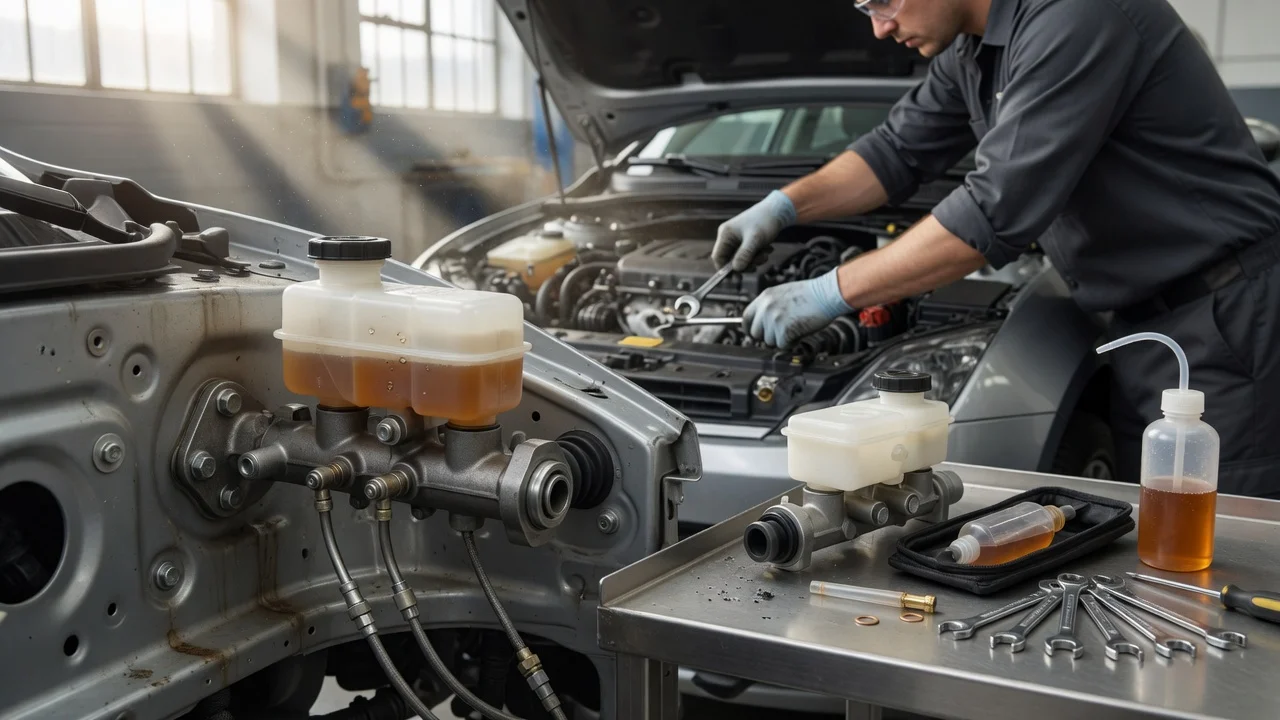
A master brake cylinder can sometimes be repaired by replacing its internal seals, but the more common and generally more durable repair is to replace the complete cylinder with a new or professionally remanufactured unit. The master cylinder is the hydraulic component that converts pedal force into brake fluid pressure. When its internal bore or seals wear, the pedal may sink, travel farther than normal, or feel inconsistent. Because the master cylinder is central to both brake circuits on most vehicles, the correct repair depends on the exact symptom, the condition of the bore, and whether the vehicle uses a conventional master cylinder or an integrated electronic brake control assembly.
Compare repair and replacement options
The main options are rebuilding the existing cylinder, installing a remanufactured unit, or installing a new unit. Compare them on cost, required skill, bore condition, parts availability, and expected service life.
Option | Typical cost | Skill level | Best when | Main limitation; Rebuild with seal kit | Lowest | High | Bore is smooth and within wear limits; correct kit is available | Requires careful disassembly, cleaning, and inspection; no correction for a scored bore; Remanufactured cylinder | Moderate | Moderate | Stock replacement is acceptable and budget is a priority | Quality varies by remanufacturer; reuse of casting depends on internal inspection; New cylinder | Highest | Moderate | Longest expected service life and least risk of hidden bore wear are priorities | Higher initial part cost; may still require bench bleeding and system bleeding
A rebuild is preferable only when the bore is in good condition, the proper seal kit is available, and the person doing the work has the tools and experience to inspect tolerances. A new or remanufactured cylinder is preferable for most owners because it removes uncertainty about hidden bore damage and usually requires less specialized inspection. A remanufactured unit can be a reasonable middle option, but its quality depends on the remanufacturer's process, so it is not automatically equivalent to a new part.
Symptoms and what to check first
Do not treat a master cylinder fault code or a single symptom as proof that the cylinder itself is failed. Brake symptoms can come from leaks, air in the hydraulic system, calipers, wheel cylinders, flexible brake hoses, the brake booster, or the mechanical linkage. Use the checks below to separate plausible causes.
Pedal slowly sinks under steady foot pressure while the vehicle is stopped: This can indicate an internal bypass between the master cylinder's primary and secondary seals. It can also occur with an external fluid leak elsewhere in the system, so inspect the entire hydraulic circuit first. Pedal is low or soft but pumps up firmer: Repeated pumping can temporarily compensate for air in the system or a cylinder that is not building pressure normally. Bleed the system properly and recheck before replacing parts. External fluid leak at the rear of the master cylinder: Check the area where the cylinder mounts to the brake booster. Brake fluid leaking from the rear seal can enter the booster, which is a condition requiring immediate repair. Brake warning light illuminated: Treat this as evidence to investigate. A low fluid level, pressure imbalance, or parking brake input can trigger the warning without proving that the master cylinder is defective. Fluid level dropping without a visible wheel-end leak: Inspect the master cylinder rear seal and the brake booster area. If brake fluid is entering the booster, the booster may also be affected.
Inspect before ordering any master cylinder
Check the brake fluid level and condition. Dark or contaminated fluid indicates that the system should be flushed and fresh fluid installed before assigning blame to a single component. Inspect the master cylinder reservoir, cap, grommets, lines, and fittings for leaks and damage. Examine the rear of the master cylinder and the area below it for brake fluid. Clean the surface and recheck after a short drive or repeated pedal applications. Inspect the brake booster mounting area for fluid staining. Stop use and seek professional diagnosis if brake fluid is found inside a vacuum booster. Verify the correct replacement for the model year, generation, powertrain, trim, and market. Vehicles with electronic stability control, hill-start assist, or integrated brake modules may not use an ordinary standalone master cylinder. A cylinder that looks similar may have different port positions, bore size, reservoir configuration, or sensor provisions.
When to stop driving and seek professional diagnosis
Stop using the vehicle and have the brake system inspected professionally if the pedal requires repeated pumping to hold the vehicle, if the pedal sinks without an external leak, if brake fluid is visible at the rear of the master cylinder or inside the booster area, or if the brake warning light is accompanied by a change in pedal behavior. A brake system that cannot hold pressure under repeated load is a safety-critical failure and should not be driven while the cause is unknown.
Repair considerations
A complete repair is not finished when the master cylinder is bolted on. The cylinder must be bench bled according to the replacement part's instructions, and the entire brake system must be bled to remove air. If the old master cylinder was leaking into the vacuum booster, the booster should be inspected for contamination and may also require service. The fluid must be compatible with the vehicle specification, and all flare fittings and banjo bolts should be tightened to the manufacturer's specified torque value. The exact fill procedure can vary depending on whether the vehicle has a conventional reservoir, shared brake and clutch fluid, or an integrated electronic hydraulic unit.
What the evidence cannot determine
Without inspection of the specific vehicle, this guide cannot determine whether your present master cylinder bore is reusable, whether a remanufactured unit is equal to a new part for your application, or whether the symptom originates in the master cylinder rather than another part of the hydraulic system. Use the supplied checks to narrow the cause, and treat any uncertain pedal behavior as a reason for professional brake diagnosis rather than as confirmation of a single failed component.