Low Brake Fluid: What It Means and What to Do Next
The short answer
A low brake fluid level is a warning sign, not a routine top-up item. It usually means one of two things. Either the brake pads or shoes have worn down, which slowly draws more fluid into the brake system, or fluid is leaking from somewhere in the system. A gradual drop that matches normal pad wear is generally less urgent. A sudden or significant drop, a warning light, or a change in how the brake pedal feels should be treated as a possible leak and inspected before the vehicle is driven further.
The details below apply to conventional hydraulic brake systems found on most passenger cars and light trucks. Fluid type, reservoir location, warning-light behavior and service intervals vary by manufacturer, model year and market, so the owner's manual for the specific vehicle is the authority on those points. No vehicle-specific specifications or test data were supplied for this guide.
Why brake fluid level drops
Brake fluid is the hydraulic medium that transfers force from the brake pedal to the calipers or wheel cylinders at each wheel. In a sealed system that is working properly, the fluid is not consumed. When the level falls, the cause is normally one of the following.
Brake pad or shoe wear: As friction material wears thinner, the caliper pistons sit further out, and the extra space behind them fills with fluid from the reservoir. The level drops slowly over thousands of miles. A leak: Fluid can escape from brake lines, hoses, caliper or wheel cylinder seals, bleed screws, the master cylinder or the reservoir itself. Leaks can cause a faster or uneven drop. Recent service: If the system was bled or components were replaced, the level may not have been topped up correctly afterward. Shared reservoir: On some vehicles with a manual transmission, the hydraulic clutch draws from the same reservoir, so a clutch-system leak can also lower the brake fluid level.
Signs that the level is low
The brake warning light on the dashboard is illuminated. On many vehicles this light is shared with the parking brake indicator, so check that the parking brake is fully released. The fluid in the reservoir sits at or below the MIN mark. The brake pedal feels soft or spongy, travels further than usual, or slowly sinks under steady pressure. Wet spots, residue or drips appear near a wheel, along the brake lines, or under the master cylinder area.
Is it safe to drive?
If the pedal sinks toward the floor, feels markedly softer than normal, or the vehicle does not stop as expected, do not drive it. Arrange for it to be towed or inspected where it sits. If the warning light is on but braking feels normal, drive only as far as necessary to reach a safe place for inspection. A level that is slightly below the MAX mark, with no warning light and a firm pedal, is typically consistent with pad wear, but the pads should still be checked.
What to check before topping up
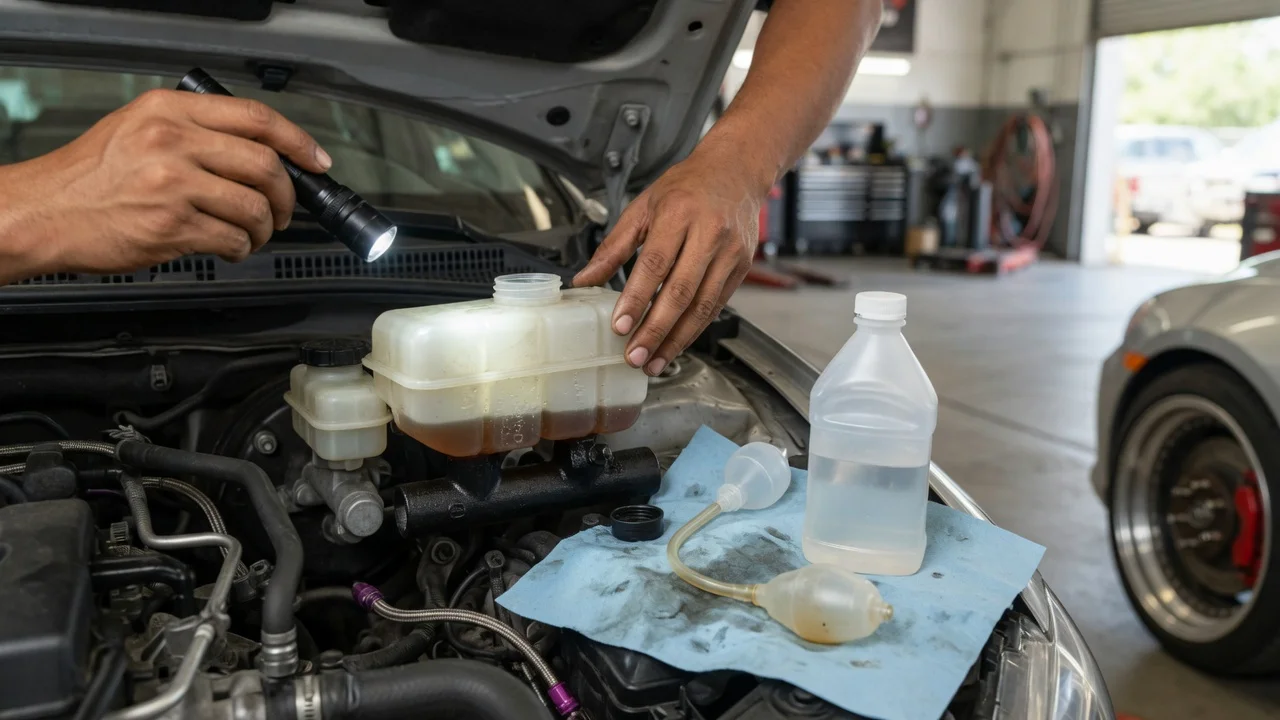
With the vehicle parked on level ground and the engine off, locate the brake fluid reservoir, usually mounted on the master cylinder near the driver's side of the engine bay, and read the level against the MIN and MAX marks. Inspect the brake pads or have them inspected. Worn pads explain a gradual drop, and replacing them will push the pistons back and raise the level again. Look for leaks at each wheel, along the lines and hoses, and around the master cylinder. Check the brake fluid type printed on the reservoir cap or listed in the owner's manual before adding anything.
Topping up without finding the cause can hide a leak and delay a necessary repair. It can also lead to overflow later: if fluid is added to the MAX mark while the pads are worn, the level will rise above it once new pads are fitted.
Using the correct brake fluid
Most vehicles use a glycol-based fluid rated DOT 3, DOT 4 or DOT 5.1. DOT 5 is silicone-based and must not be mixed with glycol-based fluids. Use only the grade the manufacturer specifies for the vehicle. Pour from a freshly opened, sealed container where possible, because glycol-based brake fluid absorbs moisture from the air over time, which reduces its performance. Brake fluid can also damage painted surfaces, so wipe up any spills promptly.
When to get professional help
Have a qualified technician inspect the brakes if the level drops again soon after a top-up, if a leak is visible, if the warning light stays on, or if the pedal feel has changed. Brake system repairs often require bleeding air from the lines, and mistakes can compromise stopping ability. Replacement intervals for brake fluid also differ between manufacturers, so the vehicle's service schedule should be followed.