How to Check Brake Fluid Level and What the Reading Tells You
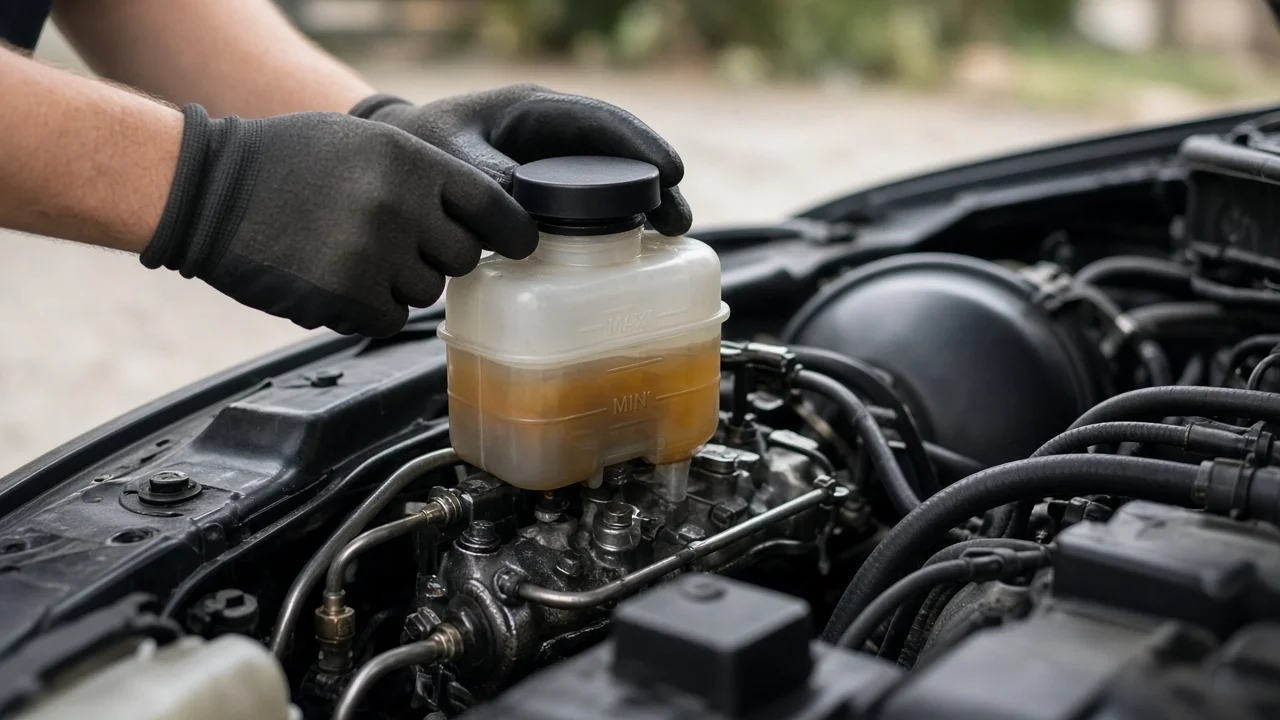
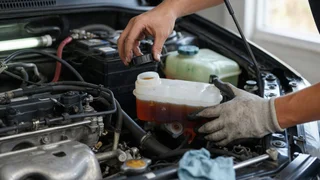
Checking brake fluid level is one of the simplest under-hood checks you can do, and it tells you more than whether you need a top-up. You find the brake fluid reservoir, usually a translucent plastic container mounted on or near the brake master cylinder. Then you see whether the fluid sits between the MIN and MAX marks on its side. If it does, the level is acceptable. If it is at or below MIN, the cause matters more than the top-up. A low level is often a sign of worn brake pads or a leak in the hydraulic system.
The Short Answer
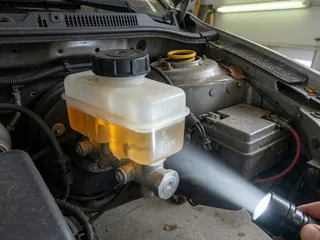
Park on level ground with the engine off. Locate the brake fluid reservoir, typically on the driver's side near the firewall, on top of the master cylinder. Wipe the reservoir clean so you can see the markings clearly. Read the fluid level against the MIN and MAX lines without opening the cap if the reservoir is translucent. If the level is between the lines, no action is needed. If it is at or below MIN, investigate the cause before simply adding fluid.
Reservoir location, cap design and marking style vary by make, model, generation and market. Some vehicles also integrate the reservoir with ABS or electronic brake hardware. The owner's manual for your specific vehicle is the reliable reference for where the reservoir is and which fluid it takes.
What Brake Fluid Does and Why the Level Matters
Most passenger cars and light trucks use hydraulic brakes. When you press the pedal, the master cylinder pushes brake fluid through lines and hoses to the calipers or wheel cylinders at each wheel. Fluid does not compress meaningfully, so pedal force is transmitted to the brakes almost directly. The reservoir supplies the master cylinder and absorbs normal changes in fluid volume.
If the level falls too far, air can enter the system. Air does compress, which can cause a soft or spongy pedal and reduced braking performance. That is why a low reading deserves attention rather than a casual top-up.
Why the Level Drops: Pad Wear Versus a Leak
The brake hydraulic system is sealed, so fluid should not be consumed the way engine oil can be. A falling level usually has one of two explanations.
Cause | What happens | Typical clues; Brake pad wear | As pads wear thinner, the caliper pistons extend farther, and more fluid moves from the reservoir into the calipers | Gradual drop over many months, no wet spots, pads near the end of their service life; Hydraulic leak | Fluid escapes from a line, hose, caliper, wheel cylinder or the master cylinder | Faster or sudden drop, damp residue near wheels or under the master cylinder, soft or sinking pedal, brake warning light
The pad-wear link has a practical consequence. If you top up to MAX while the pads are worn, the level can overflow when new pads are installed and the pistons are pushed back. Many technicians prefer to leave a slightly low but stable level alone until the pads are inspected.
How to Read the Fluid Condition
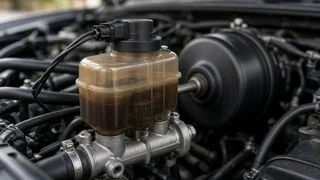
While you are at the reservoir, look at the fluid's color. Fresh glycol-based brake fluid is typically clear to light amber. Over time it darkens, and darker fluid generally indicates age and contamination. Color alone is not a precise test, though. Shops often use test strips or electronic testers to estimate moisture content or the condition of the fluid's additives.
Moisture is the main concern. Common glycol-based fluids are hygroscopic, meaning they absorb water from the air over time. Absorbed water lowers the fluid's boiling point. Under heavy braking, that can lead to vapor in the system and a fading pedal. Water can also promote internal corrosion. For this reason, manufacturers specify replacement intervals for brake fluid, often stated in years rather than miles. The interval differs by vehicle, so check your maintenance schedule.
Brake Fluid Types and Why They Should Not Be Mixed Casually
Brake fluids in the US are classified under DOT designations. The required type is usually printed on the reservoir cap and listed in the owner's manual.
Type | Base | General notes; DOT 3 | Glycol ether | Widely used; hygroscopic; DOT 4 | Glycol ether with borate esters | Higher boiling points than DOT 3; hygroscopic; common in many modern vehicles; DOT 5.1 | Glycol ether with borate esters | Glycol-based despite the number; high boiling points; DOT 5 | Silicone | Not hygroscopic in the same way; not compatible with glycol-based systems and should not be mixed with DOT 3, 4 or 5.1
Some glycol-based grades are described as backward-compatible, but using the fluid your vehicle specifies is the safe default. Never put DOT 5 silicone fluid into a system designed for glycol fluid. Never put any non-brake fluid into the reservoir, such as power steering fluid, transmission fluid or engine oil. Petroleum products can damage the rubber seals in a brake system.
Topping Up Correctly
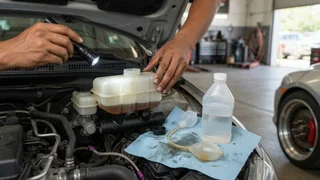
Confirm the cause of the low level first, or at least rule out an obvious leak. Clean around the cap before opening it so dirt does not fall into the reservoir. Use fresh fluid of the specified type from a sealed container. An opened bottle absorbs moisture over time. Add fluid slowly, up to the MAX line and not above it. Reinstall the cap promptly and tightly to limit moisture exposure. Wipe up any spills immediately. Glycol-based brake fluid can damage painted surfaces.
When to Stop Checking and Get the Brakes Inspected
Have the brakes inspected by a qualified technician if any of the following apply. Driving with a hydraulic brake fault is a safety risk.
The level drops noticeably between checks or needs repeated topping up. You see wet residue near a wheel, along a brake line, or below the master cylinder. The brake pedal feels soft or spongy, travels farther than usual, or slowly sinks under steady pressure. The brake warning light on the instrument cluster stays on. On many vehicles, a float switch in the reservoir triggers it when the level is low. The fluid is very dark, cloudy, or contains visible debris. The reservoir is empty or nearly empty.
How Often to Check
A quick visual check alongside other routine under-hood checks, such as engine oil and coolant, is a reasonable habit. It is also sensible to look before a long trip or towing. The check takes seconds on most vehicles with a translucent reservoir. The fluid replacement interval is a separate matter, defined by the vehicle manufacturer and dependent on the model.
Key Takeaways
Checking brake fluid comes down to finding the reservoir and confirming the level sits between MIN and MAX. A slowly falling level usually tracks brake pad wear. A rapid drop, visible wetness or a changed pedal feel points to a leak that needs professional attention. Use only the fluid type your vehicle specifies, keep the reservoir sealed, and treat fluid condition as part of the check, not just the level.