Check brake fluid level
What a brake fluid check tells you
A brake fluid check is a visual reading of the level in the master-cylinder reservoir, usually done with the engine off and the vehicle on level ground. The essential result is whether the fluid sits between the MIN and MAX marks on the translucent tank or its dipstick. That reading is a maintenance snapshot, not a full brake inspection: it does not confirm pad thickness, caliper condition, or whether the fluid itself still meets specification.
The method is the same in outline on most passenger cars and light trucks, but reservoir location, cap markings, and whether you must remove the cap to see a dipstick depend on the model, year, and whether the vehicle uses a conventional hydraulic system or an electronic parking brake that still shares the same reservoir. Always follow the procedure in that vehicle’s owner’s manual when it differs from the general steps below.
Where the reservoir is and how to read it
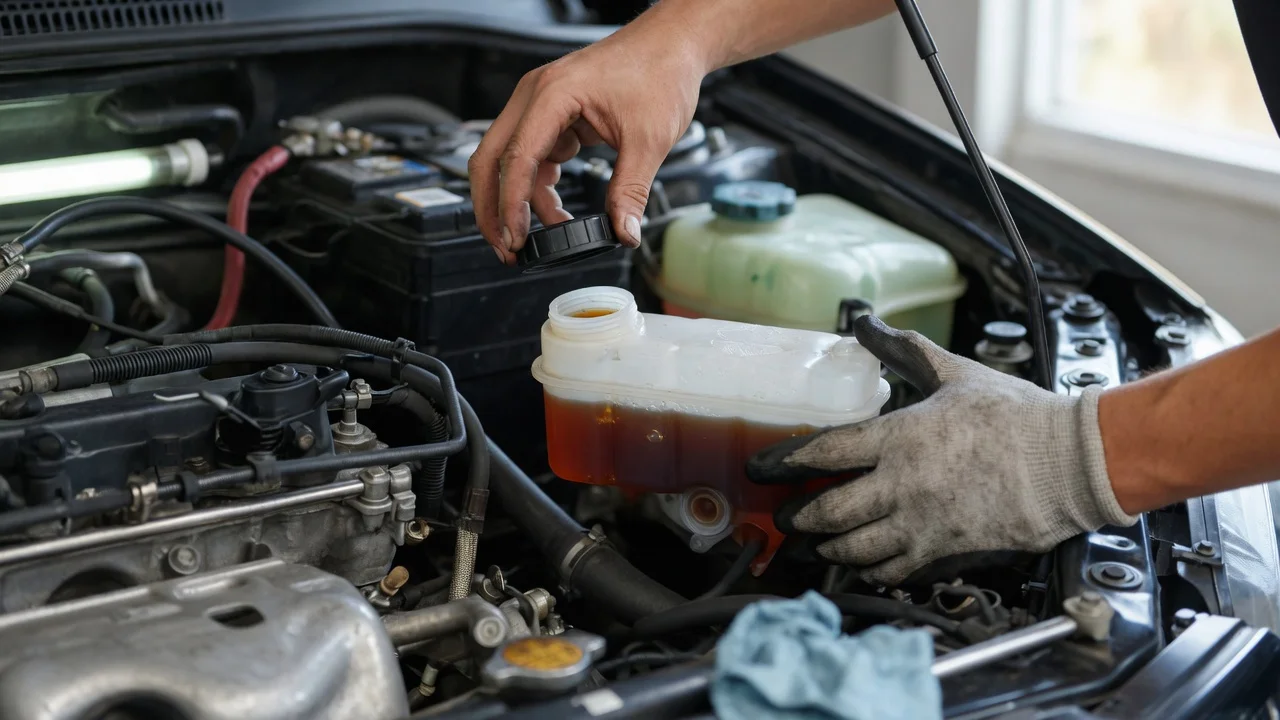
Open the hood and look in the engine bay, typically on the driver’s side near the firewall, for a small translucent plastic tank marked for brake fluid. Many tanks have molded MIN (or LOW) and MAX (or FULL) lines on the side. Park on level ground, switch the ignition off, and let the vehicle sit so the fluid surface is still. Wipe the outside of the tank if dirt or oil makes the meniscus hard to see, then read the level against those marks without tilting your view.
Some vehicles hide the marks under a cap that includes a dipstick. In that case, clean the cap and surrounding area first so grit does not fall in, remove the cap, wipe the stick, reseat it fully, then lift it again to read. Do not leave the reservoir open longer than needed. Brake fluid absorbs moisture from air, and contamination can damage seals and internal valves.
Level at or near MAX with the ignition off: typical when pads are new or recently replaced. Level between MIN and MAX: normal for many vehicles as friction material wears and more fluid stays in the calipers. Level at or below MIN: treat as a fault until you know why. Topping up without finding the cause can mask a leak or extreme pad wear. Empty, rapidly falling, or a spongy pedal after checking: do not drive. Have the hydraulic system inspected.
What the fluid should look like
New DOT 3 and DOT 4 fluid is typically clear to light amber. Dark brown or black fluid, floating debris, or a milky appearance points to age, contamination, or moisture, which lower boiling point and can corrode internal parts. Color is a clue, not a specification test. Moisture content and boiling point require a dedicated tester or a scheduled flush; a level check does not replace that service.
Match any added fluid to the specification printed on the cap or in the owner’s manual (commonly DOT 3, DOT 4, or DOT 5.1 on hydraulic systems). Those grades are glycol-based and must not be mixed with DOT 5 silicone fluid. Using the wrong type can swell seals or leave the system incompatible with later service. If the cap is unmarked and the manual is unavailable, do not guess the grade.
When a low reading is expected and when it is not
Brake fluid level falls gradually as disc pads wear because the caliper pistons extend and hold a larger volume of fluid. A slow drop that stays above MIN, with a firm pedal and no warning lamp, is often consistent with normal wear. A sudden drop, repeated need to add fluid, wetness around lines, calipers, or the booster, or a warning lamp for brake fluid or brake system, points to a leak or a hydraulic fault rather than pad wear alone.
Some vehicles with electronic parking brakes or stability-control hydraulic units store extra fluid in the same reservoir. Level can look slightly different after a control-module bleed or after the parking brake has been serviced. If the level was set during a recent brake job, compare against that service record before adding fluid.
Safe next actions
If the level is between the marks, the pedal is firm, and no warning lamp is on, record the reading and recheck at the interval in the maintenance schedule, or sooner if the pedal feel changes. If the level is below MIN, inspect for leaks and pad wear before adding fluid. Add only the specified type, fill to the MAX line with the vehicle level, and recap immediately. Wipe spills off paint at once; glycol fluid damages finish.
Do not pump the pedal with the reservoir open, and do not overfill. Excess fluid can overflow as pads wear in reverse during a later replacement, when pistons retract and fluid returns to the tank. If you cannot locate the reservoir, cannot read the marks, or the pedal sinks, stop and have the braking system inspected. A level check answers whether the reservoir is in range; it does not certify that the brakes will stop the vehicle as designed.