Brake Fluid Light: What It Means and How to Diagnose It
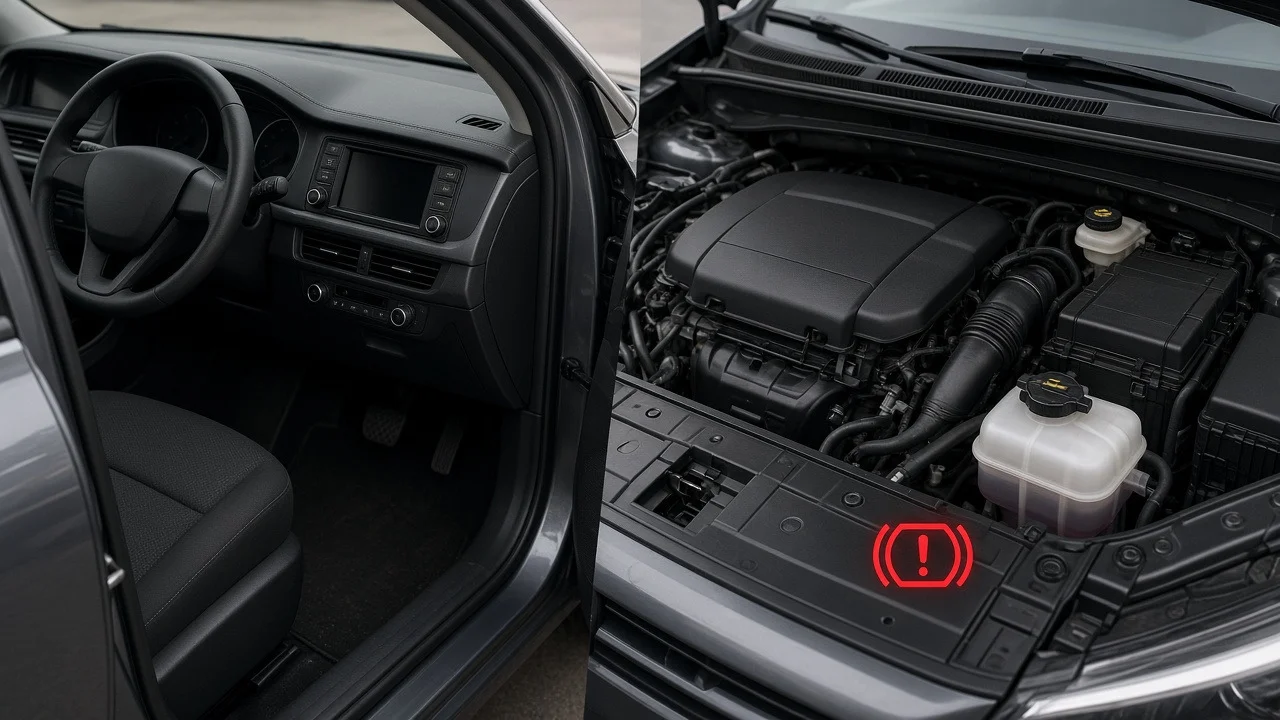
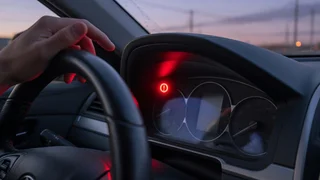
A brake fluid light on the instrument cluster most often means the fluid level in the master cylinder reservoir has dropped below its minimum mark. On many vehicles, though, the same red brake warning indicator also lights when the parking brake is applied or when the car detects a fault in the hydraulic or electronic brake system. Whether the light is a simple reminder or a reason to stop driving depends on what you find when you check it. This guide explains what the warning can mean, which checks separate one cause from another and when the car needs professional diagnosis before it is driven again.
The short answer
Treat a brake fluid warning as a safety warning until you have ruled out a hydraulic problem. First confirm the parking brake is fully released. Then, with the vehicle parked on level ground, check the fluid level in the reservoir. A slightly low level with no leaks and a firm brake pedal often points to normal brake pad wear. A level that keeps dropping, visible fluid near a wheel or under the car, or a brake pedal that feels soft or sinks means the car should not be driven until it is inspected.
Exact behavior varies by make, model year and system design. Some vehicles use a dedicated brake fluid symbol or a text display message, others share one red BRAKE light among several functions, and hybrids and electric vehicles with electronically controlled braking may show different warnings. The owner manual for your specific vehicle is the authority on what its warning indicator means and how the system should be checked.
What the warning light is monitoring
Most hydraulic brake systems have a level sensor in the master cylinder reservoir, usually a float with a switch. When the fluid drops far enough, the switch closes and the warning illuminates. This sensor reports fluid level only; it does not measure fluid condition, moisture content or brake pressure directly.
On many cars the same red indicator is also wired to the parking brake switch, and on some models it can signal problems the brake or stability control module detects, such as a fault affecting electronic brake force distribution. Because of this shared role, the light alone does not tell you which condition triggered it. Noting when it appears and whether other warnings appear with it is the first step in narrowing the cause.
Normal behavior versus a real warning
Many vehicles briefly illuminate their warning lights when the ignition is switched on as a self-test of the bulbs or display. If the brake light goes out within a few seconds and stays off, that is normal operating status. A light that stays on, comes on while driving, or flickers during braking, cornering or on hills deserves attention.
A light that flickers when turning or stopping often means the fluid is close to the minimum line and is sloshing past the sensor. That still means the level is low and needs to be explained, not ignored.
Step-by-step diagnostic checks
Work through these checks in order. Each one either rules out a cause or points you toward the next step.
1) Check the parking brake
Make sure the parking brake is completely released. A hand lever that is not fully down or a foot pedal that has not fully returned can keep the switch engaged. On vehicles with an electronic parking brake, look for a separate parking brake indicator or message; a fault in that system may be reported with its own warning. If the light goes out once the parking brake is fully released, the parking brake was the cause. If it stays on, continue.
2) Check the fluid level
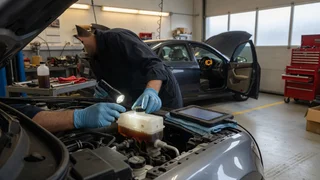
Park on level ground with the engine off. The brake fluid reservoir usually sits on top of the master cylinder, near the back of the engine bay on the driver's side, and is typically translucent with MIN and MAX marks. The cap often identifies the required fluid type. Clean the area around the cap before opening it so dirt cannot fall in.
Level between MIN and MAX: the sensor should not be triggered by fluid level, so suspect the parking brake switch, the level sensor or wiring, or a system fault reported by a control module. Level at or slightly below MIN: consistent with worn brake pads or a slow leak; continue to the pad and leak checks. Level well below MIN or reservoir nearly empty: suggests a significant leak or a major hydraulic issue; do not drive the vehicle.
3) Consider brake pad wear
As disc brake pads wear, the caliper pistons extend further to keep the pads against the rotors. Fluid moves out of the reservoir to fill that extra space, so the reservoir level drops gradually over the life of the pads without any leak. If the vehicle has covered many miles since its last brake service, a low level may simply reflect worn pads. Inspecting pad thickness through the wheel spokes or with the wheels removed can confirm this. If pads are near their wear limit, replacing them is the real fix, and the level will rise again when the pistons are pushed back during the pad replacement.
4) Look for leaks
Brake fluid is usually clear to amber when fresh and darker as it ages, and it feels slippery. Check these areas for wetness, drips, crusty residue or damp dirt buildup:
Inside each wheel and tire, where a leaking caliper or wheel cylinder can wet the inner sidewall; The ground under each wheel and along the brake line routes after the car has been parked; Rigid brake lines and flexible hoses, especially at fittings and where hoses flex near the suspension; The master cylinder body and the joint between the master cylinder and the brake booster; The reservoir itself, its cap and its seal
A leak anywhere in the hydraulic system means the system can lose pressure. Any confirmed brake fluid leak is a reason to stop driving and have the system repaired. A master cylinder can also leak internally into the brake booster, which leaves no puddle; a dropping level with no visible external leak is one reason to have a technician inspect the system.
5) Check the brake pedal feel
With the engine running and the vehicle stationary, press the brake pedal firmly. A healthy pedal should feel firm and hold its position. A pedal that feels spongy, travels further than usual, or slowly sinks toward the floor under steady pressure suggests air in the system, a leak or a failing master cylinder. Any of these makes the car unsafe to drive.
6) Note any other warnings
Check whether the ABS, stability control or other warnings are lit alongside the brake light. On many vehicles, the red brake warning together with the ABS warning indicates the anti-lock system and electronic brake force distribution may be disabled, which can affect stability under hard braking. A combination of warnings calls for a diagnostic check with a scan tool rather than a simple fluid top-up.
Interpreting what you find
What you observe | What it likely indicates | Next action; Light clears when parking brake is fully released | Parking brake switch was triggering the light | No further action unless it recurs with the brake released; Fluid between MIN and MAX, light stays on | Faulty level sensor, parking brake switch, wiring or a module-reported fault | Diagnostic check with a scan tool and electrical inspection; Fluid slightly low, no leaks, firm pedal, worn pads | Normal fluid displacement from pad wear | Inspect and replace pads as needed; Fluid low and drops again after topping up | Active leak, external or internal | Stop driving; professional inspection; Visible wetness at a wheel, line or master cylinder | Hydraulic leak | Stop driving; repair before use; Soft, spongy or sinking pedal | Air, leak or master cylinder failure | Do not drive; tow to a repair shop; Brake and ABS warnings on together | Possible ABS or brake force distribution fault | Diagnostic check before regular driving
Topping up brake fluid correctly
If the level is slightly low and you have found no leak and no pedal problem, you can add fluid to bring it into the normal range. Use only the fluid type specified on the reservoir cap or in the owner manual. Most passenger vehicles use glycol-based fluids such as DOT 3, DOT 4 or DOT 5.1, while DOT 5 is silicone-based and must not be mixed with glycol fluids. If you are unsure which fluid your car uses, confirm before adding anything.
Use fluid from a sealed container; brake fluid absorbs moisture from the air once opened; Add fluid only up to the MAX mark, not above it; If the low level is due to worn pads, avoid filling to the top; the level will rise when the pads are replaced and the pistons are pushed back; Wipe up spills immediately, because brake fluid can damage painted surfaces; Replace the cap securely and recheck the level after a short drive and again over the following days
Topping up only addresses the symptom. If you have to add fluid again soon, the system is losing fluid somewhere and needs inspection.
When the fault is electrical or electronic
If the fluid is at a normal level and the parking brake is released, the light may come from a faulty reservoir float switch, a damaged connector, a wiring fault or a misadjusted parking brake switch. On vehicles where the brake or stability control module controls the warning, a stored fault code can help direct the diagnosis. Treat any code as evidence to investigate rather than proof that a particular part has failed. A code pointing to the level sensor, for example, could result from the sensor itself, its wiring or an actual low-fluid condition.
Hybrids, electric vehicles and cars with electronically controlled or brake-by-wire systems can have specific service procedures. Some of these systems can build hydraulic pressure automatically, such as when a door is opened, so working on them without following the manufacturer's procedure can be hazardous. For these vehicles, a professional diagnostic check is the safer route for anything beyond reading the fluid level.
When to stop driving
Do not continue driving, and arrange a tow if necessary, in any of these situations:
The brake pedal feels soft, spongy or sinks toward the floor; The fluid level is well below MIN or the reservoir is close to empty; You can see brake fluid leaking from any part of the system; The fluid level drops again soon after topping up; The brake light comes on suddenly while driving together with a change in braking performance; Braking feels uneven, the car pulls sharply or stopping distances seem longer
If the light comes on while you are driving, slow down gradually, test the brakes gently, and pull over somewhere safe to check. If braking feels normal and you are close to a safe destination, cautious low-speed driving to that point may be reasonable, but driving with an unexplained brake warning is not a long-term option.
Bottom line
A brake fluid light is usually caused by an engaged parking brake, low fluid from pad wear, a leak or a sensor or system fault. Checking the parking brake, fluid level, pad wear, visible leaks and pedal feel will tell you which of these is most likely and whether the car is safe to drive. A slightly low level with worn pads and a firm pedal is a maintenance item; a falling level, a leak or a soft pedal is a safety problem that needs repair before the vehicle goes back on the road.