Load Range E Tires: How to Decide Whether They Suit Your Vehicle
The Short Answer
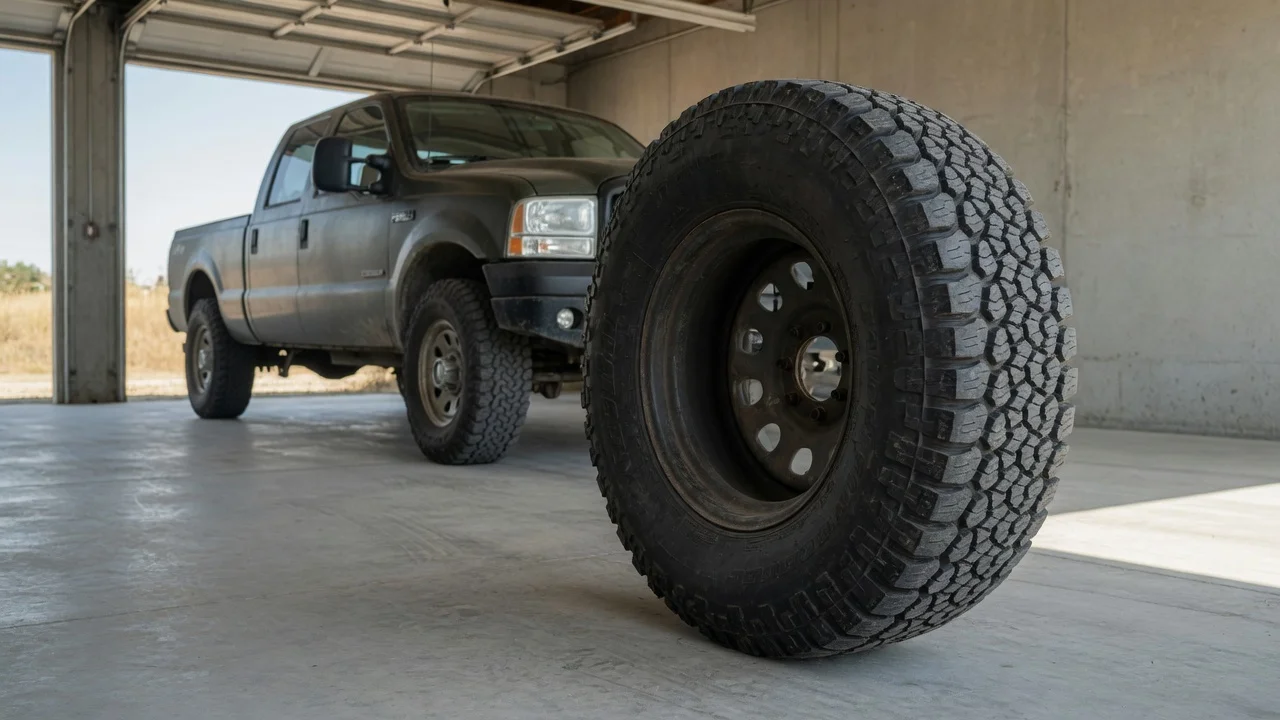
Load Range E is a load-carrying designation for light truck (LT) tires. It is equivalent to the strength of a traditional 10-ply tire and, in common LT-metric sizes, reaches its maximum rated load at around 80 psi. These tires suit vehicles whose manufacturer specifies them, or vehicles that regularly carry or tow loads heavy enough to exceed what lighter tires can safely support. Typical examples are heavy-duty pickups, heavy-duty vans and trucks pulling large trailers. On a light-duty pickup, SUV or passenger car that is not specified for them, Load Range E tires usually add stiffness, weight and cost without a practical benefit.
Several conditions affect the answer. A tire only carries its rated load when it is inflated to the pressure that rating requires. Fitting a stronger tire does not raise your vehicle's payload, towing or gross weight ratings. The wheels must also be rated for the load and pressure involved.
What Load Range E Means
Load range is a letter code on LT tires that indicates how much load the tire can carry and at what maximum inflation pressure. The letters replaced the older practice of counting actual fabric plies in the tire's construction. Today the term "ply rating" describes equivalent strength, not the number of layers inside the tire. A Load Range E tire built with modern materials may contain fewer physical plies than ten but performs to that rating.
The common LT load ranges compare as follows for LT-metric sizes. Flotation sizes such as 35x12.50R17LT and specific products can differ, so the maximum pressure molded on the sidewall is the figure that applies.
Load range | Ply rating equivalent | Typical maximum load pressure (LT-metric); C | 6-ply | 50 psi; D | 8-ply | 65 psi; E | 10-ply | 80 psi; F | 12-ply | 95 psi
Trailer tires marked ST also use load range letters. However, they are a separate category designed for trailer use. They should not be fitted to a car, truck or van.
Load Range Versus Load Index
Load range and load index are related but different. The load index is the number in the tire's service description, the code that follows the size. It corresponds to a maximum load per tire. LT tires often show two numbers, such as 121/118. The first applies when the tire is mounted singly. The second applies when it is mounted in a dual pair on a dually rear axle.
Two Load Range E tires in different sizes can have different load indexes. When comparing tires for capacity, use the load index and the tire maker's load data, not the load range letter alone.
Vehicles That Typically Call for Load Range E
Heavy-duty pickups, commonly sold as 3/4-ton and 1-ton or 2500 and 3500 series, where the factory specifies LT tires of this rating; Heavy-duty cargo and passenger vans with high gross vehicle weight ratings; Trucks that regularly tow heavy travel trailers, fifth-wheel trailers or gooseneck trailers, or that carry slide-in campers; Work trucks that routinely run near their maximum payload
These are general patterns, not a rule for any specific model. Factory tire specifications vary by model year, market, cab and bed configuration, axle rating and options. The tire information placard, usually on the driver's door jamb, and the owner's manual state what your particular vehicle requires.
When Load Range E Is Likely the Wrong Choice
If your vehicle came with passenger (P-metric) tires or lighter LT tires and you rarely approach its payload or towing limits, Load Range E tires are generally unnecessary. Their stiffer construction usually makes the ride firmer, especially when the vehicle is lightly loaded. They also tend to be heavier, which can affect fuel economy, steering feel and braking. They typically cost more as well.
Some buyers choose these tires for puncture resistance off-road or on job sites. That can be a reasonable trade-off, but it does not mean the vehicle can carry more weight.
How to Decide for Your Vehicle
Check the tire information placard and the owner's manual for the specified tire size, load index or load range, and the recommended cold inflation pressures. Read the vehicle certification label for the gross vehicle weight rating (GVWR) and gross axle weight ratings (GAWR). These limits stay the same no matter what tires you fit. Estimate how you actually use the vehicle: typical payload, trailer tongue or pin weight, and how often you run heavily loaded. If possible, weigh the loaded vehicle per axle at a certified scale. This confirms how much load each tire must carry. Compare the load each tire must carry against the load index and load and inflation data for the tire you are considering. Confirm the wheels are rated for the tire's load and the pressure you will run. The rating is often stamped on the wheel or available from the wheel maker. If the factory tire already meets your load needs, there is little reason to step up to Load Range E.
Setting Pressure After a Change of Tire Type
This is the step most likely to go wrong. Do not simply inflate a Load Range E tire to the maximum pressure on its sidewall for everyday use. That figure is a limit, not a recommendation. On the other hand, do not assume the placard pressure for a P-metric or lighter LT tire will give a Load Range E replacement the load capacity it needs. A different tire type can require a different pressure to carry the same load.
The correct pressure comes from the tire manufacturer's load and inflation tables, matched to the actual axle loads. When you are moving away from the factory tire specification, have a qualified tire professional confirm the pressure, the load capacity and the wheel compatibility. Some vehicles also have tire pressure monitoring systems with load-based or light-and-heavy pressure settings. These may need adjustment by a dealer or tire shop so that warnings match the new pressures.
Limits of This Guide
No model-specific data, tire manufacturer tables or test results were supplied for this article. It therefore gives no exact pressures, load figures or fitment recommendations for any particular vehicle. The ply equivalents and typical pressures above reflect common LT-metric conventions. The tire sidewall, the manufacturer's published data and your vehicle's placard and manual take precedence. Rules on tire fitment and load ratings for commercial or registered heavy vehicles vary by country and region and are not covered here.