What Is a Tire's Load Range? Meaning, Inflation, and Vehicle Fit
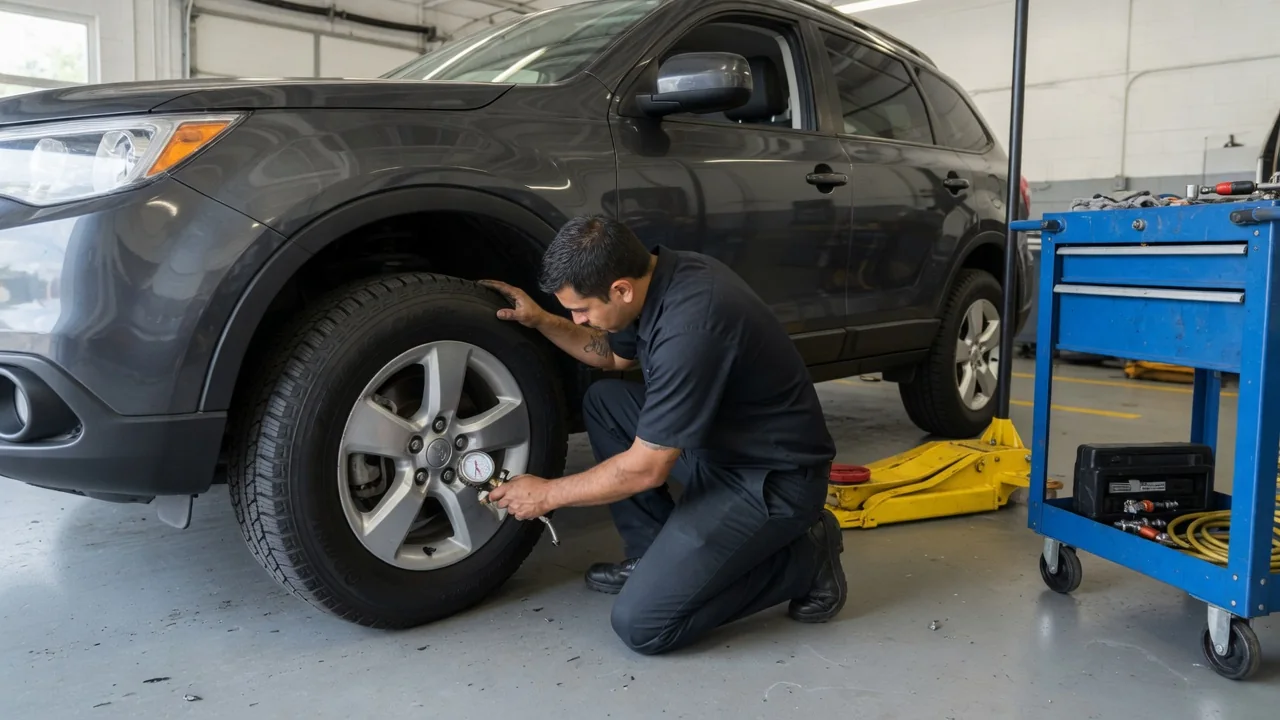
A tire's load range is a sidewall designation that describes how strong its casing is and, as a result, how much inflation pressure it can hold and how much weight it can carry at that pressure. If you have wondered what a tire's load range is, or what tire load range means when you shop for replacements, the short answer is that it describes construction strength. Understanding it helps you match tires to the work your vehicle actually does.
Construction rating
Load range began as a way to express ply rating. Older bias-ply tires gained strength by adding layers of cord fabric, so a tire with more plies could hold more air and support more weight. As tire construction changed, a single high-strength ply could do the work of several older ones, and counting plies stopped being a literal description of the tire. The industry kept the strength comparison but expressed it as a letter. Load range B corresponds to a 4-ply rating, C to 6-ply, D to 8-ply, E to 10-ply, and F to 12-ply. The letter tells you the equivalent strength, not the number of layers actually inside the tire.
Passenger tires usually use a different vocabulary. Most are Standard Load, sometimes marked SL or carrying no special marking at all. Extra Load tires, marked XL or labeled Reinforced, have a stronger casing that allows a higher maximum inflation pressure and therefore more load capacity in the same size. Light truck tires, identified by the LT designation, are the ones most often labeled with a load range letter such as C, D, or E. In both systems, the label points to the same idea: how much structural capacity the casing has been built to provide.
Load range is also distinct from the load index, the numeric code that appears in the service description next to the speed rating. The load index translates to a specific maximum weight per tire. Load range describes the construction class that makes that weight possible. The two work together, but they answer different questions, and reading both gives a more complete picture than either alone.
Inflation
A tire does not carry weight through its rubber and cords alone. The compressed air inside does most of the supporting, while the casing contains that pressure and shapes the tire's footprint. This is why load range and inflation are inseparable. A stronger casing is rated for a higher maximum pressure, and that higher pressure is what unlocks the greater load capacity printed on the sidewall. The sidewall typically lists the maximum load together with the maximum pressure at which that load applies.
An important consequence follows. A tire with a higher load range only delivers its extra capacity when it is inflated toward the higher pressure it was designed for. At the same pressure, tires of the same size but different load ranges tend to carry similar loads, because the air volume and pressure are what do the supporting. Tire manufacturers publish load and inflation tables that show how much weight a given size can carry at each pressure step, and those tables are the reliable reference when you need to set pressure for a particular load.
The maximum pressure molded into the sidewall is a limit, not a recommendation for daily driving. The pressure you normally use comes from the vehicle's tire placard, usually on the driver's door jamb or in the owner's manual. That placard reflects the original tire specification and the vehicle's weight distribution. Underinflation is especially harmful for heavily loaded tires because it increases sidewall flexing, which builds heat and can lead to structural damage over time.
Vehicle fit
The vehicle manufacturer chooses tires whose load capacity suits the vehicle's weight ratings, and that choice is recorded on the placard along with size and pressure. Replacement tires should meet or exceed the original load capacity. Fitting tires with a lower load range or lower load index than specified can leave the tires carrying more weight than they were built for, particularly when the vehicle is loaded to its limits or towing.
Moving up to a higher load range is common for pickups and vans that tow or haul regularly, but it is not automatically an improvement. Stiffer casings generally ride firmer, often weigh more, and may need different inflation than the original tires to perform as intended. If the new tires call for a different pressure, the tire pressure monitoring system may need attention so its warnings remain meaningful. How much any of these changes matter depends on the specific vehicle, so the tire manufacturer's data and the vehicle documentation should guide the decision.
Mixing tire types also deserves care. When passenger-type tires are used on light trucks or similar vehicles, industry practice reduces their rated capacity for that application, so a passenger tire and an LT tire with similar numbers are not interchangeable. Keeping matching load ranges on the same axle, and ideally on all four positions, helps the vehicle handle predictably and keeps load capacity balanced.
Practical implications and limits
In everyday terms, load range matters most when a vehicle regularly operates near its weight limits. Towing a trailer, carrying a full bed of materials, or running a loaded work van all place sustained demands on tires, and a casing rated for those demands resists heat buildup and deformation better. For a lightly used passenger car, the original standard load specification is usually designed to cover normal use, and an upgrade may add firmness without a matching benefit.
A higher load range never raises the vehicle's own limits. Gross vehicle weight rating, axle ratings, towing capacity, and payload are set by the vehicle's frame, suspension, brakes, and drivetrain. Stronger tires can remove the tires as a weak link, but they cannot make the rest of the vehicle carry more than it was engineered to carry. Treat load range as one part of a system rather than a way to expand capacity.
Rated capacity also assumes a tire in good condition. Cuts, bulges, impact damage, uneven wear, prolonged underinflation, and age can all reduce a tire's ability to carry its rated load, regardless of the letter on the sidewall. Regular pressure checks with a reliable gauge, ideally when tires are cold, along with periodic inspection, do more to preserve real-world load capacity than the rating alone. When in doubt about a specific combination of vehicle, tire, and load, the tire manufacturer's load and inflation information and the vehicle's documentation are the authoritative references.