LINE-X Truck Bed Liner Installation: Preparing for the Service
The essential answer
LINE-X truck bed liner installation is a professional spray-on coating applied to the cargo bed, and often the tailgate, at an authorized installer. Preparing for the service means arriving with an empty bed, removing or documenting bed-mounted accessories, and following the shop’s drop-off, masking, and pickup instructions. Exact prep, coverage options, cure time, and whether the truck can be driven the same day are set by the local installer and the product system they apply, not by a single universal checklist.
What the service covers
LINE-X is a branded spray-on bed liner, typically a polyurethane or polyurea coating sprayed onto prepared metal. The usual job is the interior of the pickup bed. Many shops also coat the tailgate inner panel, and some offer extras such as the rail caps, the underside of a spray-in or drop-in liner replacement, or other cargo surfaces. Those extras are optional and must be confirmed when the appointment is booked. This guide covers owner preparation for a standard bed-and-tailgate spray, not do-it-yourself application, roll-on consumer kits, or drop-in plastic liners.
A material qualification applies: LINE-X product names, thickness targets, color choices, and warranty terms vary by location, truck generation, and the system the shop is authorized to spray. Claims about a specific formula, a guaranteed mil thickness, or a factory-backed warranty should come from the installer for that vehicle, not from a general overview.
How to prepare the truck
The coating bonds to a clean, empty bed. Before drop-off, remove cargo, tools, tie-downs that are not staying in place, loose mats, and any aftermarket liner already in the bed. Dirt, oil, wax, and bed-rug residue interfere with adhesion, so shops typically clean and mechanically prepare the surface themselves. Owners should still arrive with the bed as empty and as free of loose debris as practical so that shop time is spent on coating, not on unloading.
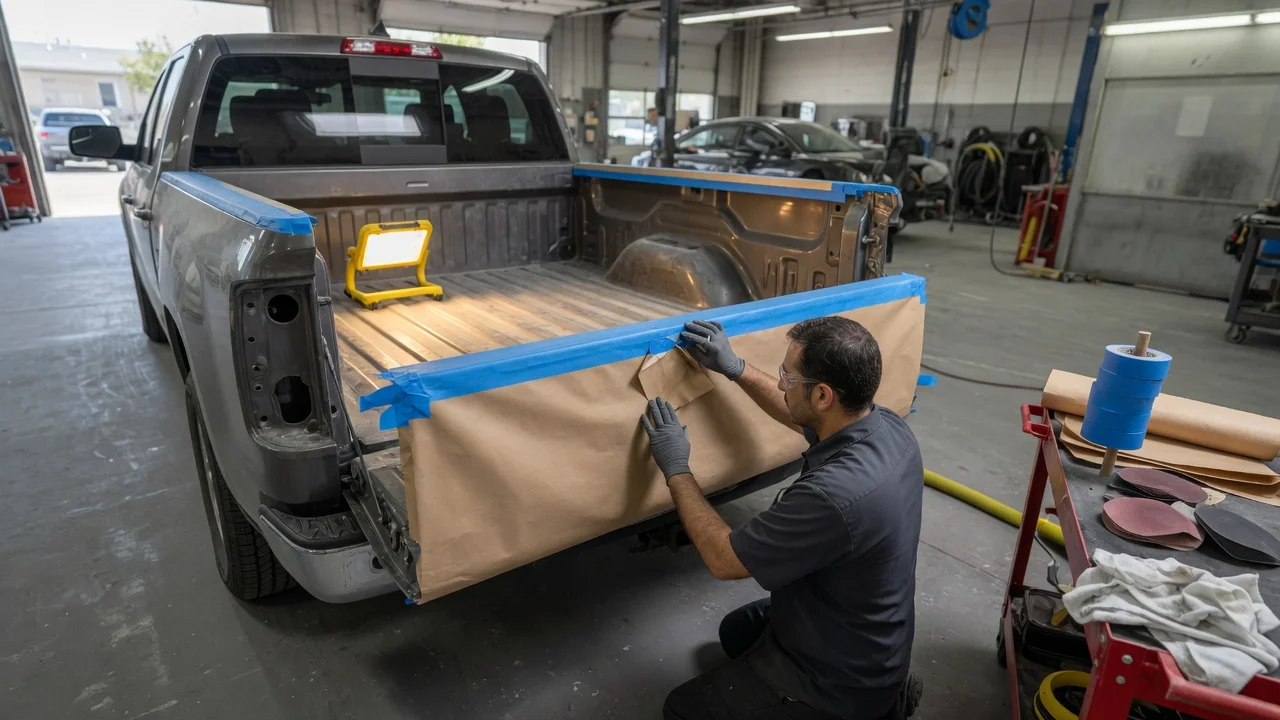
Empty the bed completely, including under-rail storage, wheel-well pockets, and the tailgate if that surface will be coated. Remove or arrange removal of accessories that block spray: tonneau covers, bed caps, rail protectors, bed extenders, cargo management tracks, fifth-wheel or gooseneck hardware, and lighting or camera modules mounted in the bed. Confirm with the shop which items they will take off and reinstall. Note existing bed damage, rust-through, dents, and prior coatings. Surface rust and old liner often need extra prep or may limit coverage; the shop should inspect before spraying. Photograph the bed, tailgate, and any remaining hardware so the condition at drop-off is documented. Ask whether the truck must be left overnight. Spray-on liners need flash and cure time; some shops return the vehicle the same day with limited cargo use, while others keep it until the coating has set. That schedule is installer-specific and is not standardized in public product literature used here.
Accessories, trim, and truck-specific caveats
Factory bed features change by model year, cab configuration, and market. Multi-Pro or MultiFlex tailgates, power tailgates, bed lighting, 110-volt outlets, camera housings, spray-in factory liners, and composite or aluminum beds all affect masking and prep. Aluminum beds and some coated factory beds need different abrasion and adhesion steps than bare steel. Tell the installer the exact year, make, model, bed length, and whether a factory liner is already present so they can quote the correct process.
If a previous spray-on or drop-in liner is in place, removal or overcoating is a separate decision. Overcoating an unknown product can cause adhesion failure. Documented practice is to have the shop inspect the existing surface rather than assuming it can be sprayed over. Rust holes, seam sealer failure, and accident damage are likewise outside a standard liner job and may need body repair first.
What to confirm with the installer
Public marketing for LINE-X describes a durable, textured spray-on liner and a dealer or installer network. It does not, in the materials relied on for this article, fix a single price, a single thickness, a universal color chart, or a mandatory overnight hold. Those details belong in the appointment. Ask the shop to state, in writing if possible, what surfaces will be coated, whether rail caps and bolt holes are included, what color and texture will be used, how long the truck will stay, when the bed can carry cargo or a fifth-wheel plate again, and what warranty applies to that truck.
Surfaces included: bed floor, walls, front bulkhead, wheel wells, and inner tailgate. Rail-cap coating versus leaving factory plastic caps uncoated. Color, texture, and whether a logo or custom graphic is part of the job. Prep of rust, dents, or an existing liner, and any extra charge. Drop-off window, estimated completion, and cargo-use restrictions after pickup. Warranty length, what it covers (peel, wear, UV), and whether it is transferable.
Aftercare that starts at pickup
Preparation includes planning the first days of use. Fresh spray-on liner is often dry to the touch before it has fully cured. Shops commonly advise against sliding sharp freight, dumping hot ash, or installing a fifth-wheel or gooseneck plate until they clear the coating. Water exposure, wash chemicals, and bed-wax products should follow the installer’s aftercare sheet. If no sheet is provided, ask for one at pickup rather than assuming household cleaners are safe on a new coating.
Gaps in public guidance
This article does not cite a measured cure time, a required film thickness, a price, or a claim of firsthand testing. Those figures, when they exist, are product-system and shop dependent. LINE-X formula names and installer processes also change over time. Treat any thickness, hardness, or “ready in X hours” number from a third-party summary as unverified unless the installing shop confirms it for the job being booked.
Next step
Book an inspection or quote with an authorized LINE-X installer, give the truck’s year, make, model, and bed length, and arrive with an empty bed and a list of accessories to remove or retain. Use the shop’s written scope and aftercare instructions as the controlling guide for that vehicle.