Truck Bed Liner Repair: Assessing Damage and Repair Options
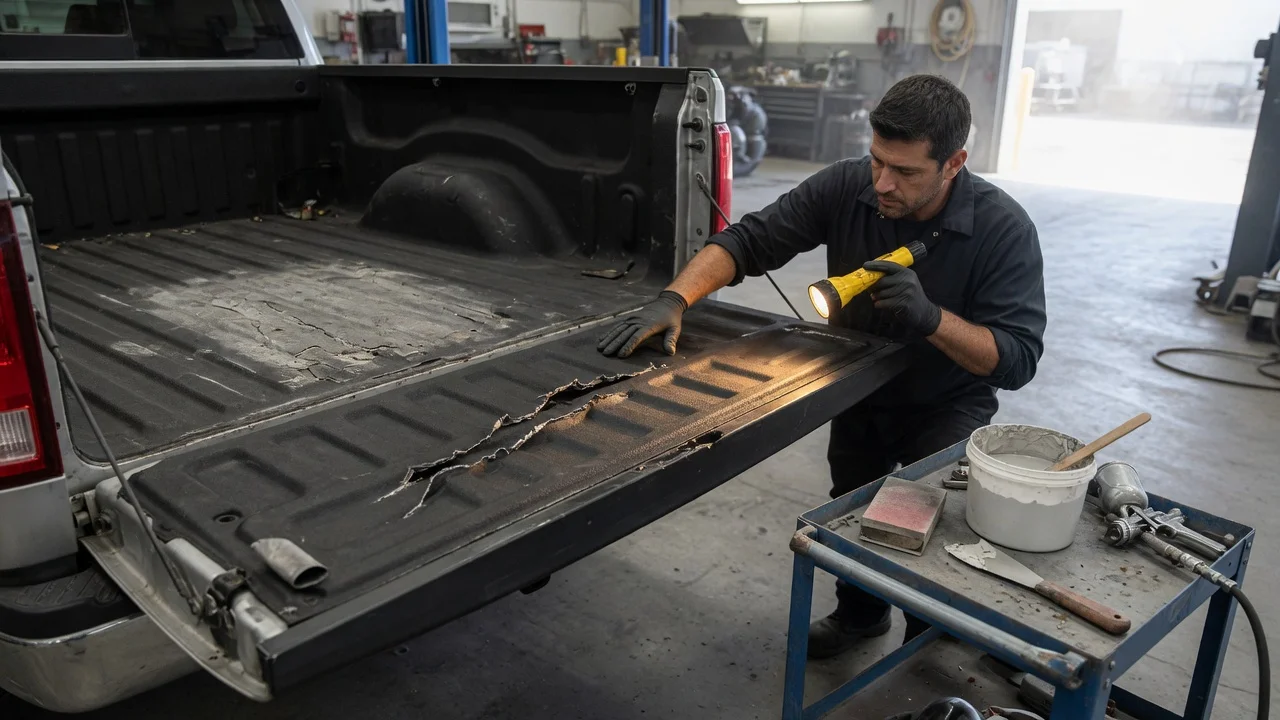
What actually determines a workable repair
Most damaged truck bed liners can be restored or replaced. The workable method depends on the liner construction, how far the damage goes, and whether the bed metal is still sealed and sound. A small gouge in a well-bonded spray-on coating is a different job from a cracked drop-in shell or rust packed under a liner. Match the repair to those three facts before buying a kit or booking a shop.
This guide covers passenger and light-duty pickup beds with aftermarket or factory spray-on coatings, molded drop-in shells, and roll-on or brush-on films. It does not assign a single product, price, or cure time, because those vary by coating chemistry, bed size, model year, and local shop practice. Where a claim depends on a specific liner brand or truck generation, treat fitment and compatibility as something to confirm against the vehicle and the product data.
Identify the liner first
Repair materials have to match the liner that is already in the bed. A kit made for polyurea spray-on will not bond the same way to a polyethylene drop-in, and a roll-on topcoat will not rebuild a thick spray texture. Spend a few minutes naming the liner before you choose a method.
Spray-on (often polyurea or polyurethane): a textured coating bonded to the bed floor, walls, and often the rail caps. Edges look sprayed or masked, and the liner does not lift out as a single piece. Drop-in: a molded plastic or composite shell that sits in the bed. It usually has a distinct rim, drain holes or channels, and can be unbolted or unclipped. Many trap dirt and moisture against the paint. Roll-on or brush-on film: a thinner DIY or service coating with a more paint-like build. Wear-through to primer or metal shows sooner than on a heavy spray-on. Bed mat or rug: a removable pad on the floor only. Damage is normally handled by replacing the mat, then inspecting the paint underneath.
Factory-installed spray-in beds exist on some trims and model years; they behave like other bonded coatings for repair purposes. Drop-in shells are model- and generation-specific, so a replacement has to match the truck’s bed length, body style, and rail design.
How to assess the damage
Work from the surface inward. Clean the area so you can see the coating, then check adhesion, metal exposure, and rust. A wet or muddy bed hides lifting edges and scale.
Surface scuffs: texture is polished or lightened, but the coating still covers metal. Often cosmetic. Chips and gouges: a nick or cut into the liner. Note whether the bottom of the wound is still coating, primer, or bare steel. Lifting or peeling: edges you can pick up, blisters, or a hollow sound when you tap. The coating has lost bond in that area. Drop-in cracks and warp: splits at stress points, broken mounting tabs, a shell that no longer sits flat, or a rattle over bumps. UV chalking: a dry, faded, dusty surface on an otherwise intact film. Appearance issue unless the film has also thinned to metal. Moisture and rust: orange staining, scale, soft metal, or holes at drain paths, under a drop-in, or at a puncture. Treat this as a metal problem first.
If the bed floor or wall is perforated, badly scaled, or flexing, stop loading the bed and have the metal inspected. A new liner over unsound steel will hide the problem and keep water against it. Surface rust on otherwise intact metal can be treated, then sealed, before any coating or new drop-in goes back on.
Repair options on the same decision criteria
The useful comparison is durability of the sealed surface, how much prep you must do, whether rust is addressed, and how closely the result will match the rest of the bed. Published kit prices, shop quotes, and coating thickness claims are only comparable when they use the same bed size, liner chemistry, market, and date; those figures are omitted here because no single configuration was supplied.
Option Suits this damage What it requires What you should expect; Clean and monitor Intact coating with dirt or light scuffs Wash, dry, and reinspect after the next heavy load Appearance only; the liner itself is unchanged; DIY touch-up or roll-on patch Small chips and gouges in a well-bonded spray-on or roll-on film Compatible filler and topcoat, thorough degrease, scuff, and full cure before loading A sealed spot; texture and color often differ from the original; Professional spot repair Localized damage on an otherwise sound spray-on liner A shop that works with that coating family and can blend texture Better match than most kits; surrounding liner still has to be well bonded; Full re-spray Widespread wear, peeling, or a bed stripped for metal work Complete surface prep of the bed; masking of the cab and tailgate hardware Closest result to a new bonded liner; Drop-in replacement Cracked, warped, or poorly fitting shell Correct fitment for bed length and model year; a clean, treated bed underneath A new shell; moisture can still collect if debris is left under it; Convert from drop-in to spray-on Owner wants a bonded liner after removing a shell Bare-bed prep, rust treatment, then professional or quality DIY spray Permanent coating; later repairs follow spray-on methods; Metal repair, then liner work Exposed steel, scale, or holes Welding or panel repair as needed, then primer and liner The only durable path when the bed itself is damaged
When each option is the better fit
Choose DIY touch-up when the liner is a bonded spray-on or roll-on film, the damaged area is small, the coating around it is still stuck down, and you can identify a compatible repair material. Prep quality decides the result: wash, degrease, dry completely, scuff as the product directs, mask clean edges, and wait through the stated cure before cargo goes back in the bed. A mismatch in chemistry shows up as peeling of the patch itself.
Choose professional spot repair when the gouge is larger, you want the texture blended, or the original liner is a shop-applied polyurea or polyurethane system. Spot work is preferable while the rest of the coating is sound. If large areas have already lifted, a full re-spray after stripping the failed film is the more durable choice, because new material will not reliably bridge loose coating.
Choose a full re-spray when wear is bed-wide, the truck is being kept, or metal work has already stripped the old film. This is also the usual path after a drop-in is removed and the owner wants a bonded liner. Confirm with the installer how they will treat any rust and whether they will coat the rail caps, bulkhead, and tailgate; those details change both appearance and how water sheds.
Choose drop-in replacement when the existing shell is cracked, warped, or missing mounting points, and you still want a removable liner. Fitment is specific to bed length and generation, so verify the truck’s configuration before ordering. Pull the old shell, clean the bed, and treat any rust before the new one goes in. A new drop-in on a dirty or rusty floor will pack moisture in place.
Choose metal-first work whenever steel is showing, scale is present, or you find wet packing under a liner. That sequence is preferable to any cosmetic patch. Once the bed is sound and primed, pick spray-on or a new drop-in based on how you load the truck: a bonded coating stays put under sliding cargo; a drop-in is easier to remove later and can be swapped if it is damaged again.
Practical next action
Wash the bed, dry it, and write down liner type, size of the damaged area, whether metal is visible, and whether rust is present. If metal is sound and the coating is still bonded, a compatible touch-up or a professional spot repair is a reasonable first path. If the drop-in is structurally failed, plan on a correctly sized replacement and a clean bed underneath. If rust or holes are part of the picture, have the metal repaired, then select the liner. Ask any shop which coating family they will use and how they will prep rust; ask any kit seller whether the product is intended for your liner chemistry. Those two checks prevent most failed patches.
What remains unspecified
This article does not quote repair prices, coating thickness, grit grades, or cure hours, because those figures depend on product data sheets, bed size, climate, and shop process, and no matched set of specifications was provided. Brand-to-brand adhesion, color match, and warranty treatment of DIY work versus dealer or installer work also vary and should be confirmed for the specific truck and liner. If the liner was applied under a commercial or OEM warranty, check that document before grinding or recoating, because unauthorized repair can affect remaining coverage.