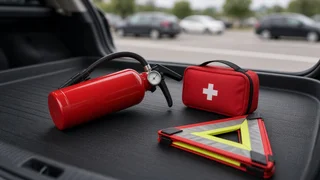
Kidde 5-B:C Fire Extinguisher for Your Car: Does It Match Your Risks?
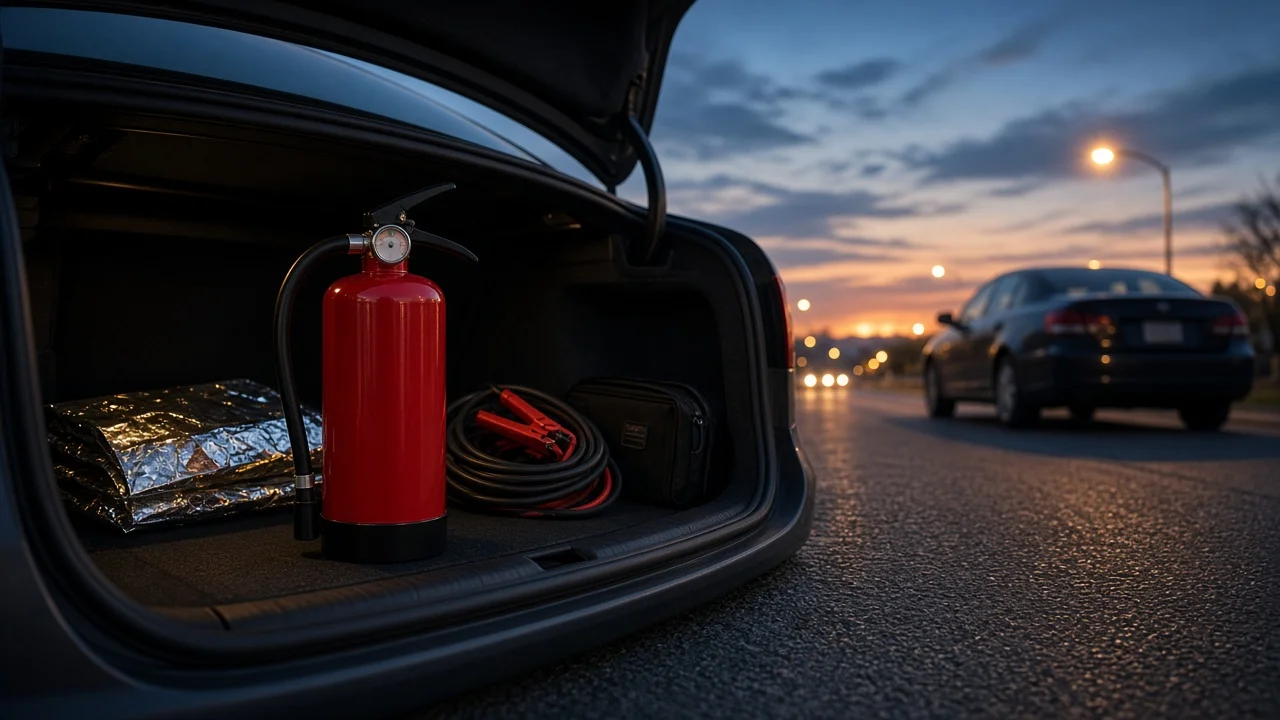
The short answer
A Kidde extinguisher rated 5-B:C can be a reasonable choice for a passenger car or light truck if your main concern is a small fuel, oil or electrical fire caught early. It is not rated for burning seats, carpet or other ordinary combustibles, it has the smallest common B rating, and no portable extinguisher is a dependable answer to an electric-vehicle battery fire. Your vehicle type, what you carry and whether you are a commercial operator change the answer.
What the 5-B:C rating means
The rating comes from the UL classification printed on the label. The letters show which fire classes the unit is tested for, and the number shows relative capability within a class.
Rating part | Fire class | What it means for a vehicle; 5-B | Flammable liquids and gases | Covers gasoline, diesel, oil and other fluids. The 5 is a relative capacity figure; a higher number means more firefighting capacity. C | Energized electrical equipment | The agent does not conduct electricity, so it can be used on wiring and electrical components. No A | Ordinary combustibles | Not rated for upholstery, carpet, paper or similar interior materials.
How it fits common vehicle fire risks
Fuel or fluid leak igniting under the hood or near the exhaust: within the B rating, but only while the fire is small. Electrical or wiring fault: within the C rating. Fire spreading into the cabin and burning seats or trim: outside the rating; a unit with an A rating, such as an ABC model, is better suited. High-voltage battery fire in an EV or hybrid: a portable extinguisher is not a reliable way to stop thermal runaway, the self-sustaining overheating of battery cells. Evacuate and call 911. Towing, hauling fuel or carrying equipment: a larger B number may be worth considering because the potential fire is larger.
Commercial vehicles
Federal motor carrier rules in the US require commercial power units to carry an extinguisher, with 5 B:C as the minimum for most vehicles and 10 B:C for vehicles transporting placarded hazardous materials. A 5-B:C unit therefore only meets the floor for non-hazmat operations. Confirm the current requirement for your operation before relying on it.
What to check before buying
UL rating on the label: confirm it reads 5-B:C and not a different rating with a similar model name. Extinguishing agent: B:C dry chemical units commonly use a bicarbonate powder; the label will state which. Dry chemical leaves a residue that should be cleaned off electronics and metal promptly. Vehicle mounting bracket: the extinguisher should be secured so it cannot roll under the pedals or become a projectile in a crash. Temperature range: parked cars get very hot and very cold, so check that the stated operating range suits your climate. Pressure gauge: lets you see at a glance whether the unit is still charged. Rechargeable or disposable: affects what you do after use or when the gauge shows low pressure. Size and weight: it must fit where you plan to mount it and be easy to grab quickly.
Using it safely
Stop, turn off the engine, get everyone out and well away from the vehicle, and call 911 before attempting anything. Only use the extinguisher on a small fire with a clear escape route. Avoid fully opening a hood with fire under it, since the inrush of air can intensify the flames. If the fire grows, involves the fuel tank or battery pack, or you are unsure, leave it to the fire department.
Information gaps
No confirmed details were available for specific Kidde 5-B:C models, including agent weight, discharge time, dimensions, operating temperature range, bracket design or price. Check the product label and manufacturer documentation for the exact model before buying, and inspect the gauge and condition regularly once installed.