Kidde Multipurpose Fire Extinguisher for Your Car: What to Check Before You Buy
The short answer
A multipurpose dry chemical extinguisher, the kind labeled for Class A, B and C fires, is a reasonable choice for a car because it covers the fire types a vehicle can produce: ordinary combustibles like upholstery and paper, flammable liquids like fuel and oil, and energized electrical equipment. Whether a particular Kidde unit suits your vehicle depends on three things you should confirm on the product label before buying: that it carries a UL rating including A, B and C; that its listed operating temperature range fits the conditions inside your parked car; and that it comes with, or accepts, a bracket you can secure in the cabin or cargo area.
Two conditions change the answer. First, a small extinguisher is meant for a fire that is just starting; if a fire is established, the right move is to get everyone away from the vehicle and call 911. Second, if the fire involves the high-voltage battery of an electric or hybrid vehicle, a portable extinguisher is not a reliable way to stop it, because battery thermal runaway can continue and reignite. Treat that situation as evacuate-and-call only.
What "multipurpose" means on a US extinguisher label
In the US, extinguishers are rated by fire class. Class A covers ordinary combustibles, Class B covers flammable liquids and gases, and Class C means the agent does not conduct electricity, so it can be used on energized electrical equipment. "Multipurpose" generally refers to an ABC dry chemical extinguisher, which commonly uses monoammonium phosphate as the extinguishing agent.
The UL rating appears as a string of numbers and letters. The number in front of A and the number in front of B indicate relative firefighting capacity for those classes; a higher number means more capacity. Class C has no number because it only indicates electrical non-conductivity. When comparing Kidde models, or Kidde against another brand, compare these rating numbers rather than relying on a product name or the word "automotive" on the packaging.
What to check before buying
No confirmed specifications, prices or model details for specific Kidde products were available for this article, so the checklist below tells you what to verify on the label, packaging or manufacturer documentation rather than quoting figures.
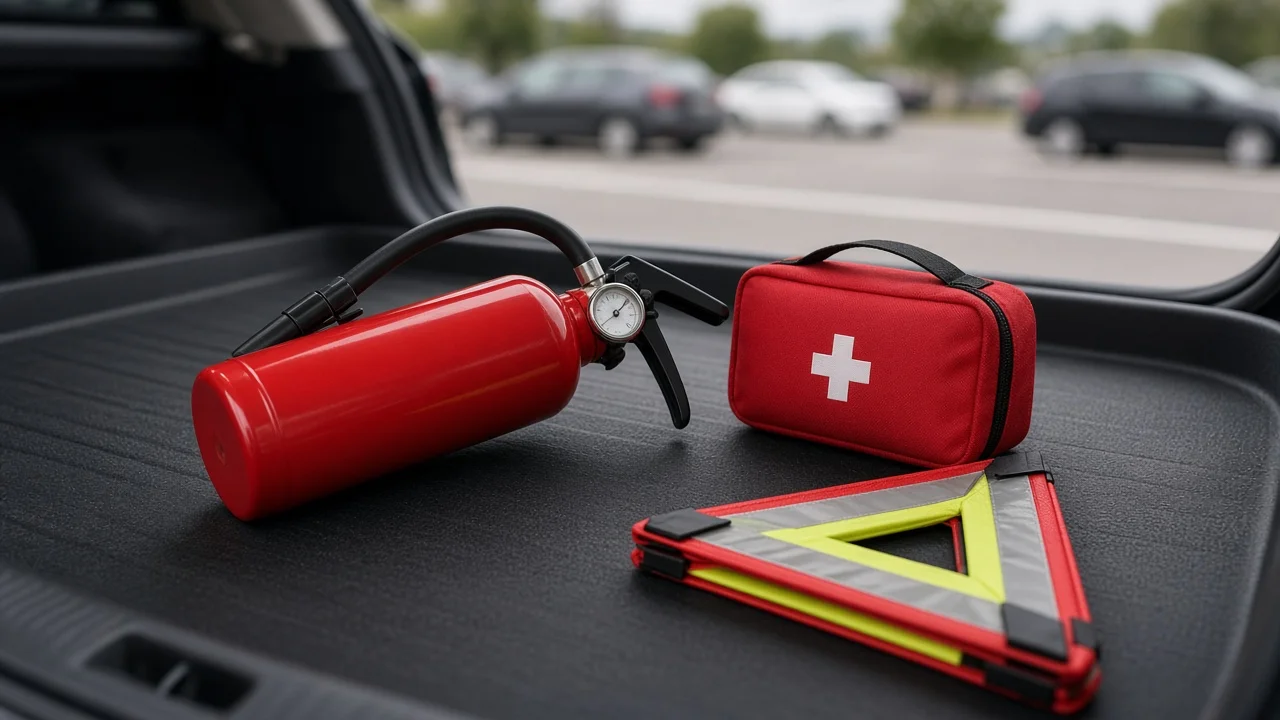
UL rating: confirm A, B and C classes are all listed, and compare the A and B numbers between candidates. Operating temperature range: the label states the range the unit is approved for. A closed car can get far hotter in summer sun and far colder in winter than a house, so make sure the stated range fits your climate. Mounting hardware: check whether a vehicle bracket is included and how it attaches. A household wall hook is not the same as a bracket designed to hold the cylinder during braking or a collision. Pressure gauge: a gauge lets you see at a glance whether the unit is still charged. Rechargeable or disposable: a rechargeable unit typically has a metal valve and can be serviced and refilled; a disposable unit is replaced after use or when it loses pressure. Check which one you are buying. Size and weight versus space: measure where you plan to mount it before choosing a size, and make sure it will not interfere with seat movement, pedals or cargo. Recall status: extinguishers, including Kidde products, have been subject to recalls in the past. Check the model number against current recall listings from the US Consumer Product Safety Commission before buying or relying on an older unit.
Where and how to mount it in a vehicle
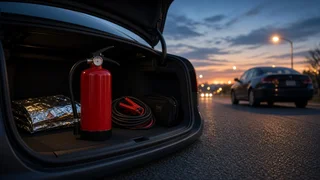
An extinguisher loose in the cabin can become a dangerous projectile in a crash or hard stop, and it can roll under the pedals. Secure it with a bracket fastened to a solid surface. Common locations are the floor in front of a seat, a seat base, or a secure point in the cargo area, as long as the driver can reach it quickly after exiting the vehicle. Avoid the engine bay, where heat can affect the cylinder and where a fire would block access to it. Before drilling into the floor or trim, check what is underneath, such as wiring, fuel lines or the fuel tank.
Using it during a vehicle fire
An extinguisher supports a safe exit; it does not replace one. If you see smoke or flames, the order of priorities is: pull over and stop, turn off the engine, get everyone out and well away from the vehicle, and call 911. Only attempt to fight the fire if it is small, you have a clear escape path, and you are not putting yourself between the fire and traffic.
Do not fully open the hood if the fire is in the engine compartment. Opening it suddenly lets in more air and can cause the fire to flare toward you. If you choose to act, discharge through any gap such as the grille or wheel wells, from a safe distance. Most portable extinguishers are operated with the PASS method:
Pull the pin. Aim the nozzle at the base of the fire, not the flames. Squeeze the handle. Sweep side to side across the base of the fire.
A small extinguisher empties quickly. If the fire is not clearly going out, stop, move away and wait for firefighters. A fire that seems to be out can reignite, so stay clear and let responders check the vehicle.
Trade-offs of dry chemical in a car
The main drawback of ABC dry chemical is cleanup. The powder spreads widely, and monoammonium phosphate can become corrosive when it absorbs moisture, which matters for wiring, connectors and electronics. After any discharge, even a brief test or accidental one, the residue should be cleaned out promptly. Other agent types exist, such as clean-agent extinguishers that leave little residue, but they differ in cost, capacity and which fire classes they cover; compare UL ratings before treating one as a substitute for an ABC unit.
Maintenance after purchase
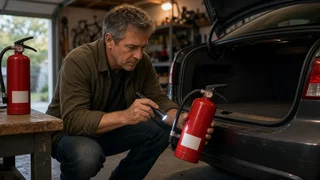
Look at the pressure gauge regularly; monthly is the common guideline for portable extinguishers. Check that the pin and tamper seal are intact, the nozzle is clear and the cylinder is not dented or corroded. Because vibration in a vehicle can cause dry chemical to compact over time, some manufacturers advise periodically inverting or shaking the unit; follow the instructions on your specific Kidde model. Replace a disposable unit, or have a rechargeable one serviced, after any use, if the gauge reads outside the normal range, or when the manufacturer's stated service life is reached.
Information gaps to resolve
This guidance does not cover any specific Kidde model's UL rating, agent weight, temperature range, bracket design, service life, warranty or price, because no verified product data was available. Confirm each of these on the product listing and label for the exact model number you are considering before you buy.