What Is an ABC Fire Extinguisher? A Practical Guide for Drivers
An ABC fire extinguisher is a multipurpose dry chemical extinguisher that can be used on three classes of fire: Class A (ordinary solid combustibles such as paper, cloth, wood and many plastics), Class B (flammable liquids and gases such as gasoline, diesel and oil), and Class C (fires involving energized electrical equipment). Because a vehicle fire can involve all three at once, an ABC unit is the most common type recommended for cars, trucks and RVs. It has real limits, however. It is not designed for burning metals or cooking-oil fires, and it cannot reliably stop a lithium-ion battery in thermal runaway. In any vehicle fire, getting people out safely matters more than putting out the flames.
What the letters A, B and C mean
In the US, fire classes describe the type of fuel that is burning. An extinguisher label shows which classes it is approved for, and an ABC unit carries all three letters. The classification system used elsewhere differs. In Europe, for example, electrical fires are not assigned a separate letter in the same way, so this explanation applies to US-labeled extinguishers.
Class | Fuel type | Typical vehicle examples; A | Ordinary solid combustibles | Seat fabric, carpet, interior trim, cargo, paper; B | Flammable liquids and gases | Gasoline, diesel, engine oil, transmission fluid, some coolants; C | Energized electrical equipment | Wiring harnesses, battery cables, alternator, aftermarket electronics; D (not covered by ABC) | Combustible metals | Magnesium or other metal components in some specialized situations; K (not covered by ABC) | Cooking oils and fats | Galley equipment in food trucks or RVs
How an ABC extinguisher works
A fire needs heat (an ignition source), fuel (combustible material), oxygen, and a self-sustaining chemical chain reaction. Extinguishers work by removing one or more of these elements.
Most ABC extinguishers use a fine powder based on monoammonium phosphate, pressurized with an inert gas such as nitrogen. When discharged, the powder interrupts the chemical chain reaction in the flame, which is why it knocks down liquid and electrical fires quickly. On solid materials, the powder melts and forms a crust-like coating over the hot surface. This helps cut off oxygen and reduces the chance that smoldering material reignites, something powder-only BC extinguishers do less effectively.
The powder does not conduct electricity, so it can be used on energized electrical equipment. That is the meaning of the Class C approval. It does not mean the electrical fault has been removed. If the circuit stays live, the fire can restart once the powder cloud settles.
How to read a fire extinguisher rating
An ABC label usually shows a rating in a format such as 1-A:10-B:C or 2-A:10-B:C. Under the US rating system, each part means something specific:
The number before A indicates relative firefighting capacity on ordinary combustibles. Each unit is roughly equivalent to the effectiveness of 1.25 gallons of water, so a higher number means more capacity. The number before B indicates the approximate area, in square feet, of a flammable-liquid fire that a non-expert user should be able to extinguish under test conditions. The C carries no number. It simply confirms that the extinguishing agent is non-conductive and approved for use on energized electrical equipment.
Higher ratings generally go with larger, heavier units. For a passenger car, the practical question is finding a unit that fits securely in the cabin or cargo area and still offers a meaningful rating. A larger unit gives more discharge time but is harder to mount and handle. The rating and agent type are printed on the label, and these are the figures to compare when choosing between models.
Strengths and limitations in a vehicle
An ABC extinguisher is a sensible general-purpose choice for most drivers, but it is a tool for small, early-stage fires and not a substitute for evacuation.
Strengths
One unit covers the three fuel types most likely to burn in a conventional vehicle. Fast knockdown of small fuel and electrical fires. Widely available in compact sizes with brackets for vehicle mounting. The coating effect on solid materials helps limit reignition of upholstery and trim.
Limitations
Short discharge time. Compact units empty in seconds, so a fire beyond its earliest stage is likely to outlast the extinguisher. Corrosive residue. Monoammonium phosphate powder is mildly acidic and, once it absorbs moisture, can corrode metal parts and damage electronics and connectors. Prompt cleanup is important after any discharge. Poor visibility and irritation. The powder cloud reduces visibility and can irritate eyes and airways, especially in an enclosed cabin. Not for Class D or Class K fires. Limited effect on lithium-ion traction batteries. In electric and hybrid vehicles, a battery in thermal runaway generates its own heat and can reignite long after the visible flames are knocked down. An ABC extinguisher may suppress surrounding flames but will not cool the battery cells. Vibration can cause the powder to compact over time in a moving vehicle. Follow the manufacturer's guidance on inspection and maintenance.
Who it suits
For most owners of gasoline and diesel cars, pickups, motorcycles with storage, and towing setups, an ABC extinguisher is the most practical single choice. Owners of electric vehicles can still benefit from one for small cabin, tire or cargo fires, but should treat any battery-related fire as an immediate evacuation and emergency services situation. People who need to protect sensitive electronics, such as in race cars, aircraft-style installations or equipment-heavy vans, sometimes choose clean-agent extinguishers instead because they leave little or no residue. These typically cost more for a given rating.
How ABC compares with other extinguisher types
Type | Typical classes | Key difference for vehicle use; ABC dry chemical | A, B, C | Broadest coverage; residue is messy and can be corrosive; BC dry chemical (often sodium bicarbonate) | B, C | Less effective on upholstery and other solid materials; residue is less acidic; Carbon dioxide (CO2) | B, C | No residue, but heavy for its capacity and less effective outdoors in wind; not rated for Class A; Clean agent (halocarbon-based) | Varies; often B, C, some A:B:C | Low residue, suited to electronics; usually more expensive; Water or water mist | A (some mist units broader) | Not suitable for fuel fires; standard water is unsafe on energized equipment
Using an ABC extinguisher in a vehicle fire
The steps below cover a small fire that you notice early. If flames are large, spreading, coming from under the vehicle near the fuel tank, or involve an EV battery, skip the extinguisher entirely. Evacuate and call for help.
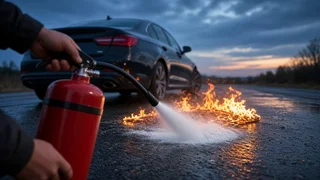
1) Pull over to a safe spot away from traffic, buildings, dry grass and other vehicles, and switch off the ignition. Turning the engine off stops the fuel pump and is the simplest form of electrical isolation available from the driver's seat. 2) Get everyone out and move well away from the vehicle, upwind if possible. Do not go back for belongings. Safe evacuation comes first. 3) Call emergency services (911 in the US) and give your location, even if you plan to try the extinguisher. 4) Decide whether the fire is small enough to tackle. If you are not confident, stay back. 5) Do not fully open the hood. Fresh air can make an engine fire flare up suddenly. If the fire is under the hood, discharge through the gap at the hood edge, through the grille, or from beneath the front of the vehicle, keeping your body to the side. 6) Use the PASS method. Pull the pin, Aim the nozzle at the base of the flames, Squeeze the handle, and Sweep side to side. 7) Keep a clear escape route behind you and back away if the fire grows or the extinguisher empties. 8) Even if the flames go out, stay clear and let firefighters confirm the fire is fully extinguished. Fuel and electrical fires can reignite.
Do not try to disconnect the battery during an active fire. Reaching into the engine bay exposes you to flames, hot surfaces and possible flare-ups. Leave electrical isolation beyond switching off the ignition to responders or a technician once the scene is safe.
Choosing, mounting and maintaining one for your car
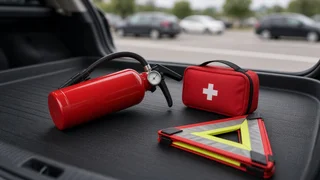
Check the label for an ABC rating and an independent testing laboratory listing. Pick a size you can reach and handle quickly, and that fits a secure location. Mount it with a sturdy bracket. A loose extinguisher can become a dangerous projectile in a crash, so avoid leaving it rolling in the trunk or under a seat where it could block pedals. Keep it accessible from the driver's position or the nearest door rather than buried under cargo. Check the pressure gauge regularly. The needle should sit in the green zone. Inspect the pin, tamper seal, hose and nozzle for damage or blockage. Follow the manufacturer's instructions on loosening settled powder, service intervals and replacement. Some units are rechargeable by a qualified service provider, while others are disposable once used or out of date. Replace or recharge the extinguisher after any use, even a brief one, because partial discharge can cause pressure to leak away.
Some commercial vehicles, such as certain trucks and buses, must carry extinguishers that meet specific rating and mounting requirements. Operators should check the regulations that apply to their vehicle class rather than relying on general passenger-car guidance.
Cleaning up after a discharge
Once responders confirm the vehicle is safe, remove the powder as soon as practical. Vacuum or brush away loose residue, then wipe affected surfaces. Because the powder can corrode metal and electrical contacts when it absorbs moisture, have the engine bay, wiring and any affected electronics inspected by a qualified technician before driving again, particularly if the fire involved electrical components. Do not restart a vehicle that has had an electrical fire until the cause has been found.
The bottom line
An ABC fire extinguisher is a multipurpose dry chemical unit rated for ordinary combustibles, flammable liquids and energized electrical equipment. That combination makes it the most versatile single choice for a typical vehicle. It works by interrupting the combustion chain reaction and coating burning solids, but compact units empty quickly and leave corrosive residue. It is not a reliable answer to EV battery fires. Keep one mounted securely and in working order, and use it only on small, early fires after everyone is out and emergency services have been called.