Key Fob Not Working After Battery Replacement: Causes and Fixes
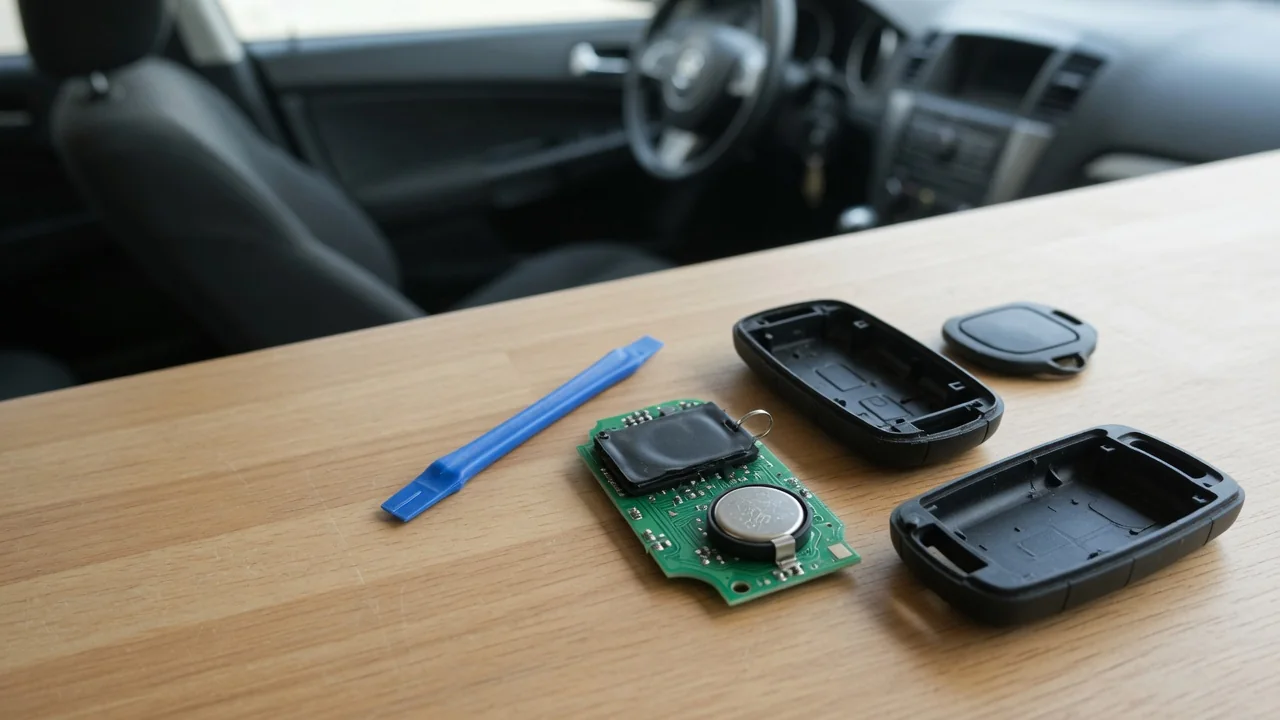
When a key fob stops working right after a battery change, the cause is usually small. Whether you drive a Toyota RAV4, Honda CR-V, Ford F-150 or BMW X5, or ride a Harley with a proximity fob, the same logic applies. Check the new cell and how it sits, then confirm the vehicle still recognizes the key before you pay for reprogramming.
Why a Key Fob Can Stop Working Right After a Battery Change
Most fobs that fail right after a key fob battery replacement have a simple explanation. The new coin cell may be the wrong type, weak from sitting on a shelf, or installed upside down. A contact can get bent while the old cell is pried out, and the rubber button pad or case halves may not seat properly afterward. Any of these can leave a key fob not working even with a new battery when nothing inside is actually broken.
It helps to separate the two jobs a modern key does. Remote keyless entry handles the lock and unlock buttons, while an immobilizer transponder or smart key lets the engine start. One can fail while the other keeps working, which is a useful clue. Some remotes may need to resync after losing power, depending on make, model, year and key type. On most fobs, though, a battery swap alone does not erase programming, so don't assume yours is the exception without checking.
Checking the New Coin Cell and How It Was Installed
Start by confirming the replacement matches the battery listed in the owner's manual or printed on the old cell. Many fobs use a CR2032 coin cell, but other sizes look almost identical and differ in thickness. A thinner cell may not press firmly against the contacts. Next, check battery polarity. Compare the new cell's orientation with the old one or with the plus marking inside the case, since a reversed cell delivers no power at all.
Look for signs of poor contact: a cell that rattles, terminals that look flattened or bent, or debris and residue on the metal tabs. Inspect gently and don't force or solder anything. A new cell can also be stale, so trying a second fresh battery from a different package, or checking it with an inexpensive battery tester, is a reasonable test. Keep coin cells away from children and pets, because swallowing one can cause serious internal injury, and recycle old cells properly.
Toyota, Lexus, Honda, Nissan, Infiniti, Mazda, Subaru and Mitsubishi Fobs
Fob designs, battery types and resync steps vary across Toyota, Lexus, Honda, Acura, Nissan, Infiniti, Mazda, Subaru and Mitsubishi, and even between model years of the same vehicle. A Camry, Prius or Tacoma may use a different key style depending on the year, and the remote for a Honda Civic or Accord can differ from a Pilot or Odyssey smart key. Find out whether you have a basic remote, a flip key or a smart key with push-button start, because each one is troubleshot differently.
Many smart-key systems, including those on vehicles like the Nissan Rogue, Altima, Infiniti QX60 and Mazda CX-5, offer a backup start method for when the fob signal is weak. It often involves holding the fob in a specific spot or against the start button. The exact location and steps vary, so check the manual for your model. If the buttons still do nothing after correct installation, a dealer or qualified locksmith can test whether the fob transmits and is still recognized.
Hyundai, Kia, BMW, Mercedes, Volvo, Volkswagen and Audi Fobs
Some Hyundai, Kia, BMW, Mercedes, Volvo, Volkswagen and Audi fobs use tightly fitted cases, internal clips or sealed button membranes. During a battery change, the membrane can shift or the circuit board can lift slightly, so the buttons stop registering even though the cell is fine. When you reassemble the fob, check that the board sits flat, the button pad lines up with its contacts, and the case closes evenly. Avoid prying on the board or components, which can crack solder joints.
Some vehicles may need the key detected or the system reinitialized after a power loss. That can apply to anything from a Hyundai Elantra or a VW Golf or Passat to an Audi Q5, Mercedes E350, Mini Cooper, Land Rover or Porsche. Procedures differ by exact model and year, so confirm the right steps for your vehicle instead of following generic online instructions. If a fob must be checked against the immobilizer or recoded, that usually requires dealer or specialist diagnostic equipment.
Jeep, Dodge, Ram, Chevrolet, GMC, Cadillac and Ford Fobs
Key types vary widely across Jeep, Dodge, Ram, Chrysler, Chevrolet, GMC, Buick, Cadillac, Ford and Lincoln models. Depending on trim and year, a Jeep Grand Cherokee or Compass, Dodge Durango, Chrysler Pacifica, Chevy Equinox, Cadillac SRX or Ford Escape may use a basic remote or a proximity key. Identify which one you have before troubleshooting. A fob-not-detected message on a proximity system points to a different problem than buttons that do nothing.
There are a few safe checks you can make. Does an indicator light on the fob flash when you press a button? Does the vehicle respond when you stand right beside it? Does a spare key fob work normally? If the spare works, the problem is probably in the original fob's battery, contacts or electronics, not the vehicle. If neither key works, a dealer or automotive locksmith can confirm whether reprogramming is needed. The procedure depends on model and year and may require specialized tools.
Key Fob Not Working After Replacing the Car's 12V Battery
Replacing the fob's coin cell is not the same as replacing the car's main 12V battery, and the troubleshooting is different. When a key fob stops working after a new car battery goes in, the fob itself is often fine. Loose or corroded terminal connections, a weak replacement battery, or electronic modules that need to wake up and recognize the key can all change how a Nissan, Toyota or any other vehicle responds to remote and proximity signals.
Before blaming the fob, confirm the vehicle has normal power. The interior lights should come on, the dash should light up, and the interior lock switch should move the door locks. If any of those are weak or missing, focus on the vehicle's electrical system instead of the key. Warning lights, a no-start condition or other electrical faults after a battery replacement call for professional testing, not more experimenting at the battery terminals.
When to Get the Key Fob Tested, Reprogrammed or Replaced
Suspect the fob itself if it stays dead after you've confirmed a fresh battery and good contacts, or if it shows visible damage, has been exposed to water, or has cracked solder points near the battery holder or buttons. Remote reprogramming pairs the lock and unlock functions with the vehicle. Immobilizer key programming registers the transponder or smart key so the engine will start. A full replacement is a new fob that usually needs both steps, plus a cut blade if the key has one.
Bring all your keys and proof of ownership to the dealer or automotive locksmith. Programming may involve every key for the vehicle, and a key left at home could stop working afterward. Some vehicles let owners program keys themselves with a sequence of ignition, door or button actions, while others require specialist tools. The owner's manual or a dealer can tell you which applies. Ask before you buy an aftermarket fob so you don't pay for one that can't be paired.