Identifying a Dodge Transmission Shift Solenoid
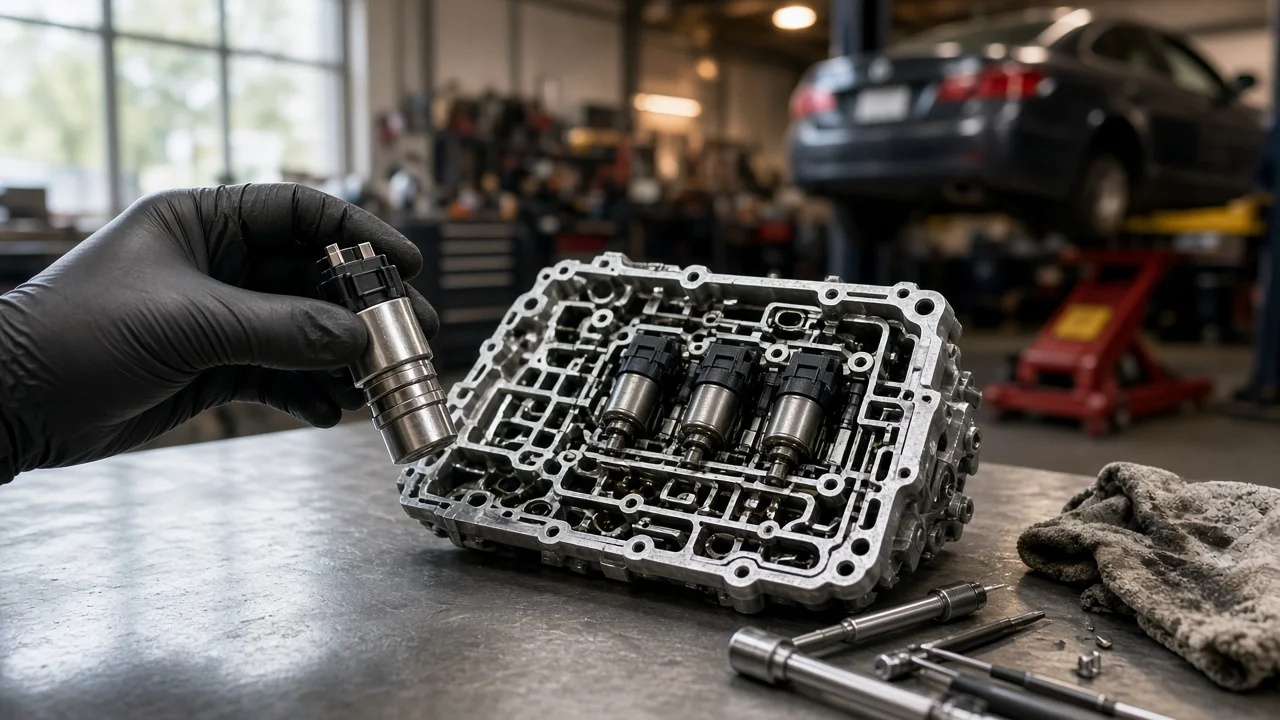
Finding the shift solenoid on a Dodge starts with knowing which transmission is in the vehicle. Dodge cars, minivans, SUVs and Ram trucks have used several very different automatics over the years. Some carry a removable solenoid pack on the outside of the case. Others place the solenoids inside on the valve body or build them into an electronic control unit. This guide explains how to tell which design you have and how to approach a suspected solenoid problem without guessing.
The short answer
A Dodge shift solenoid is an electrically controlled valve. The transmission control module uses it to direct fluid pressure to the clutches and change gears. On most Dodge automatics, the solenoids are not single parts you can spot from under the car. They are grouped into an assembly, often called a solenoid pack or a solenoid and pressure switch assembly, or they are built into a valve body or mechatronic unit. To identify the correct part, first confirm the exact transmission model. Then locate the assembly for that design and match the replacement using the vehicle identification number, not the model name alone.
Shift complaints and diagnostic codes do not by themselves prove that a solenoid has failed. Wiring, connectors, fluid condition, internal pressure loss and control module faults can all produce the same symptoms.
How shift solenoids control gear changes
In an electronically controlled automatic, the control module reads inputs such as vehicle speed, throttle position, engine load and transmission input speed. It then energizes specific solenoids to route pressurized fluid through the valve body. Each combination of active solenoids applies or releases particular clutches, and that produces each gear. Some designs also use solenoids to control torque converter lockup or line pressure. On those designs, pressure switches report back whether a circuit actually built pressure.
The solenoid is only one link in that chain, so a problem anywhere along it can affect shift behavior. Harsh, delayed or missing shifts can come from several sources: • a sticking solenoid; • an open circuit in its wiring; • low or contaminated fluid; • a worn clutch that leaks pressure; When the module detects a fault it considers serious, many Dodge transmissions enter a limp-home mode that holds a fixed gear to protect the unit. That is often the first thing owners notice.
Transmission type changes where the solenoid is
Dodge has used both Chrysler-designed and supplier-built transmissions, and the solenoid layout differs between them. Many front-wheel-drive Chrysler four-speed transaxles, such as the 41TE family used in minivans and sedans, have a solenoid and pressure switch assembly bolted to the outside of the case. That makes the assembly relatively easy to reach. The older rear-wheel-drive four-speeds in the RE family, found in many trucks and SUVs, do not use a full electronic shift pack. Instead they rely on a governor pressure solenoid and an overdrive and converter clutch solenoid assembly.
Later rear-wheel-drive RFE transmissions place their solenoid and pressure switch assembly inside the transmission, on the valve body. Mercedes-derived five-speeds and ZF-designed eight-speeds, used in some Dodge cars and Ram trucks, build their solenoids into an internal conductor plate or a mechatronic control unit. Replacing those parts may require programming or an adaptation procedure. Older three-speed automatics without electronic shift control may have no shift solenoids at all.
Model year, engine and drivetrain also matter. Two vehicles with the same badge can use different transmissions. Revisions within one transmission family can also change connectors, solenoid packs or software. Fluid specification varies too. Many Chrysler-designed automatics call for ATF+4, while supplier-built units often require their own specific fluid. Check the owner's manual or service information before topping up or refilling.
What the owner can do
Start by confirming the transmission. Any of these can identify it: • the owner's manual; • a label or tag on the transmission case; • the vehicle's build information, which a dealer can look up from the VIN; • the original window sticker; Also note the model year, the engine, and whether the vehicle is front-, rear- or all-wheel drive.
Next, record the facts. Read stored diagnostic codes with a scan tool that can access the transmission module. A basic code reader may show only generic engine codes, or none at all. Write down every code and whether it is current or stored. Note the conditions when the problem appears: cold or hot, which shift, and light or heavy throttle. Check the fluid level and condition using the correct procedure for your transmission. Some units have no dipstick and must be checked at a specific temperature through a fill plug. A burnt smell, dark color or debris points toward internal wear that a new solenoid will not cure.
Before buying parts, inspect the visible wiring and the connector at the transmission for damage, corrosion or fluid intrusion. Review the service history for recent fluid changes, earlier repairs or software updates. If testing does point to a solenoid assembly, order it by VIN or by the exact transmission part number to ensure correct fitment.
Confirming the fault and choosing a repair
A code that names a shift solenoid circuit usually means the module saw an electrical value out of range. It does not prove the solenoid itself is bad. Proper testing typically includes these steps: • check solenoid resistance against the published specification; • verify power and ground; • test wiring continuity between the module and the transmission; • use a scan tool to command the solenoids or watch pressure switch status; A code describing a gear ratio error often points to slippage or a mechanical problem rather than a solenoid.
Repair options depend on what testing finds. A damaged connector or wire can be repaired on its own. If the solenoid assembly is mounted outside the case and the fluid is healthy, replacing the assembly is a common, moderate job. Internal assemblies, conductor plates and mechatronic units are more involved. They require removing the pan and sometimes the valve body, followed by a correct refill. Some also need module programming or a relearn procedure. If the fluid shows heavy wear material, a rebuild or a replacement transmission may be the more realistic path.
Limitations and when to get help
This overview cannot tell you which component has failed on a specific vehicle. Solenoid locations, resistance values, fluid capacity, torque specifications and relearn procedures all depend on the model and year. Get them from the service information for your exact transmission. Similar symptoms can come from very different causes, and replacing a solenoid pack on a guess can leave the real fault in place.
If the vehicle is in limp mode, slipping, or shifting harshly enough to affect safe driving, limit its use. Have it diagnosed by a transmission specialist or a dealer with the proper scan tool. Bring your notes on codes, symptoms and service history. That record shortens diagnosis and helps separate a solenoid fault from wiring, fluid or internal wear.