Identify the manufacturer from a VIN
The short answer
The manufacturer is encoded in the first three characters of the Vehicle Identification Number (VIN). This group is called the World Manufacturer Identifier, or WMI. It is assigned to a specific manufacturer, so looking it up in an authoritative decoder or WMI reference tells you who built the vehicle.
Several qualifications can change how you read the result:
The 17-character format only applies from the 1981 model year. In the US, VINs have followed a standardized 17-character format since then. Older vehicles use manufacturer-specific numbering, so the first three characters may not be a WMI at all. The WMI names the manufacturer of record. That company is not always the brand on the badge. Vehicles built under contract, on shared platforms or through joint ventures can carry a WMI that points to a different company or plant. The first character shows where the vehicle was built, not the brand's home country. A vehicle from a foreign brand that was assembled in the US will usually start with a US code. Small-volume manufacturers are identified differently. Builders that produce a small number of vehicles use 9 as the third character. Positions 12 through 14 then complete their identifier, so you need all six characters to identify them.
How the first three characters break down
Position | What it indicates | Notes; 1 | Country or region of manufacture | In North America, 1, 4 and 5 indicate the United States, 2 indicates Canada and 3 indicates Mexico. 2 | Manufacturer, read together with position 1 | Read characters 1 and 2 as a pair, not as a standalone code. 3 | Vehicle type or manufacturing division, depending on the manufacturer | A 9 here signals a small-volume manufacturer whose full identifier continues in positions 12 to 14.
In the US, SAE International coordinates WMI assignments on behalf of the National Highway Traffic Safety Administration (NHTSA). Manufacturers decide what many of the other positions mean, so the WMI is the most reliable part of the VIN for identifying the maker. Model, trim and engine details further along the VIN need the manufacturer's own decoding.
Gap in the supplied evidence: this article does not include a confirmed table matching specific WMI codes to brands. To match a WMI to a manufacturer, use NHTSA's public VIN decoding tool or another official WMI reference. Do not rely on unofficial lists, because they can be incomplete or out of date.
Where to find the VIN
Exact locations vary by manufacturer, model year and body style. Check the owner's manual or the manufacturer's documentation for your vehicle. On most modern passenger vehicles sold in the US, look in these places:
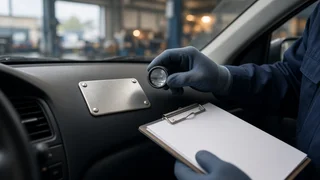
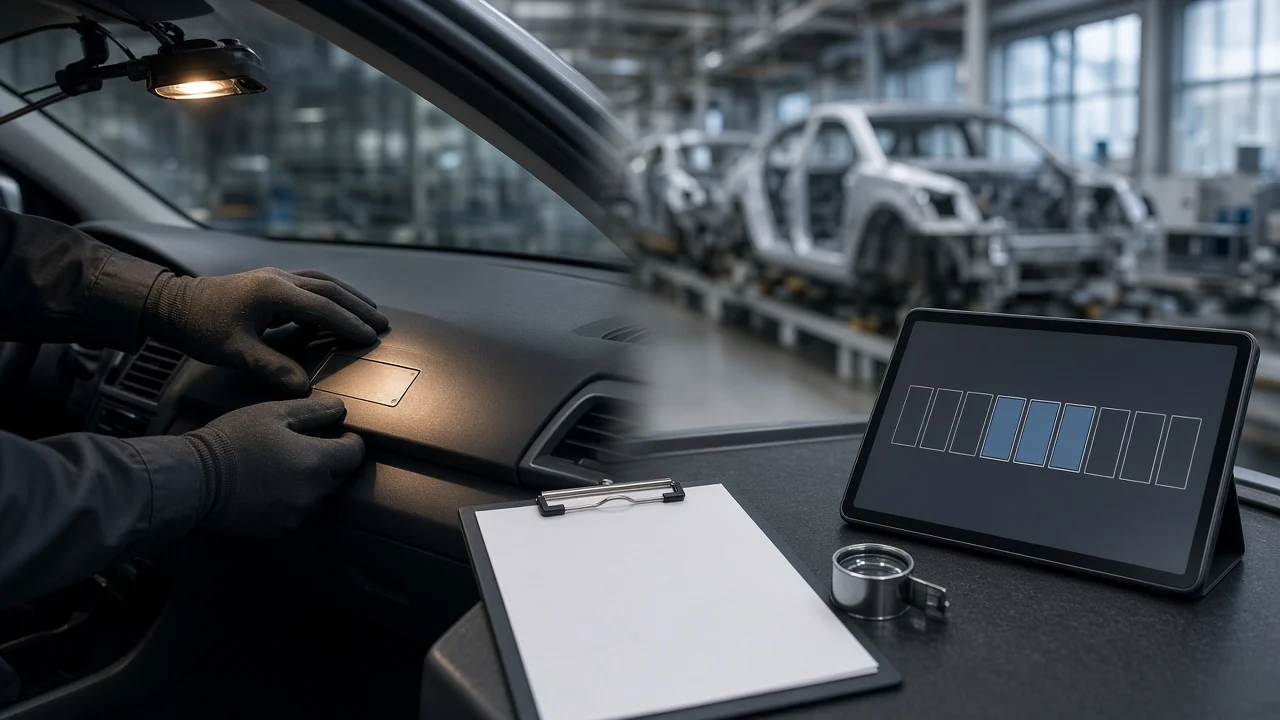
Lower driver-side corner of the dashboard, visible from outside through the windshield. The label on the driver-side door jamb or door edge, usually called the safety certification label. The vehicle title, registration and insurance documents. Other stamped or labeled locations on the body or frame, depending on the vehicle.
Compare the VIN in at least two places, such as the dashboard and the title. If they don't match, settle the difference before relying on any decoded information. This matters most when buying a used vehicle.
Avoiding common mix-ups
The letters I, O and Q are never used in a modern VIN, so they can't be confused with 1 and 0. If you read an O, it is a zero. The VIN is not the same as an engine number, transmission number or part number. Those are separate markings and do not identify the vehicle manufacturer in the same standardized way. Paint codes, trim codes and build-option labels may appear on the same door-jamb label as the VIN. They are not part of the VIN. On North American vehicles, the ninth character is a check digit. It confirms the VIN is valid but does not identify the manufacturer. A decoder that flags an invalid check digit usually means a character was mistyped.
Putting it together
Read the VIN from the dashboard or door-jamb label and confirm it against your documents. Then look up the first three characters in an official decoder. If the third character is a 9, include positions 12 to 14. The result tells you the manufacturer of record and the country of assembly. If the badge on the vehicle names a different brand, the vehicle may have been built through a contract, platform-sharing or joint-venture arrangement. In that case, the manufacturer's documentation for the specific model year is the best way to confirm it.