VIN 3 Lookup: How to Identify a Manufacturer From the First Three VIN Characters
The Short Answer
The first three characters of a Vehicle Identification Number (VIN) form the World Manufacturer Identifier, or WMI. Together they identify the manufacturer and the region the code was assigned to, and sometimes the vehicle type or division. To look up a manufacturer, read positions 1 through 3 of a standard 17-character VIN and match them against an official or reputable WMI reference, then confirm the result with a full VIN decoder.
Two conditions change this answer. First, the 17-character format has been standard for vehicles sold in the US since the 1981 model year, so older vehicles may use shorter, manufacturer-specific numbers that do not follow this structure. Second, when the third character is 9, the vehicle comes from a small-volume manufacturer, and the WMI alone does not identify it; the manufacturer is identified by additional characters later in the VIN (positions 12 to 14).
If your search refers to a VIN that begins with the number 3, that first character points to North America, and VINs starting with 3 are most commonly assigned to vehicles built in Mexico. The second and third characters then narrow it down to a specific manufacturer.
How the First Three Characters Are Structured
Position 1: the geographic region and, usually, the country. For example, 1, 4 and 5 are assigned to the United States, 2 to Canada and 3 largely to Mexico; J indicates Japan, K South Korea, S the United Kingdom, W Germany and Z Italy. Position 2: combined with the first character, this identifies the manufacturer or a specific manufacturing entity within that country. Position 3: identifies the vehicle type or division for many manufacturers (for example, passenger car versus truck), or signals a small-volume manufacturer when it is the digit 9.
Note that the first character strictly reflects the country associated with the manufacturer code rather than a guaranteed final assembly location. In practice it usually matches where the vehicle was built, but the plant itself is identified more precisely by position 11 of the VIN.
Step-by-Step: Identify the Manufacturer From a VIN
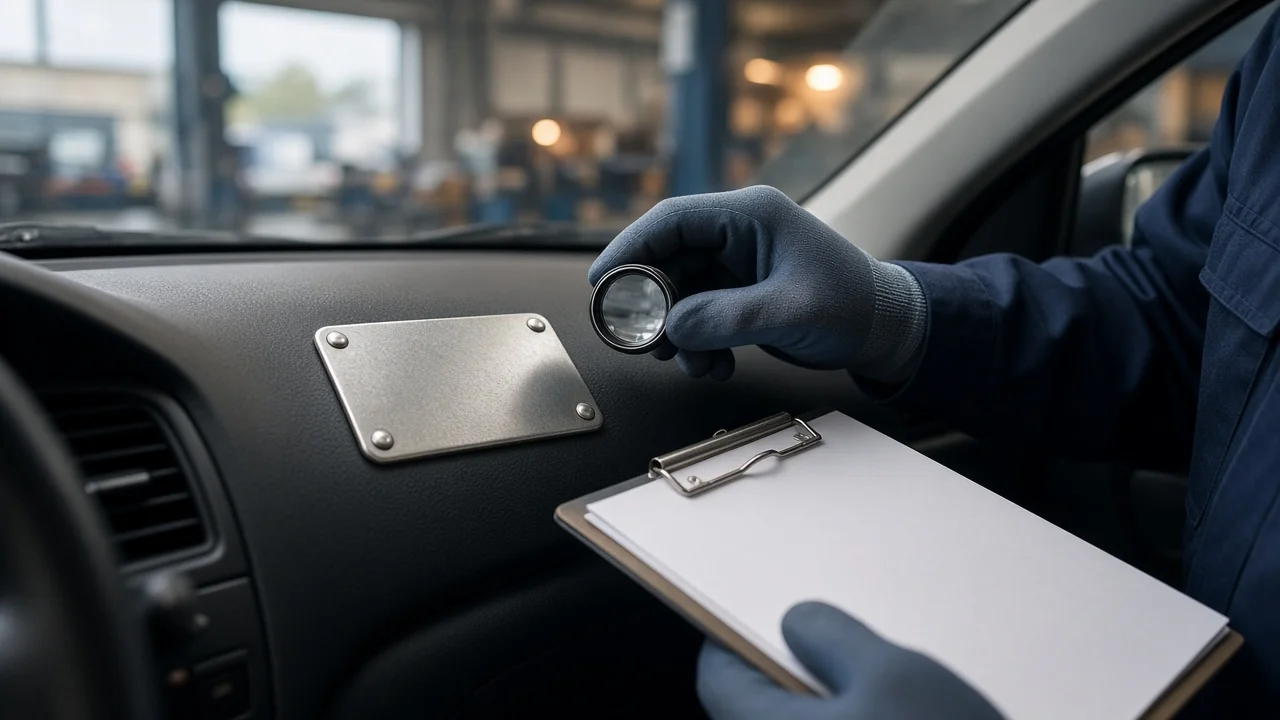
1) Find the VIN. Common locations include the lower corner of the windshield on the driver's side, the driver's door jamb label, the vehicle title, the registration and insurance documents. 2) Confirm it has 17 characters. If it is shorter, the vehicle likely predates the standardized format, and a manufacturer-specific reference is needed. 3) Check for invalid letters. Standard VINs do not use the letters I, O or Q, to avoid confusion with 1 and 0. If you see one, you have probably misread the number. 4) Read the first character to identify the region or country. 5) Read the first three characters together and match them against a WMI reference list. 6) If the third character is 9, look at positions 12 to 14 to identify the small-volume manufacturer. 7) Verify the result with a full VIN decoder, such as the free decoder operated by the National Highway Traffic Safety Administration (NHTSA), and compare it with the brand, model and documents for the vehicle.
Examples of Common Manufacturer Codes
No verified code list was supplied for this guide, so the table below shows only a small set of widely documented WMIs for illustration. Manufacturers often hold many WMIs for different plants, brands and vehicle types, and assignments can change over time, so treat this as an orientation aid rather than a complete or authoritative list.
WMI | Commonly associated manufacturer and origin; 1FA | Ford, United States (passenger cars); 1FT | Ford, United States (trucks); 1G1 | Chevrolet (General Motors), United States; 1HG | Honda, United States; 2T1 | Toyota, Canada; 3VW | Volkswagen, Mexico; 4T1 | Toyota, United States; 5YJ | Tesla, United States; JHM | Honda, Japan; KMH | Hyundai, South Korea; WBA | BMW, Germany; WVW | Volkswagen, Germany (passenger cars); YV1 | Volvo, Sweden; ZFF | Ferrari, Italy
What the WMI Does Not Tell You
The first three characters identify who made the vehicle, not exactly what it is. Model line, body style, engine and restraint details are encoded in positions 4 through 8, known as the Vehicle Descriptor Section. Platform and chassis codes used by enthusiasts and parts catalogs are generally not printed directly in the WMI, and how they relate to the VIN varies by manufacturer, so confirming a platform usually requires a full decode or manufacturer documentation for the specific model year and market.
Other positions also matter when verifying a vehicle. In North America, position 9 is a check digit calculated from the other characters, which helps catch typing errors and some altered VINs. Position 10 indicates the model year, position 11 the assembly plant, and the final characters form the production serial number.
How to Verify Your Result
A WMI match is a starting point, not proof of a vehicle's identity. Confirm that the VIN is identical on the dashboard plate, the door jamb label and the title. Run the complete VIN through an official decoder and check that the reported manufacturer, model year and body type match the vehicle in front of you. If the WMI does not match the badge on the car, the explanation may be legitimate, such as a model built by one company and sold under another brand, but it can also indicate a transcription error or tampering, and a professional inspection or vehicle history report is a sensible next step.
Gaps and Limitations
This guide is based on the general VIN structure used in the US and international standards. No vehicle-specific evidence, complete manufacturer code list or official registry data was supplied, so specific code assignments, small-volume production thresholds and platform-code mappings should be confirmed with NHTSA records or the manufacturer for the exact vehicle, model year and market.