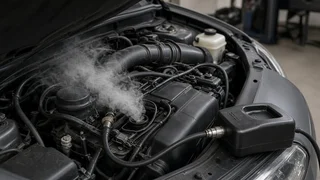
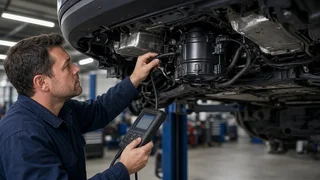
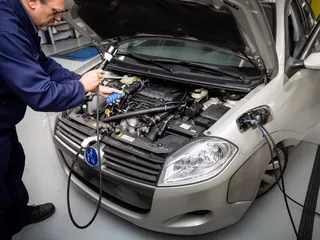
How to Smoke Test a Car EVAP System
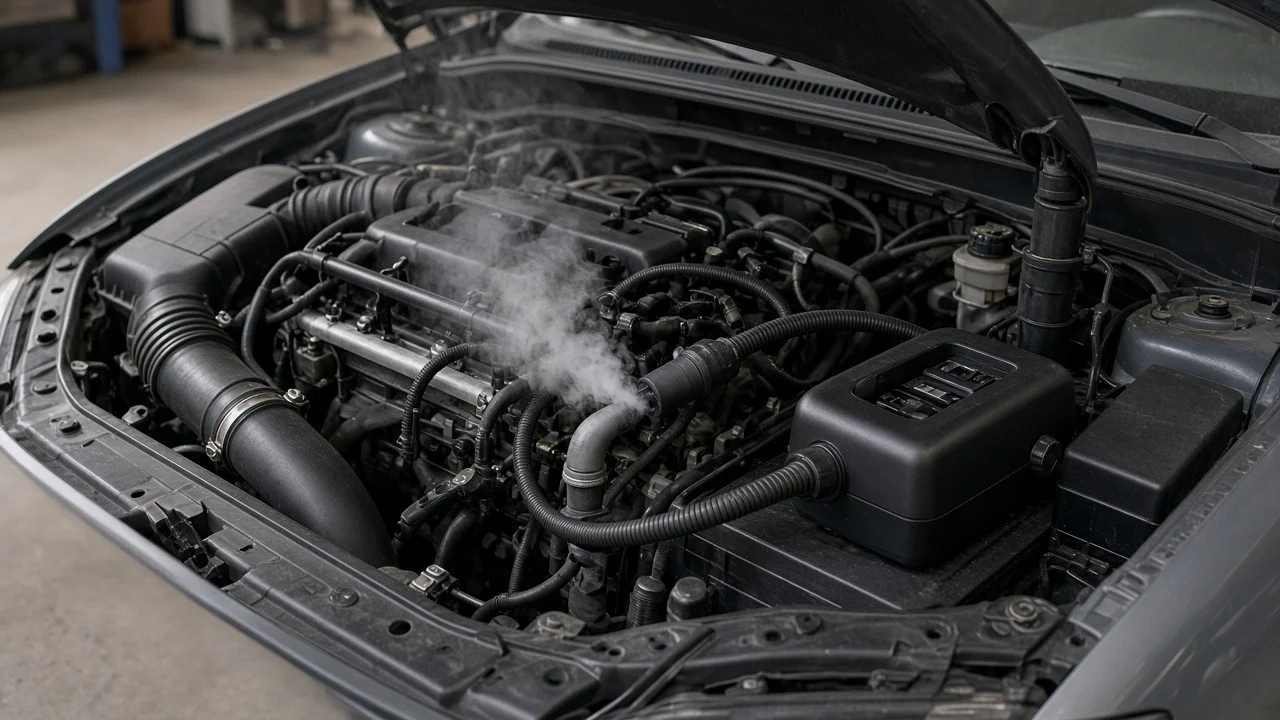
A smoke test is the most direct way to find a small evaporative emissions leak that does not leave a visible fuel stain or set a clear fault code. It pushes a visible vapor through the closed fuel vapor system so the leak becomes a white plume at a hose, seal, valve, or canister. This guide explains the general principles, the required equipment, and a safe sequence for diagnosing the system without replacing parts on guesswork.
Direct answer
A car EVAP system smoke test introduces a low-pressure diagnostic vapor into the sealed fuel vapor storage circuit to reveal where fuel vapor or outside air can escape or enter. The test works because the vapor follows the same path as gasoline fumes, but it is visible at the escape point. You pressurize the system gently, watch for smoke, and then interpret the location and size of the leak before opening or replacing anything.
The method is especially useful after a leak code appears, a fuel odor is present, or a loose gas cap check has not solved the problem. The charcoal canister, purge valve, vent valve, and connecting vapor lines are all part of the closed circuit. A smoke machine lets you test the complete path as an assembly, but the exact test port, vent valve state, and pressure limit must match the vehicle being tested.
How to proceed
Begin with the engine off and the vehicle parked in a ventilated area. Confirm the gas cap is tight, then identify the correct service port or a convenient vapor line connection for your smoke machine according to the vehicle’s service information. Close or command the canister vent valve as required so the test vapor stays in the circuit. Introduce the smoke at a low, regulated pressure and give the vapor time to travel along every vapor line before looking for the plume.
Check the gas cap, filler neck, purge valve body, vent valve, charcoal canister seams, and all quick-connect fittings. A small wisp may be a normal seep at a test connection, while a steady stream from a cracked hose or canister seam points to the actual leak. Some systems require extra steps, such as closing the vent valve or isolating the tank, so stop the test and confirm the procedure if the smoke escapes immediately from the service port or if the system will not hold low pressure.