EVAP system repair cost
A recurring check engine light tied to evaporative emissions can quickly turn a routine fill-up into a spending question. Drivers searching for a car EVAP system repair cost usually want a realistic range, not a sales pitch. The total depends on whether the fault is a loose fuel cap, a degraded vapor line, a sticking purge valve or vent valve, or a saturated charcoal canister. Because the system holds fuel vapor instead of releasing it, a small leak can trigger the same warning as an expensive component failure. Understanding what the light means and how a shop performs a leak test helps you compare estimates with confidence and avoid paying for parts the evidence does not support. The most useful first stop is often a nearby shop that can confirm the leak before quoting a repair.
The direct answer
EVAP system repair cost is driven by the failed component and access time. A loose or damaged fuel cap is typically the least expensive fix, while replacing a purge valve or vent valve usually costs more because the part must be sourced and fitted near the intake or canister area. Replacing a charcoal canister often sits at the higher end, especially if the canister has become heavy with fuel or debris and surrounding vapor lines also need attention. If you are searching for car evap system repair near me, request an estimate that separates diagnosis, parts and labor so the quote reflects an identified fault rather than a guess.
A shop may charge a diagnostic fee to run a smoke test or perform an electronic leak test before quoting. That is reasonable because the code only points to a system, not a single component. The best quote identifies whether the leak is at the filler neck, canister vent, purge circuit or a cracked vapor line, then lists the repair that addresses that finding. Since aftermarket and original-equipment parts can change the price considerably, ask which option is included. A nearby independent shop can often perform the same leak test and repair as a dealership, so comparing itemized quotes should focus on the confirmed cause rather than the lowest headline number.
Understanding a problem
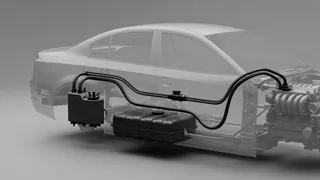
A large leak, small leak or purge flow code is a starting point, not proof that a specific part has failed. The EVAP system stores fuel vapor from the tank and later feeds it into the engine through a purge valve, while a vent valve controls fresh air entering the charcoal canister. A loose gas cap, cracked filler neck, split vapor line or weak canister seal can all produce a leak test failure. A mechanic should use a smoke machine, a bidirectional scan tool or an onboard leak diagnostic to confirm whether the leak is mechanical, electrical or related to a valve that is not sealing when commanded.
Component behavior matters when interpreting codes. A purge valve that is stuck open can create a drivability symptom at idle, while one that will not open may only set a code. A vent valve that is stuck closed can distort the leak test and cause false failures, especially if the system was tested with the tank nearly full or after overfilling. The vehicle should be tested only after the fault condition is active and the wiring and connector function are confirmed. Treat a code as a clue, not a parts invoice. Continue testing only as needed to identify the faulty area, and stop further teardown when the confirmed leak matches the reported code.