How to Reset the Hybrid Battery Cooling Warning
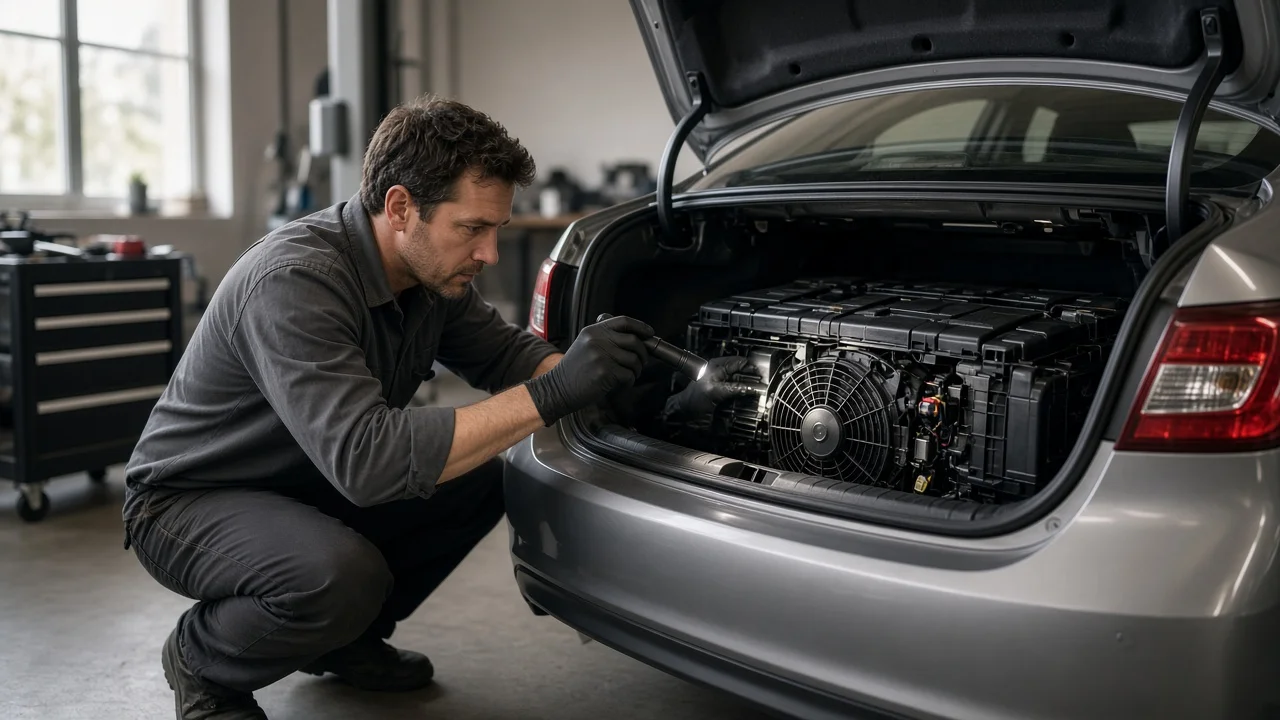
A low hybrid battery cooling warning can appear suddenly and interrupt an otherwise normal drive. The message often indicates reduced airflow across the high-voltage pack rather than an immediate internal failure. Owners searching for a reset are usually looking for two things: a way to clear an active message after basic cleaning, and confirmation that the warning will not return because the underlying temperature condition has improved. Understanding the cooling loop, the filter, and the reset conditions helps separate a temporary alert from a recurring thermal-protection event.
Direct answer
Clearing this warning is not usually a standalone button press. The vehicle uses the message as a thermal-management response, so the proper reset sequence involves cleaning or clearing the intake path and then allowing the control module to see improved temperature data during a new drive cycle. On many Toyota hybrid models, the alert may self-clear after the obstruction is removed and the system completes a readiness check.
A complete reset therefore has two parts: restore airflow and verify the message stays off. If the warning disappears immediately after cleaning but returns during warm weather or sustained uphill driving, the cause is likely still present. Treat the cleared message as an acknowledgment, not proof that the cooling system is healthy.
How to proceed
Start with the most accessible point: the cabin intake vent for the high-voltage battery. Locate the grille, usually near the rear seat or lower cabin area, and inspect it for pet hair, clothing, or debris. Vacuum the grille surface gently and remove any loose material without pushing it inward. For some vehicles, a washable filter sits behind the grille and can be removed for cleaning according to the owner's manual.
After cleaning, turn the vehicle to the ready state and allow the hybrid system to run through a normal cool-down and warm-up cycle. Listen for the battery blower fan. If the fan runs and the warning self-clears, confirm the result by driving normally and watching for repeat alerts. If the fan is silent or the warning remains, the problem may involve the fan, temperature sensor, or duct sealing rather than a simple reset.
Understanding a problem
Low cooling performance generally means the battery temperature is rising faster than the airflow can remove heat. That does not automatically mean the battery has failed. A blocked filter is the most common cause and the most practical first check. Because the battery is sealed and air-cooled, even modest restriction can raise the measured temperature enough to trigger a protective power limit or warning.
Other symptoms can help narrow the cause. A loud or unusual fan noise may point to bearing wear or debris contacting the blower. No fan noise at all could indicate an electrical problem, a failed fan, or a control command issue. Once the intake is clean and the fan can be heard, temperature sensors and the control module are more likely to complete a successful self-check and keep the message off.