How to Prepare a Parked Car for Freezing Rain
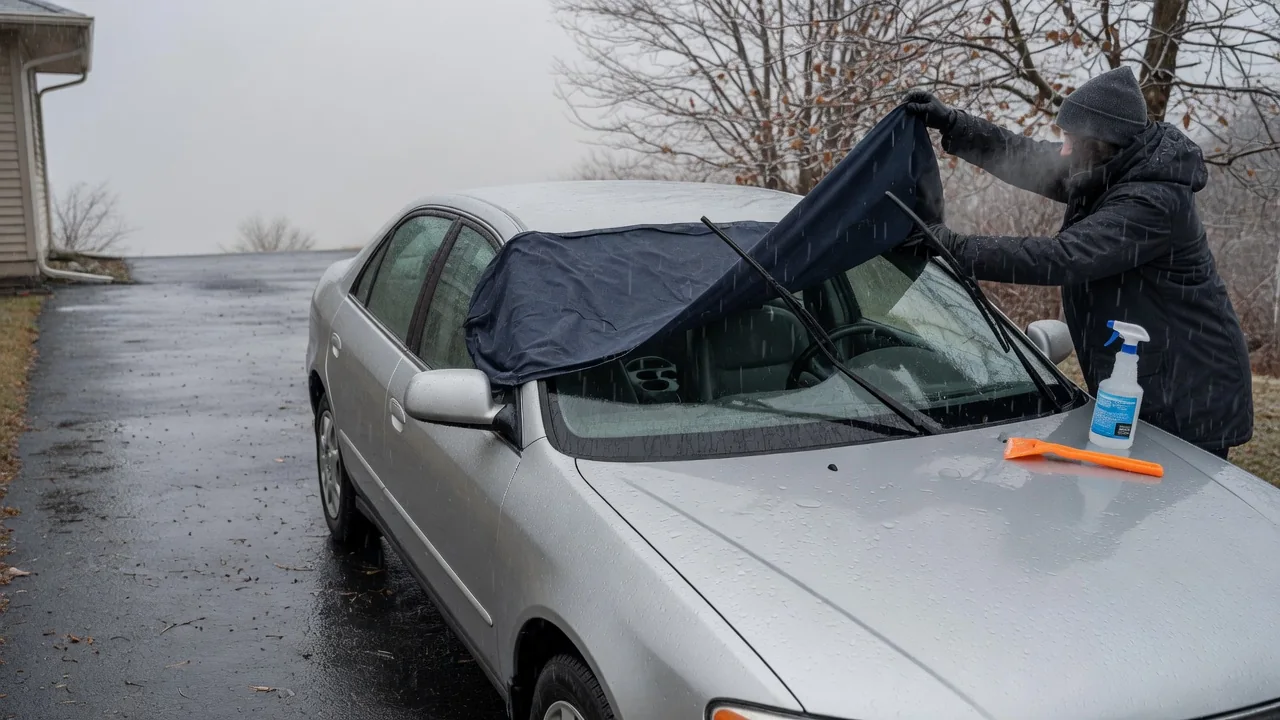
Freezing rain coats a vehicle in a hard, clear glaze that bonds to glass, seals and handles far more stubbornly than snow. Knowing how to prepare a parked car for freezing rain comes down to two priorities: being able to get in afterward and being able to see out. A few calm steps before the storm make the morning much easier.
Choose parking spot
Where the car sits during the storm shapes how much ice it collects and how safely you can reach it afterward. A garage or carport is the obvious best option because the glaze never reaches the glass or door seals. If covered parking is unavailable, a spot beside a building on the sheltered side can reduce wind-driven accumulation on one flank of the vehicle. Level ground matters too, since an iced slope makes walking to the car hazardous and can complicate pulling away once the surface is slick.
Look up before committing to a space. Ice-laden tree limbs and overhead lines can sag or break under the added weight, and falling branches damage roofs, hoods and glass. Low areas where runoff pools can freeze around the tires, while spots beneath roof edges may receive dripping water that refreezes into thick sheets. Leaving room around the driver's door and behind the vehicle gives you space to scrape and stand safely. Local street parking rules during winter weather vary, so check what applies where you live.
Protect wipers appropriately
Wiper blades are thin rubber edges on light arms, and they suffer when frozen to the windshield. Switching the wipers off before shutting down the car is the first step, particularly on vehicles with automatic rain-sensing operation, because a motor that tries to sweep blades bonded to the glass can strain the linkage or tear the rubber. Many drivers lift the arms away from the windshield so the blades do not freeze in place, which makes clearing the glass simpler the next day.
Lifting the arms is not suitable everywhere. Some vehicles park the wipers below the hood line and need a service position selected through the controls before the arms can be raised, so the owner's manual is the right reference. In strong wind, a raised arm can snap back against the glass, and heavy ice adds load to the arm spring. A windshield cover secured in the door openings is a gentler alternative that shields both glass and blades. Avoid wrapping blades in improvised materials that can freeze on or trap moisture.
Allow thaw time
The single most useful preparation is time. A glaze of ice releases far more easily once the cabin heat and defroster have warmed the glass from inside, so plan a later departure or an earlier start to your routine. Running the defroster, rear window heater and heated mirrors, where fitted, softens the bond so a plastic scraper can lift ice in sheets rather than chips. Always make sure the tailpipe is clear and never warm a vehicle inside an enclosed garage, because exhaust gases accumulate quickly.
Patience protects the car as well as you. Pouring hot water on frozen glass risks cracking it through sudden temperature change, and the water can refreeze into a fresh layer. Hammering or prying at ice can chip paint, scratch glass and damage trim. Doors frozen at the seals respond better to steady pressure along the edge of the door than to hard pulling on the handle, which can break. Electric vehicles and some newer models allow cabin preconditioning on a schedule, though the feature and its controls differ by manufacturer.
Everyday Use and Observations
Small habits before the storm pay off in ordinary use. Topping up washer fluid with a winter-rated blend helps keep the nozzles and lines working when you need to clear residue. Keeping the scraper, gloves and any de-icer spray indoors rather than locked inside the frozen car means they are reachable when the doors will not open. Folding the mirrors, if the design allows, can shield the glass faces, although power-folding mechanisms may freeze in position and should not be forced open afterward.
Afterward, pay attention to what the car tells you. Frameless windows that drop slightly when the door opens may stick, so let the cabin warm before working the door. Fuel doors, charge port flaps, flush door handles and trunk releases can all freeze shut and deserve gentle handling. Ice over cameras, parking sensors and radar panels commonly triggers driver-assistance warnings that clear once the surfaces are clean. Check that headlights, taillights and the roof are free of ice before driving, since sheets leaving the roof endanger traffic behind you.
Limits and Next Steps
Preparation reduces the inconvenience but does not make travel safe. A fully cleared car still meets roads coated in the same glaze, where even good winter tires find very little grip. If the storm is ongoing, the most sensible choice is often to leave the vehicle parked until road crews have treated the surfaces. No cover, spray or parking trick prevents every problem, and thick accumulation can still take considerable time to remove even when every precaution was taken the evening before.
Some outcomes call for professional attention rather than persistence. A lock or latch that will not release, a window that stops moving, wipers that no longer sweep properly or a warning light that stays on after the sensors are clean should be inspected rather than forced. Cracked glass or damaged seals found after the thaw deserve prompt repair to keep water out. Because door hardware, wiper service modes and preconditioning features vary widely, your owner's manual remains the best guide for the details of your particular vehicle.