How to Practice Parking in an Unfamiliar Car
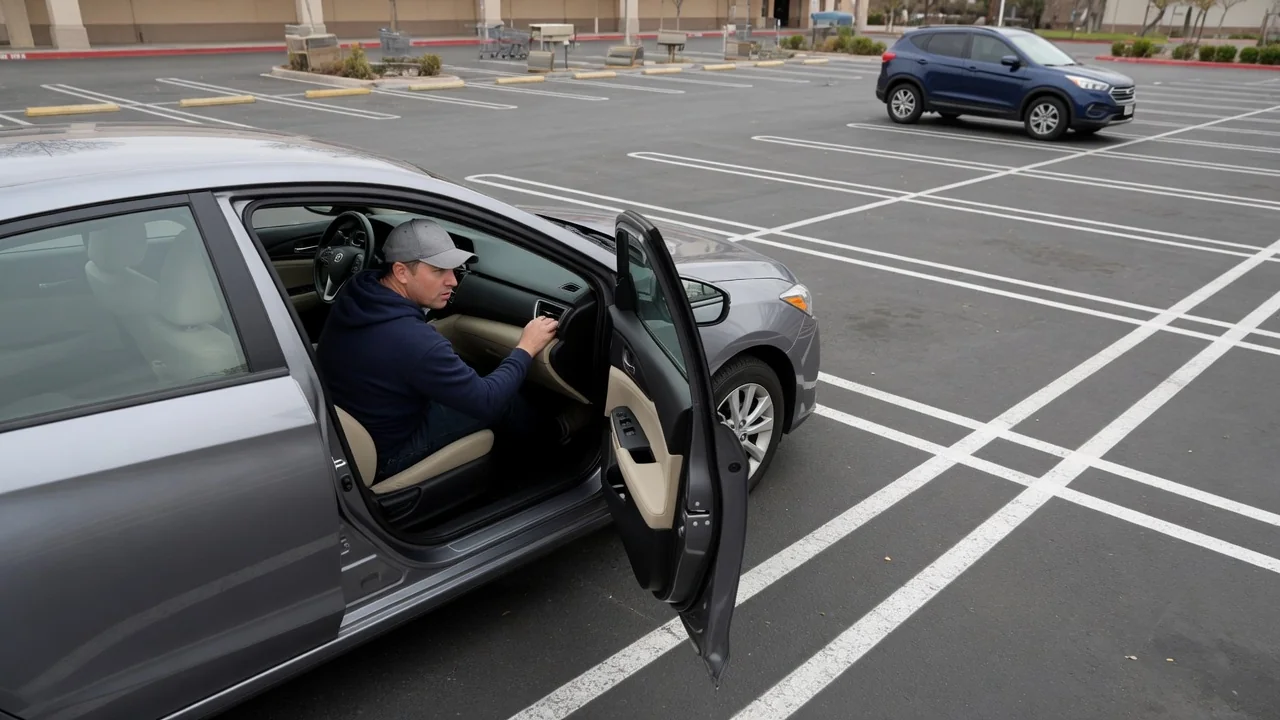
A rental, a borrowed pickup, or a newly purchased crossover can feel larger and stranger than it really is the first time you aim it at a parking space. Learning how to practice parking in an unfamiliar car takes about twenty unhurried minutes in an empty lot, and the routine below builds confidence before you face a crowded garage or a tight curbside spot.
Find vehicle edges
Start with the car stationary in a quiet corner of an empty lot. From the driver's seat, note where the hood drops out of view, since a sloping nose on a modern sedan hides far more bodywork than the upright hood of an older truck. Then step out and walk around the vehicle, looking at how far the bumpers extend beyond the wheels and how wide the mirrors sit. That overhang is what touches a wall or curb first, long before the tires arrive.
Next, connect what you see from the seat with what is true on the ground. Pull forward toward a painted line, stop when you believe the front bumper is over it, then set the parking brake, get out and check. Repeat with the rear bumper and with the passenger-side wheels against a side line. Most drivers stop short at first, and the gap shrinks with each attempt. A soft marker such as an empty cardboard box makes a forgiving target that will not scratch paint.
Use mirrors and cameras
Mirror adjustment comes before any maneuver. Set the seat first, because moving it later changes every sight line. Angle the side mirrors so a sliver of the car's flank shows at the inner edge, and consider tilting the passenger mirror down slightly so you can see the painted line or curb beside the rear wheel. Some vehicles dip that mirror automatically in reverse, while others require a manual adjustment, so watch what happens when you select reverse.
Backup cameras differ widely between vehicles. Lens position, field of view and the colored guideline overlay vary, and some guidelines bend with the steering wheel while others stay fixed. Reverse toward a line and compare where the screen suggests the bumper is with where it actually sits. Wide-angle lenses make objects look farther away than they are, and rain or road grime can blur the image. Parking sensors, if fitted, beep at distances worth testing against a soft object. Treat every aid as a supplement to mirrors and a look over the shoulder.
Practice slowly
Speed is the variable you control most easily. In an automatic, releasing the brake usually lets the car creep at idle, which is plenty for parking; hybrids and electric vehicles may creep differently or not at all depending on their settings, and a manual transmission calls for gentle clutch control. Feel how the brake pedal bites, since an unfamiliar pedal can grab sooner than expected. Moving at walking pace gives you time to stop, reassess and correct before a small error becomes contact.
Begin with the simplest maneuver, pulling straight forward into a space with empty bays on both sides. Then try reversing into the same space, which many drivers find more precise because the steered front wheels swing the nose while the car pivots around its rear axle. Notice how many turns the steering wheel takes from lock to lock and how tight the turning circle feels; a long-wheelbase truck needs a wider swing than a compact hatchback. Save parallel parking for last, using two markers to stand in for other cars.
Everyday Use and Observations
After a few repetitions, patterns emerge that carry over into daily driving. You may find a reference point, such as a line appearing under the side mirror or a curb disappearing beneath the base of the windshield, that reliably signals when to turn or stop. These cues are personal to your seating position and the particular vehicle, so they need to be rediscovered in every car. Checking your final position after each attempt, centered or crooked, close or far, turns guesswork into calibrated judgment.
Pay attention to details that only show up in real use. Thick roof pillars or a high rear deck can hide a shopping cart or a low bollard, and tall vehicles conceal objects close to the bumpers. Long doors on a coupe need more room to open than the short doors of a four-door sedan, which affects how you center the car in a bay. Low front air dams can scrape on concrete wheel stops, so stopping a little short is often wiser than nosing in until the tires touch.
Limits and Next Steps
An empty lot cannot reproduce everything. Real parking adds pedestrians, impatient traffic, sloped surfaces, poor lighting and neighboring cars parked over their lines. Darkness and rain also change how mirrors and camera images look. Once the basics feel comfortable, move to a lightly used lot at a quiet hour and choose spaces with generous room, then gradually accept tighter spots. If a space looks doubtful, passing it and walking a little farther costs nothing, and asking a passenger to step out and guide you is entirely reasonable.
Features such as automated parking assistance, surround-view cameras, rear cross-traffic alerts and automatic emergency braking in reverse operate differently from one manufacturer to another, and some can be switched off or behave unexpectedly near low obstacles. The owner's manual explains what the specific vehicle offers and what its systems cannot detect. With a rental or borrowed car, it also helps to note existing scuffs before driving away. A short refresher session is worthwhile whenever you change vehicles again, because the reference points you learned will not transfer exactly.