How to Judge Front Bumper Clearance While Parking
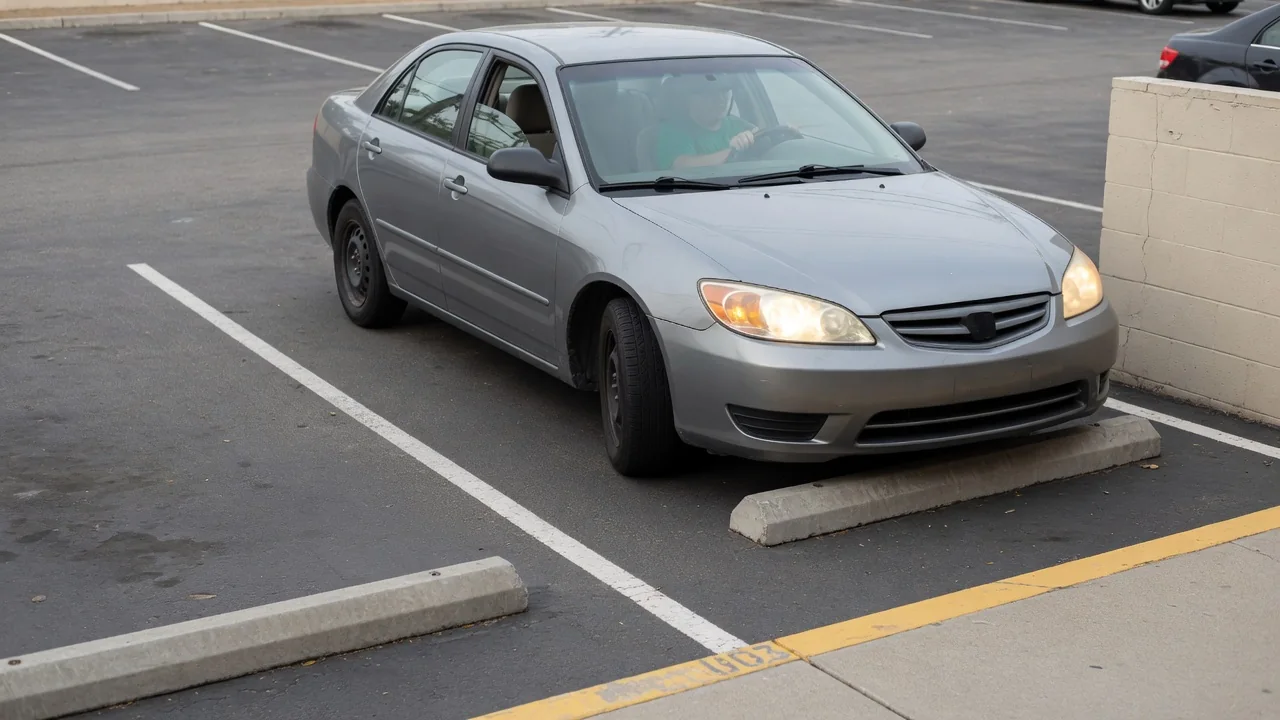
Learning how to judge front bumper clearance while parking is mostly a matter of knowing what you cannot see. The nose of the car extends beyond the hood line, hidden from the driver's seat, so the skill comes from pairing reliable visual references with a slow, controlled approach that leaves time to stop, check, and correct before contact.
Know overhang
Front overhang is the length of bodywork that sits ahead of the front wheels, and it is the part of the car a driver misjudges most often. From the seat, the visible edge of the hood is rarely the true front of the vehicle. The bumper cover, lower air dam, and any splitter or tow hook cover extend farther forward and lower down, so the car is always a little longer than it appears through the windshield.
The amount varies widely by design. A sloping hood on a low sedan can hide the entire nose, while a tall pickup with an upright grille shows more of its hood but conceals a large area of ground directly ahead. A simple way to learn your own vehicle is to stand beside it and compare where the front tire sits against the leading edge of the bumper, then note how low the lowest plastic trim hangs relative to a typical curb.
Use sightlines
A sightline reference links something you can see from the driver's seat to the position of the bumper you cannot. A common method is to watch where a parking line, curb, or wall base disappears beneath the hood or the bottom of the windshield. When that object drops out of view at a consistent point, the bumper is a predictable distance from it, and that relationship stays the same every time you sit in the same position.
Other drivers prefer a side reference, such as noticing when a curb or painted line appears to pass under the door mirror or line up with the lower corner of the side window. Either approach works only if seat height, seatback angle, and posture stay consistent, because moving the seat changes the angle of your eyes over the hood. Taller and shorter drivers in the same car will find different reference points, so each person needs to establish their own.
Stop and inspect
The most dependable way to calibrate a reference is to stop early, set the parking brake, shift to park, and step out to look. Pull toward a painted line or a soft marker such as a cone in an empty lot, stop where you believe the bumper is close, and then check the actual gap. Most people find they have left far more room than expected, which shows how much the hidden nose distorts distance.
Repeat the exercise a few times, creeping forward in small amounts and checking again, until the view from the seat matches a known gap on the ground. Pay attention to what the reference object looked like at that moment, including where it met the hood line or dashboard. Checking against a curb or parking block also reveals whether the low front trim would clear it or strike it, which matters more than the bumper face on many low cars.
Everyday Use and Observations
In daily parking, speed control does most of the work. Easing off the brake and letting the car creep at idle, rather than pressing the accelerator, gives you time to watch your reference and stop within a very short distance. In a garage, a wall shadow, a reflection of the headlights on the surface ahead, or the way the light beams shrink and brighten as you close in can all confirm what your sightline is telling you.
Conditions change the picture. A downhill approach hides the ground sooner, an uphill ramp can bring the lower bumper into contact before the wheels reach the stop, and a heavy load or passengers can alter the car's stance. Concrete wheel stops and tall curbs deserve particular caution because they sit below the hood line the whole time. When a stop is taller than your front trim, stopping short of it is safer than relying on the tires to touch first.
Limits and Next Steps
Visual references are estimates, not measurements. Darkness, rain, glare, a dirty windshield, or an unfamiliar rental car can all make a trusted sightline unreliable, and low objects such as bollards, posts, and small children can sit entirely within the blind area ahead of the hood. Parking sensors and front cameras help where fitted, but their coverage, alert distances, and blind zones differ by vehicle, so the owner's manual is the right place to confirm what a particular system can and cannot detect.
When in doubt, leaving extra space costs nothing, and getting out to look is always an acceptable choice. Recalibrate your references after changing seat position, switching vehicles, or fitting accessories that alter the front end, such as a license plate bracket or a front guard. If the bumper or lower trim has already scraped something, a look underneath for loose panels or hanging undertrays is sensible, and a qualified shop can assess anything that appears cracked, displaced, or dragging.