How to install a race car fire suppression system
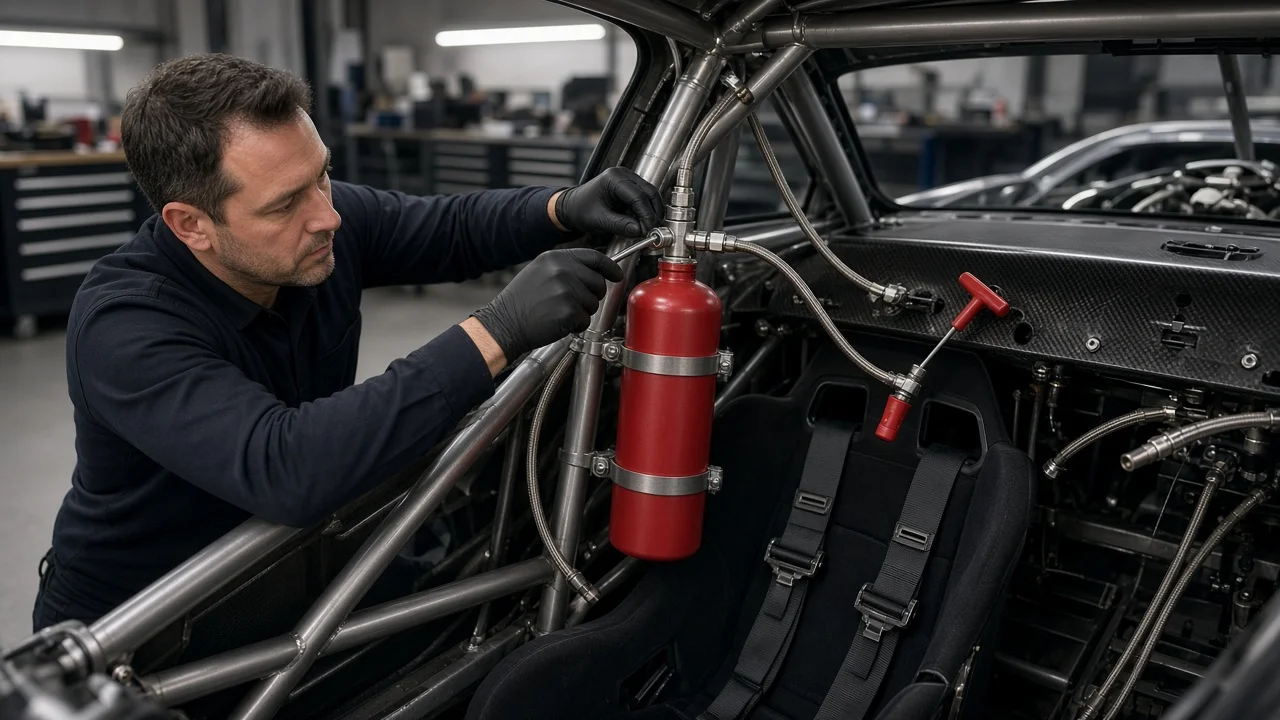
Installing a race car fire suppression system means more than bolting a bottle into the cockpit. It requires planning a discharge route that reaches the driver and the most likely ignition sources while allowing fast electrical isolation and safe evacuation. A proper race car fire suppression system installation treats the extinguishing agent as part of the cage, seat, and harness safety package. Before cutting lines or mounting brackets, understand how the bottle, nozzles, cable pulls, and cylinder pressure work together so the system can perform when visibility drops and every second counts.
Direct answer
Start by selecting the correct fire extinguisher rating and agent for the vehicle. The bottle must be mounted rigidly, usually with a metal bracket that prevents movement during impact, and placed where the driver or a corner worker can reach the activation handle. Position the cylinder so the pressure gauge is visible during a pre-race check. Supplied hardware should be used, but the mounting surface itself must be strong enough to retain the bottle in a crash.
Route the discharge line from the bottle toward the engine bay, fuel cell area, and driver compartment. Distribute nozzles so the agent reaches combustible material and likely ignition sources without short-circuiting the protection. Keep lines away from hot exhaust surfaces, steering shafts, and sharp edges. If the system uses a cable pull, avoid tight bends that could make the handle hard to operate while strapped in. The goal is a short, direct discharge path that does not create new hazards.
How to proceed
Before final attachment, lay the components in place and confirm the pull handle is easy to reach with harnesses tight. Drill only after checking both sides of the panel for wiring, fluid lines, or chassis structure. Use backing plates where the mounting surface is thin. When the bottle and nozzles are secure, connect the actuation cable or electrical trigger according to the kit instructions, then verify that the safety pin or lockout is installed until the car is on track.
After the system is mounted, perform a static check without discharging it. Confirm all clamps are tight, the bottle is secure, and the nozzles point where intended. Check that the pull handle travels freely and that no line is pinched. A final walk-around should look for contact with moving parts or heat sources. The completed race car fire suppression system installation should allow the driver to isolate the electrical system, release the harness, and leave the vehicle quickly after calling emergency services.