Best race car fire suppression system

Selecting fire protection for a race car means planning for a fuel-fed fire in a confined cockpit, often with a driver who must release harnesses and exit quickly. A dedicated on-board system reaches the ignition source and combustible materials faster than a handheld extinguisher can. This guide frames the relevant entries around suppression agent behavior, discharge layout, and activation demands rather than marketing claims, so the choice supports safe evacuation before emergency services arrive.
Relevant entries
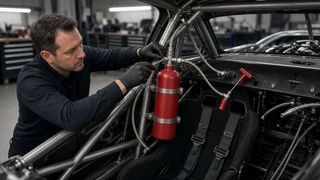
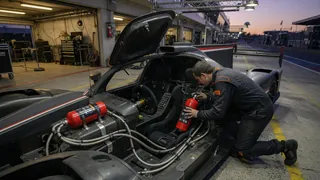
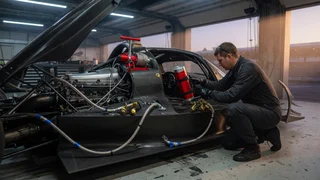
A relevant selection begins with clean-agent or foam systems designed for enclosed compartments and engine bays. These entries matter because an ignition source near fuel lines, headers, or wiring can spread before a driver reacts, and a fixed nozzle layout applies suppressant while the occupant is still focused on stopping and exiting. The inclusion boundary favors dedicated racing hardware over street-vehicle extinguishers, which usually lack the discharge volume, bracket strength, and pull-cable routing required in competition use.
The second relevant entry is a multi-nozzle suppression kit with a mechanical or electrical activation path. The ordering principle is based on coverage: cockpit nozzles near the driver, engine-bay nozzles aimed at potential combustible material, and a protected bottle location that remains serviceable after impact. Without an electrical isolation plan, a thermal event can disable a powered release, so a dual-action cable or robust manual handle improves reliability. This practical reasoning explains why each entry belongs in the comparison rather than treating the list as an exhaustive catalog.