How to identify your car's engine model
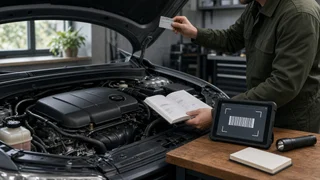
The quickest reliable way to identify your car's engine is to start with the Vehicle Identification Number (VIN) and confirm it with the emissions label under the hood. The VIN is the vehicle's unique 17-character serial number. Many manufacturers encode the factory-installed engine in it, and a VIN decoder or a dealer parts department can translate that into an engine name or code. The emissions label states the engine displacement and other details you can use to check the result. One condition changes this answer. The VIN describes the engine the car was built with. If the engine has been replaced or swapped, the VIN can be wrong about what is actually installed, so the code stamped or tagged on the engine itself becomes the deciding evidence.
What "engine model" can mean
Different sources describe the same engine in different ways, and part listings may ask for any of these. It helps to know which one you need before you start.
Term | What it describes | Where it usually appears; Displacement | Total cylinder volume, usually shown in liters (for example, a figure followed by L) | Emissions label, owner's manual, sometimes engine cover or badging; Cylinder layout | Number and arrangement of cylinders, such as inline-four or V6 | Owner's manual, brochures, sometimes engine cover; Manufacturer engine code | The maker's internal designation for a specific engine design | Engine block stamp or tag, build or option labels, dealer VIN lookup; VIN engine character | A character within the VIN that some manufacturers use to indicate the engine | The VIN itself, decoded with manufacturer data; Engine family number | An emissions certification grouping, not a unique engine model | Under-hood emissions label
For ordering parts, the manufacturer engine code or the VIN-based lookup is usually more precise than displacement alone. Two different engines can share the same displacement.
Where to find engine information on the car and in your paperwork
VIN on the dashboard: On US-market vehicles, the VIN is typically on a plate at the base of the windshield on the driver's side, readable from outside the car. VIN on the door jamb: A label on the driver's door frame or door edge usually repeats the VIN and lists other build information. VIN in your documents: The title, registration and insurance card normally show the VIN, which is useful if the plates are hard to read. Emissions label: Usually found under the hood on the underside of the hood, on a radiator support or near the engine. It typically lists engine displacement and the engine family identifier. Owner's manual: The specifications section usually lists the available engines for that model, which helps you narrow the options. Build or option labels: Some manufacturers put a parts identification or option code sticker in the glove box, trunk or spare-tire area. On many GM vehicles, for example, this label lists three-character option codes, and the engine code is among them. The engine itself: Many engines carry a stamped code or a tag on the block or cylinder head. The exact location varies widely by manufacturer and engine and is often partly hidden by other components.
Reading the VIN
Vehicles sold in the US since the 1981 model year use a standardized 17-character VIN. The first three characters identify the manufacturer. Characters four through eight describe vehicle attributes, and many manufacturers include the engine type in that section. In practice, the eighth character is commonly the engine code for many brands sold in the US, but this is a manufacturer convention, not a universal rule. The tenth character indicates the model year, and the ninth is a check digit used to validate the VIN.
Because the meaning of each character depends on the manufacturer and model year, do not guess the engine from a single character. Use a decoder or manufacturer data. The National Highway Traffic Safety Administration offers a free public VIN decoder, and a dealer parts department can look up the factory engine from the VIN. Vehicles built before the 1981 standard use manufacturer-specific serial formats that may not decode this way.
Look-alikes that can mislead you
Engine cover badges: A displacement figure or cylinder count on a plastic cover may be shared by several engine versions, and covers can be swapped. Exterior trim badges: Trunk or fender badges may reflect trim level or marketing names rather than a specific engine. Engine family number: The code on the emissions label groups engines for emissions certification. It is not the same as the manufacturer's engine code. Transmission codes: Build labels and the VIN may also encode the transmission. Make sure the code you are reading refers to the engine. Serial numbers on the block: A stamped number may be a unique serial number for that individual engine rather than the engine model code.
Step-by-step: identify and confirm your engine
You need the vehicle's paperwork or access to the car, a flashlight, and something to record what you find, such as a phone camera. A small inspection mirror helps if you plan to look for codes on the engine itself.
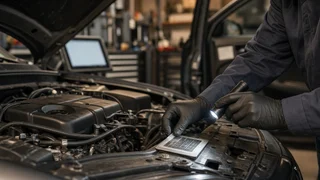
1) Record the VIN. Copy all 17 characters from the dashboard plate or door jamb label and compare it with your registration or title. Letters I, O and Q are not used in standard VINs, which helps avoid confusing them with 1 and 0. 2) Decode the VIN. Enter it into a reputable VIN decoder or give it to a dealer parts department. Note the engine description, displacement and any engine code returned. 3) Check the owner's manual. Confirm that the decoded engine is one of the engines listed for your model and model year. 4) Prepare to open the hood safely. Park on level ground, set the parking brake, turn the engine off and remove the key or switch off the ignition. Let the engine cool before touching anything, because exhaust parts and the engine can stay hot after driving. Keep hands, hair and loose clothing away from the cooling fan and belts, since electric fans on some vehicles can start even with the engine off. 5) Read the emissions label. Find the label under the hood and confirm that its displacement matches the decoded result. 6) Look for build or option labels if your vehicle has them, and note any engine code listed. 7) Optionally, inspect the engine for a stamped code or tag. Use the flashlight and mirror rather than reaching into tight areas. Stop if finding the code would require removing components, covers or shields that you are not familiar with, and ask a qualified technician instead. 8) Compare your sources. Your result is confirmed when the VIN decode, the emissions label and, if available, the build label or engine stamp all point to the same engine.
If your sources disagree
A mismatch between the VIN decode and the emissions label or engine stamp can mean the engine was replaced, the decoder used incomplete data, or a label was misread. In that case, treat the markings on the installed engine as the most direct evidence of what is in the car, and have a dealer or qualified technician confirm the engine before you order parts or fluids. Service records from previous owners may also show whether an engine replacement was done.
Limits of this guide
This guide does not cover a specific make, model or model year, so it cannot state the exact location of an engine code stamp or the meaning of a particular VIN character for your vehicle. Those details vary by manufacturer and can change between model years. For model-specific locations and codes, use your owner's manual, the manufacturer's service information or a dealer parts department, using your VIN.