How to Find Your Vehicle’s Engine Code
The Short Answer
An engine code is a short string of letters and numbers that a manufacturer uses to identify a specific engine design. It can distinguish engines that share a displacement but differ in internals, emissions equipment or output. The easiest place to start is the Vehicle Identification Number (VIN), the 17-character code assigned to your vehicle. Many manufacturers encode the engine type in one VIN position, often the eighth character on US-market vehicles. The code can also appear on a label under the hood, on the engine itself, or in your owner’s documents. A dealer parts department can look it up from your VIN.
One condition changes the answer. The VIN describes the engine the vehicle was built with. If the engine has been replaced, the VIN may no longer match what is under the hood, and markings on the engine itself become the more reliable source.
Where the Engine Code Usually Appears
Locations vary by manufacturer, model year and engine. The sources below are the common places to check. This guide does not cover any specific make or model, so check exact positions against the documentation for your vehicle.
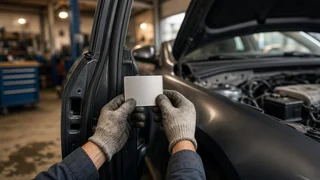
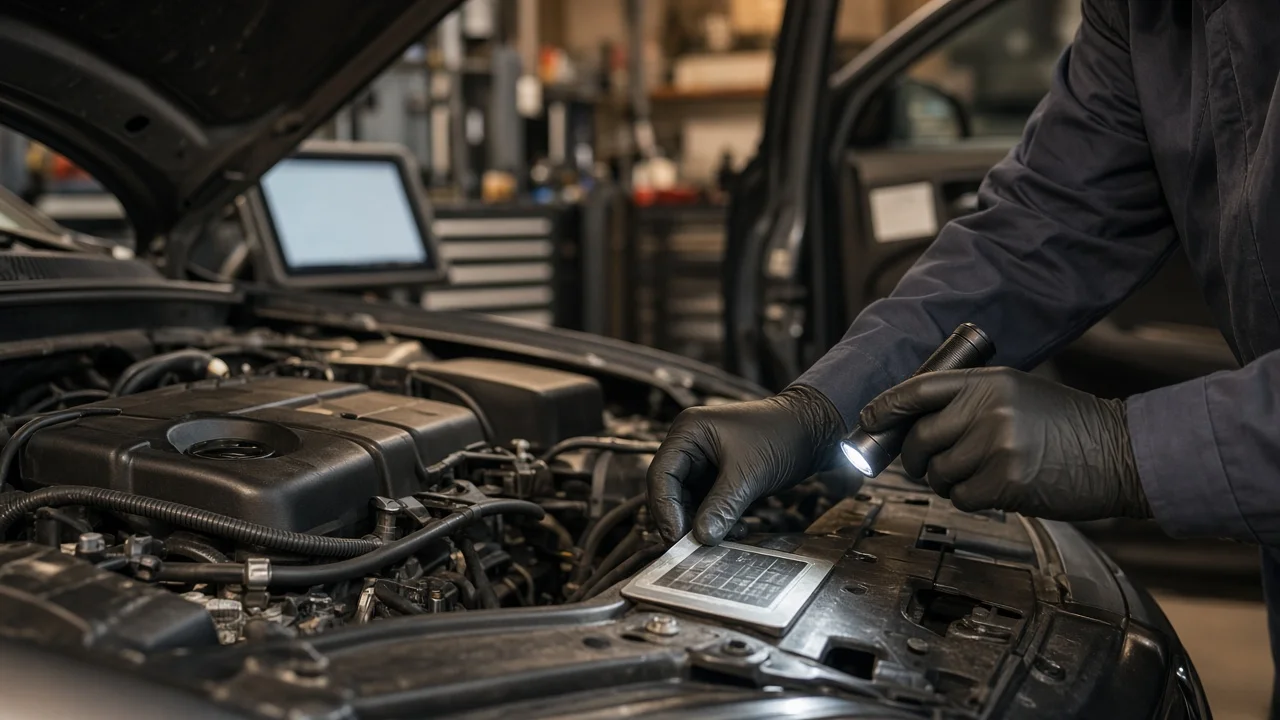
The VIN: visible through the windshield at the lower driver-side corner of the dashboard, and printed on a label in the driver-side door jamb. It also appears on the title, registration and insurance card. The emissions label: usually called the Vehicle Emission Control Information label. It is often found on the underside of the hood, on the radiator support or near the engine, and typically lists displacement and an engine family designation. The engine itself: a code may be stamped or cast into the engine block, or printed on a sticker on the valve cover or timing cover. Owner and service documents: the owner’s manual, window sticker, build sheet or past repair invoices may name the engine. The dealer: a parts or service department can usually retrieve the original engine from the VIN.
Codes That Look Similar but Mean Something Else
Several other markings on and around the engine can be mistaken for the engine code. Knowing the difference avoids ordering the wrong parts.
Marking | What it identifies | Why it can be confused; Engine code | The engine design or variant | This is the code you are looking for; Engine family (emissions label) | An emissions certification group | Often longer, and may cover more than one engine variant; Engine serial number | One individual engine | Unique to that unit rather than to the design; Casting or part numbers | A single component, such as a block or head | Cast into metal near where engine codes are also stamped; Transmission code | The transmission, not the engine | Appears on similar labels and in the same documents
If you are unsure which marking is which, compare what you find with the engine description in your owner’s manual. You can also give both the marking and your VIN to a dealer parts department.
Step-by-Step: Finding and Confirming Your Engine Code
What you need: your VIN, a flashlight and a clean rag. A phone camera helps you read markings in tight spaces. No tools or disassembly are required for the steps below.
1) Record the VIN. Copy all 17 characters from the dashboard or door jamb label and check it against your registration or title. The letters I, O and Q are not used in VINs, which helps you avoid misreading 1 and 0. 2) Decode the VIN. Enter it into a VIN decoder from the manufacturer or another reputable source, or ask a dealer to decode it. Note the engine description it returns. Do not assume the eighth character is the engine code. Its meaning varies by manufacturer, so confirm it with a decoder or manufacturer documentation. 3) Check the emissions label. With the engine off, open the hood and find the label. Note the displacement and the engine family designation, and make sure they agree with the decoded VIN. 4) Inspect the engine for markings. Let the engine cool completely first, and make sure it is off, with the key removed or the vehicle powered down. Keep hands away from the cooling fan, belts and pulleys, because some electric fans can start even with the engine off. Look on the valve cover, timing cover and block for a stamped code or sticker. Wipe away grime gently instead of scraping, which can damage stamped characters. 5) Stop if the code is out of reach. Some engine code locations can only be reached by raising the vehicle or removing covers. Do not work under a vehicle supported only by a jack. If access requires lifting the vehicle or removing components, have a qualified technician check it. 6) Cross-check your findings. Compare the code from the engine with the decoded VIN and your vehicle documents.
How to Know You Have the Right Code
The identification is reliable when at least two independent sources agree, such as the decoded VIN and a marking on the engine, or the VIN and the dealer’s records. If they disagree, the engine may have been replaced, or you may have recorded a family, serial or part number instead of the engine code. In that case, trust the markings on the installed engine for parts compatibility. Confirm with a dealer or qualified technician before buying engine-specific parts.
Limits of This Guide
This guide covers general principles only. It does not give exact code locations, character positions or code formats for any specific make, model year, market or powertrain, because no model-specific documentation was available. Those details differ widely between manufacturers. Use your owner’s manual, the manufacturer’s service information or a dealer to confirm what applies to your vehicle.