How to Help Passengers Enter a Low Car
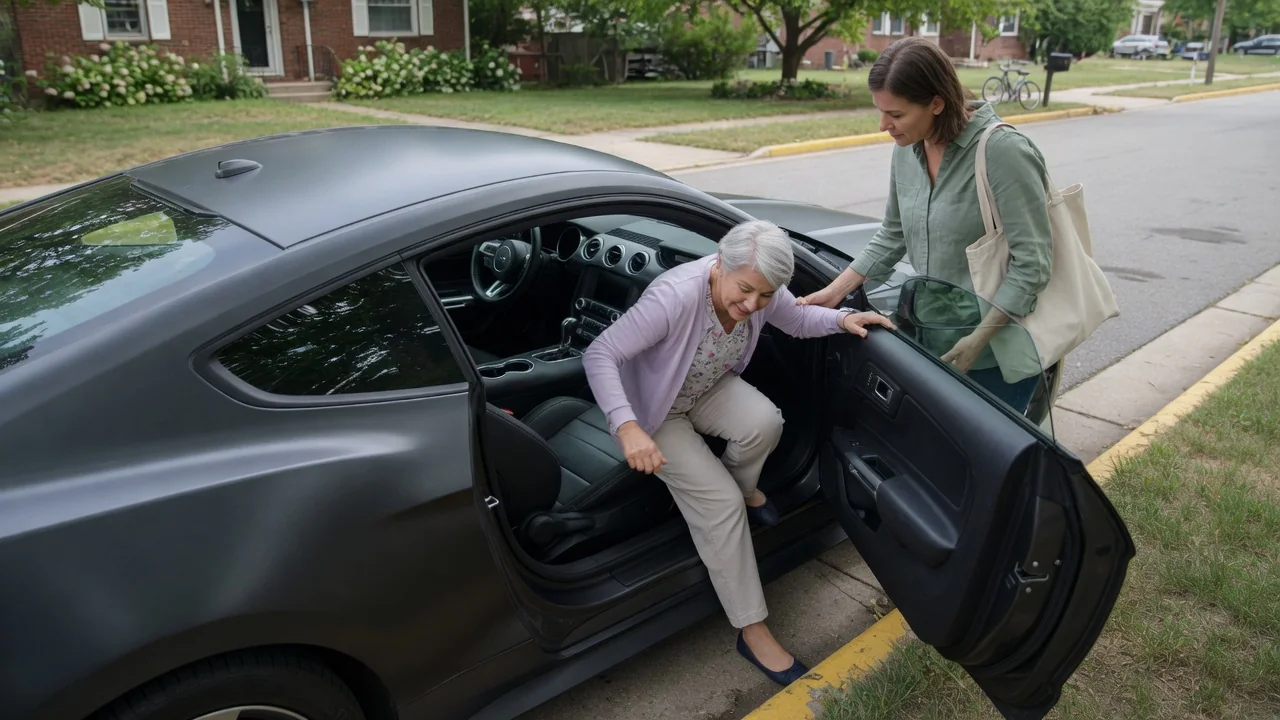
Knowing how to help passengers enter a low car starts before anyone touches a door handle. Where you park, how much room the door has to swing, and how patiently the whole process unfolds all shape whether someone lowers into the seat comfortably or struggles against the roofline, the sill, and the curb beside them.
Choose a level spot
A flat surface gives a passenger the most predictable drop into a low seat. When a car sits on a crowned road or a sloped driveway, the body leans, and the seat cushion on the downhill side ends up even closer to the ground. The door also behaves differently on a slope, either swinging closed against a passenger's legs or pulling away from their hand. Level pavement keeps the door resting where its hinge detents hold it and keeps the seat height consistent from one trip to the next.
Curb placement matters as much as the slope. Parking tight against a tall curb can put the passenger's feet higher than the car's floor, which makes the seat feel deeper still and may let the bottom edge of the door scrape the concrete. Leaving a comfortable gap so the passenger stands on the roadway, or choosing a section with a lower curb, often works better. Watch for gravel, wet leaves, drain grates, and painted lines that become slick, since firm footing is what the passenger relies on while lowering themselves.
Open doors fully
A partly opened door forces a passenger to twist through a narrow gap while also ducking under a low roofline, which is the hardest combination of movements. Opening the door to its widest stop gives room to stand beside the seat, turn, and sit before swinging the legs in. Most hinges have two or three check positions, and the last one usually holds the door firmly. Coupes typically have longer doors than sedans, so they need more side clearance to reach that final position than many drivers expect.
Parking placement decides whether a full opening is even possible. In a marked space, positioning the car toward the driver's side of the bay leaves extra room on the passenger side, and end spaces next to a walkway or striped zone offer more still. In a garage, pillars and walls are the usual obstacles, so letting the passenger in before pulling fully into a tight bay can help. Holding the door's outer edge steadies it against wind and stops it drifting back, though the door itself should not be treated as a support unless it feels solid.
Take time
Rushing is what turns a low seat into a bumped head or a strained knee. A sequence that suits many people is to back up until the legs touch the sill or seat edge, lower onto the cushion while facing outward, then bring the legs in one at a time. Each of those steps takes a few seconds, and a driver standing in traffic or blocking a lane tends to hurry them. Choosing a spot where the car can sit undisturbed removes that pressure before it begins.
Small preparations made before the passenger approaches save effort later. Sliding the seat rearward opens up legroom and moves the cushion away from the dashboard, and raising the seat on a height adjuster, where fitted, shortens the drop. Tilting the steering wheel up helps on the driver's side. Ask the passenger which hand they prefer to steady themselves with and where they want support, rather than taking an arm unprompted. Leaving the same patience for getting out matters too, since rising from a low seat usually demands more strength than sitting down.
Everyday Use and Observations
Regular trips reveal patterns worth noting. A passenger may consistently find one side of the car easier, perhaps because of a stronger leg or a better view of the handhold. Wide sills and deep side bolsters on sportier seats create a ledge that has to be cleared, while flatter cushions allow an easier slide. Some cars have a grab handle above the door opening and others omit it, and frameless windows offer nothing rigid to hold. Looking over these details in your own vehicle shows where a passenger's hands and feet can safely go.
Conditions change the picture from day to day. Rain makes the sill and door seals slippery, bulky winter coats reduce the space under the roofline, and darkness hides the edge of the curb, so interior and puddle lighting become useful. Familiar locations are easier to plan around; a home driveway can be approached the same way each time so the passenger door opens onto the flattest, clearest patch. At unfamiliar destinations, a quick look at the ground on the passenger side before stopping usually tells you whether to move forward a few feet.
Limits and Next Steps
Good parking and door clearance reduce the difficulty of a low car without removing it. The seat height, roofline, and sill width are fixed by the design, and for some passengers the bend required at the hips and knees remains uncomfortable no matter how well the car is positioned. Signs that technique has reached its limit include a passenger needing to be pulled upright, repeatedly striking the door frame, or avoiding rides altogether. Those observations are worth taking seriously rather than working around indefinitely.
Several options exist beyond technique. Accessories such as swivel cushions and portable support handles are sold for this purpose, but their fit depends on the seat shape and door latch design, so confirm suitability for the specific vehicle before relying on one. The owner's manual shows which seat adjustments are available and how far the doors are designed to open. A passenger with a medical condition or recent surgery may benefit from advice from a clinician or occupational therapist, and in some households a taller vehicle is simply the more practical choice for those journeys.