How to End a Long Trip With a Quick Vehicle Check
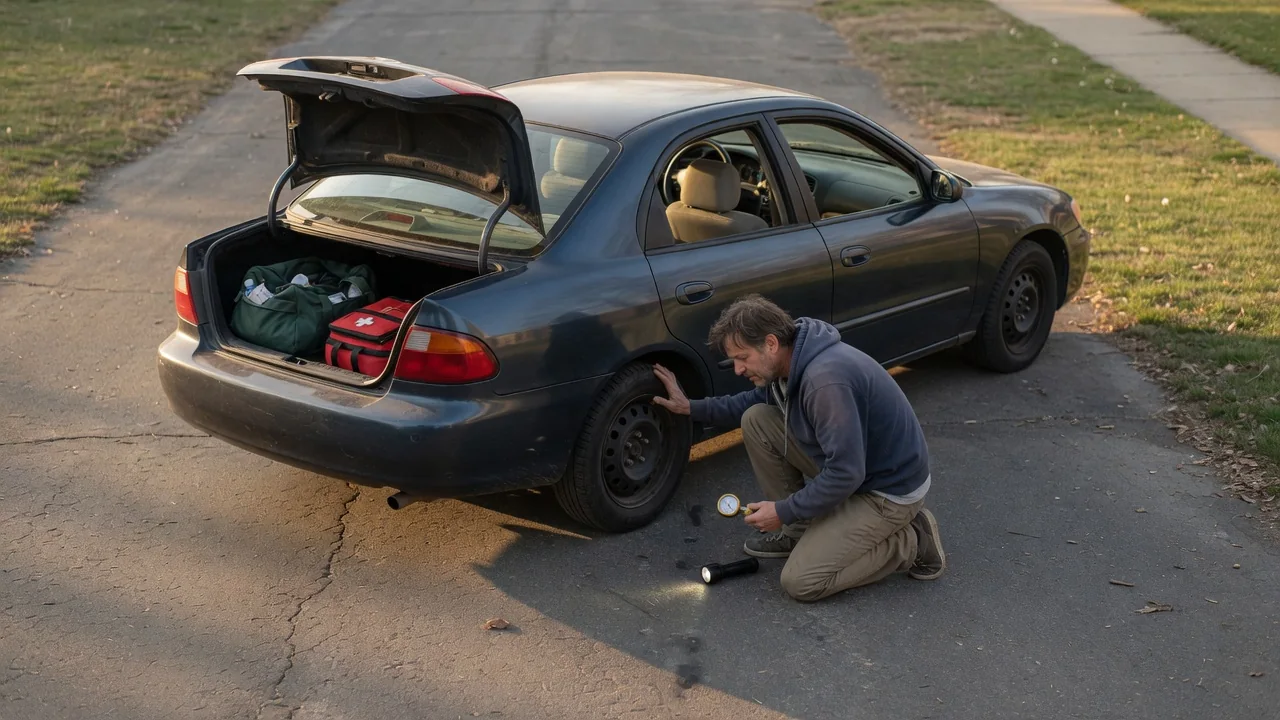
The end of a long drive is a good time to look the car over before it goes back to daily use. A post road trip car check does not replace scheduled maintenance. It can still reveal problems that built up over hundreds of highway miles: uneven tire wear, a slow leak, a low fluid, or grime that does more harm the longer it sits. This guide explains how to end a long trip with a quick vehicle check covering tires, fluids and leaks, and cleaning.
Tires
Start with tire pressure, but wait before you measure it. Driving warms the tires and the air inside them, which raises the pressure, so a gauge used right after you arrive will usually read higher than the tire holds when cold. The recommended cold pressures are usually listed on a placard on the driver's door jamb and in the owner's manual. The number molded into the sidewall is the tire's maximum pressure rating, not the target for your vehicle. For an accurate reading, check after the car has sat for several hours, ideally the next morning, and adjust to the placard values. If one tire reads noticeably lower than the others, treat it as a possible slow leak instead of just topping it up.
Next, look at the tread. Most tires have tread wear indicator bars molded into the grooves. When the tread around them wears down level with the bars, the tire is due for replacement. Also compare wear across the width of each tread. Wear on both outer edges often points to underinflation. Wear in the center can indicate overinflation. Wear on one edge only may suggest an alignment problem. Long highway stretches can make these patterns easier to see, though a single trip rarely creates them on its own.
Finally, inspect each tire for damage picked up along the way. Look for nails, screws or stones lodged in the tread, and for cuts or scrapes on the sidewalls. A bulge or bubble suggests internal damage, and that tire should not be trusted until a professional has inspected it. Check the valve stems for cracks and make sure the caps are in place. If the vehicle carries a spare, check its pressure too. Spares are easy to forget and slowly lose air over time.
Fluids and leaks
Check fluids with the vehicle parked on level ground, and follow the owner's manual, because the procedure varies by vehicle. Some engines should have their oil checked cold. Others should be warmed up and then left to rest a few minutes. Some vehicles have no traditional dipstick and show the oil level on the instrument cluster instead. Sustained highway speed and heavy loads can increase oil consumption in some engines, so a level that was fine before departure may now be near the low mark. Top up only with the oil type and grade the manual specifies.
Coolant and brake fluid can be checked through their translucent reservoirs, which usually have minimum and maximum marks. Never open a radiator cap or a pressurized coolant reservoir while the engine is hot. Hot coolant under pressure can cause serious burns. A coolant level that has fallen noticeably over one trip suggests a leak or another problem worth diagnosing. Brake fluid normally drops a little as brake pads wear, but a sudden drop or a soft brake pedal calls for prompt inspection. Washer fluid is the easy one: after hundreds of miles of bugs and road spray, the reservoir is often nearly empty.
To check for leaks, look at the ground under the car after it has been parked for a while, or slide a piece of cardboard under the engine area overnight. Clear, watery drips near the front of the car are often just condensation from the air conditioning and are normally harmless. Brown or black spots commonly come from engine oil. Reddish fluid may come from an automatic transmission or power steering system. Brightly colored, sweet-smelling fluid is often coolant, although coolant colors vary by manufacturer. Color alone is not a diagnosis, but noting the spot's location and size helps a technician find the source.
Cleaning
Cleaning after a long trip is about more than appearance. Insect residue, bird droppings and tree sap can damage the clear coat if they are left to bake in the sun, so wash them off soon after you get home. Soak the front bumper, grille, mirrors and windshield first. This loosens dried bugs so you don't need to scrub hard enough to scratch the paint. Tar spots from fresh road work usually need a dedicated tar remover rather than ordinary car shampoo.
If the route included salted winter roads, coastal air, gravel or dirt, rinse the underbody and wheel wells too. Salt and trapped mud hold moisture against metal and can speed up corrosion over time. Clean the wheels, where brake dust collects. Wipe the headlight and taillight lenses so road film does not dim them. Clean the windshield inside and out, and wipe the wiper blades with a damp cloth. If they still streak afterward, the blades may be worn.
Inside the cabin, remove food wrappers, drink containers and anything perishable before odors and stains set in. Vacuum sand and grit from the carpets and seat tracks. Abrasive particles wear upholstery and can interfere with seat adjustment. Empty the door pockets and the trunk, and look for anything that may have spilled during the drive, such as coolers or cleaning products.
Practical implications and limits
A quick check is a screening step, not a full inspection. It can catch a nail in the tread, a low reservoir or a fresh drip. It cannot assess brake pad thickness behind the wheels, suspension components, belts and hoses deep in the engine bay, or the internal condition of the battery. Some symptoms matter more than anything a driveway walk-around can confirm: the car pulling to one side, vibration at highway speed, new noises, or a warning light during the trip. Describe them to a technician in as much detail as you can remember.
A long trip can also add enough miles to bring a scheduled service due sooner than expected. Compare the odometer with the maintenance schedule in the owner's manual or the vehicle's service reminder, and see whether an oil change or tire rotation is now close. Write down what you found, such as tire pressures, fluid levels and the location of any spots. That gives you a baseline for the following weeks. A level that keeps dropping or a spot that keeps coming back tells you more than a single observation, and it helps separate a one-time event from a developing fault.