How to Describe an Intermittent Car Noise to a Mechanic
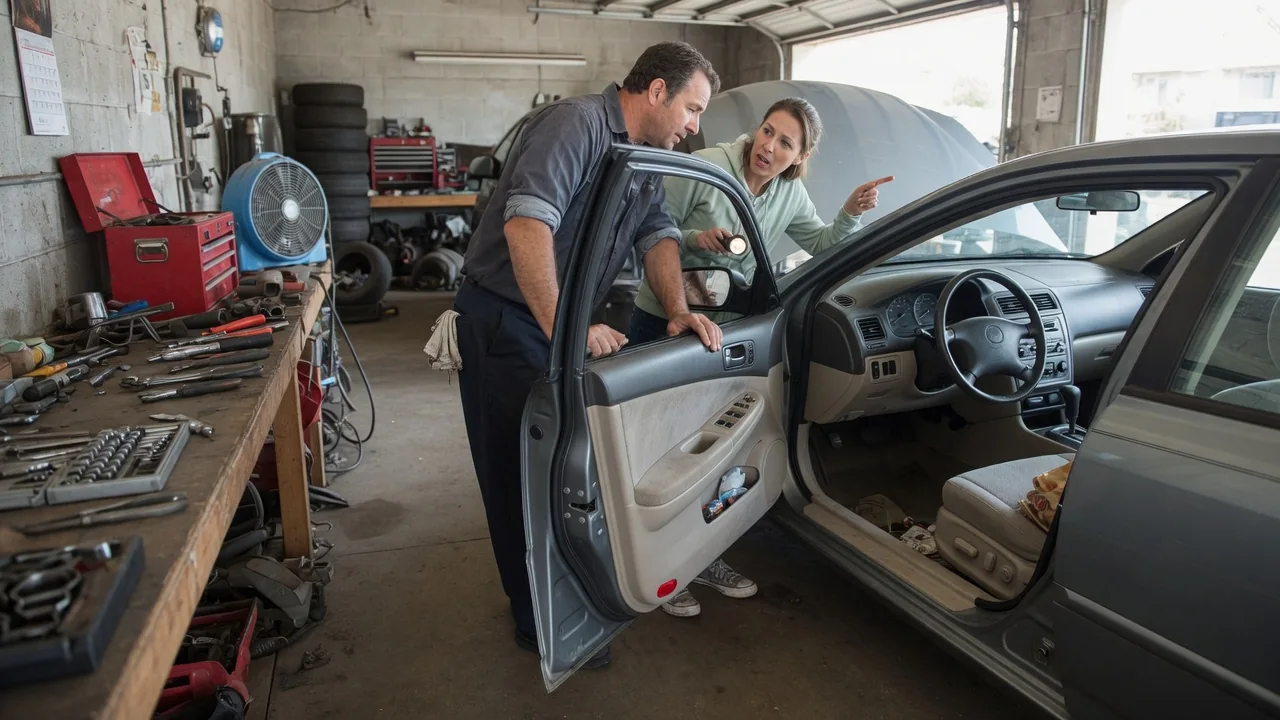
A noise that comes and goes is one of the hardest problems to diagnose, because it rarely appears on cue during a short test drive. Knowing how to describe an intermittent car noise to a mechanic means turning a vague complaint into a record of conditions the shop can recreate. The goal is not to name the faulty part, but to document when, where, and how the sound happens.
Speed and road
Speed is the first detail a technician will ask about, so note the range where the sound begins, where it is loudest, and where it fades. A hum that starts around highway speed and rises in pitch as the car goes faster follows wheel rotation, which points attention toward tires, wheel bearings, or driveline parts. A sound that tracks engine speed instead, changing when you rev in neutral or when the transmission shifts, belongs to a different group of components. Writing down both the speedometer and tachometer readings helps separate the two.
Road surface matters just as much. A clunk that appears only over sharp bumps, expansion joints, or driveway aprons suggests something in the suspension or exhaust mounting is moving under impact, while a drone that changes when you cross from coarse asphalt to smooth concrete may simply be tire tread noise. Record whether the pavement was wet or dry, rough or smooth, flat or sloped. If the noise occurs on one familiar stretch of road, name that stretch, since the mechanic may be able to drive the same route.
Direction and load
Direction changes shift weight across the vehicle, and that shift often makes a noise appear or disappear. Note whether the sound happens when turning left, turning right, or only when driving straight. A growl that gets louder in a long sweeping curve one way and quieter the other way gives a technician a useful clue about which side is carrying the load. A rhythmic clicking during tight, slow turns in a parking lot is a different observation entirely and should be described separately, including whether you were accelerating at the time.
Load covers what the engine, brakes, and body are being asked to do. Record whether the noise occurs while accelerating, coasting, holding steady throttle, or braking, and whether it changes when climbing a hill. Mention passengers, cargo, a full fuel tank, or a trailer, because added weight changes ride height and suspension angles. Accessory load counts as well: a squeal that appears only with the air conditioning on, or a groan when the steering wheel is held near full lock, narrows the search considerably. Layouts differ between front-, rear-, and all-wheel-drive vehicles, so these clues read differently on each.
Recording details
A written log is more reliable than memory. Each time the noise occurs, write down the date, outside temperature, how long the car had been running, and what you were doing in the moments before it started. Cold-start noises that vanish after a few minutes are a distinct category from sounds that show up only after a long drive, when fluids and metal parts are fully warm. Note how long the sound lasts, whether it repeats in a steady rhythm, and whether that rhythm speeds up with the car or stays constant.
An audio or video clip from a phone can help, provided it is captured safely. Ask a passenger to record, or use a secure mount, rather than handling the phone while driving. Turn off the radio and fan, say the speed and conditions aloud during the clip, and try recording from different seats with the windows closed and then open. Describe the character of the sound in plain comparisons, such as a squeak, rattle, hum, knock, or grinding, and say where it seems to come from, while accepting that sound travels through the body and can mislead the ear.
Everyday Use and Observations
Ordinary driving provides the best evidence, because the pattern across many trips reveals what a single test drive cannot. Pay attention to whether the noise appears on the morning commute but not on the drive home, after rain or a car wash, or only after the vehicle has sat for several days. Moisture, temperature, and time parked all affect rubber bushings, brake surfaces, and belts. Notice also what makes it stop: touching the brake pedal lightly, shifting to neutral, or switching off a particular accessory can each be a meaningful observation worth writing down.
Rule out the simple sources along the way. Loose items in the trunk, door pockets, glovebox, or under the seats create rattles that sound convincingly mechanical, as do a spare tire or jack that has worked loose. Mention any recent events, such as new tires, a brake job, a pothole strike, or bodywork, since a noise that began right afterward gives the shop a starting point. Also report anything that accompanies the sound, including vibration in the steering wheel or seat, a warning light, a smell, or a change in how the car steers or stops.
Limits and Next Steps
An observation record guides diagnosis; it does not replace it. Similar sounds can come from unrelated parts, and online descriptions that seem to match your noise are not confirmation of a specific failure. The same caution applies to any stored fault code: it is evidence for the technician to interpret alongside testing, not proof that a component has failed, and manufacturer-specific codes need to be checked against information for your exact vehicle. Present what you observed and let the inspection determine the cause, rather than requesting a particular part replacement based on a guess.
When you book the visit, hand over the written log and offer to ride along so you can point out the sound when it occurs. If the noise is tied to a cold start, ask whether the car can be left overnight. Be prepared for the possibility that the shop cannot reproduce it on the first attempt, in which case continuing the log is the practical next step. Do not wait, however, if the noise is joined by grinding during braking, loose or heavy steering, strong vibration, or a warning light; have the vehicle inspected promptly rather than driving to gather more notes.