How to Prepare Questions for a Mechanic Before a Repair
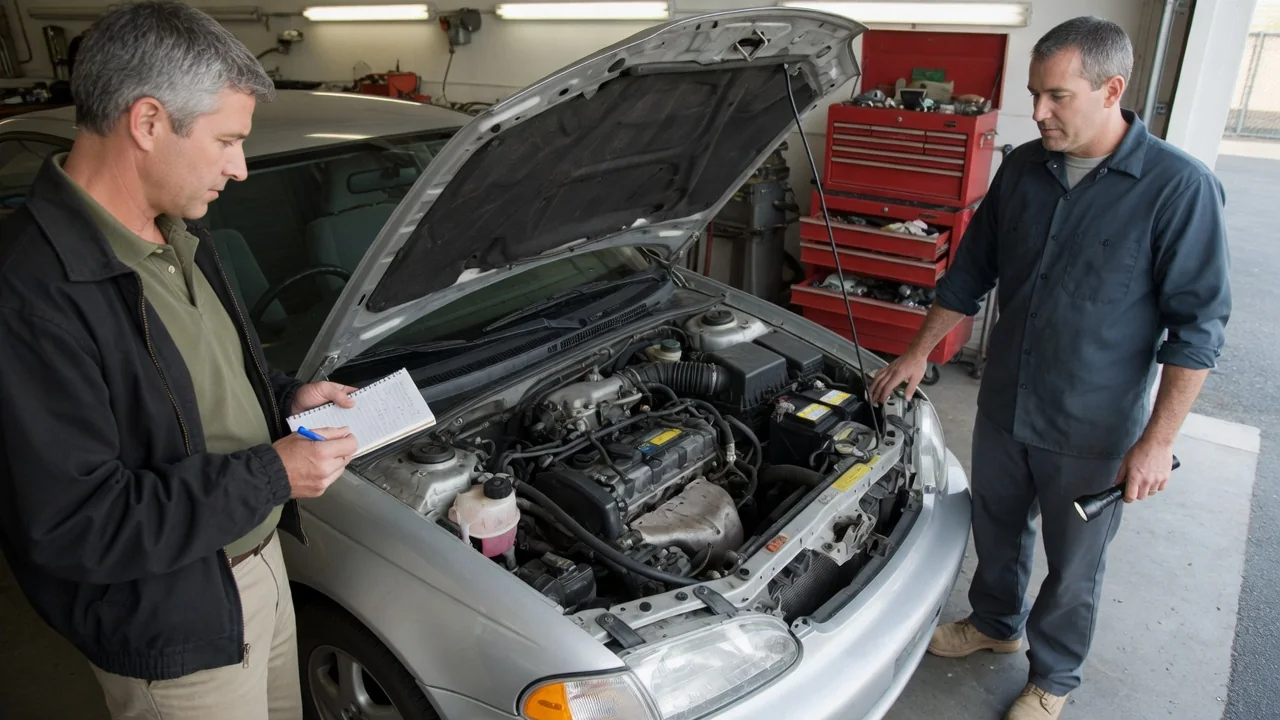
Knowing how to prepare questions for a mechanic before a repair turns a confusing estimate into a conversation you can follow. A short list written at home helps you understand what the shop found, which options exist, and how far the work should go. The goal is not to challenge the technician, but to authorize the job with a clear picture of its scope.
Diagnosis evidence
Start with the evidence behind the recommendation. Ask what the technician actually tested, measured, or saw, and whether the conclusion rests on a visual inspection, a road test, a scan tool reading, or a combination. If a warning light is involved, ask which fault codes were stored and what further checks confirmed the cause. A code points toward a circuit or system that reported something out of range; it does not by itself prove a particular component has failed, so the confirming test matters.
Physical evidence is equally worth requesting. A shop can often show a worn brake pad next to its thickness measurement, a leaking hose, a torn boot, or a photo taken under the vehicle. Ask whether you can see the part in place before it comes off. Keep in mind that some codes and test procedures are manufacturer-specific, so the meaning of a given result should be confirmed for your exact make, model, year, and engine rather than assumed from a general description.
Parts and timing
Parts questions shape both the price and the outcome. Ask whether the estimate uses original equipment, aftermarket, or remanufactured components, and why the shop prefers that choice for this repair. A sensor, for instance, may behave differently depending on its source, while a wear item such as a wiper blade or cabin filter usually leaves more room for flexibility. Also ask whether related pieces, like gaskets, seals, fluids, or mounting hardware, are included in the quote or would appear as additions later.
Timing deserves its own set of questions. Find out whether the parts are in stock or must be ordered, how long the vehicle will be tied up, and whether the car is safe to drive in the meantime. It also helps to ask which items are urgent and which can wait: a seeping gasket and a brake fluid leak carry very different levels of risk. Availability and labor time vary widely by vehicle, since the same job can be simple on one engine layout and involved on another.
Follow-up expectations
Before approving anything, ask what should happen after the repair. Some jobs call for a follow-up step, such as rechecking a fluid level, verifying that a warning light stays off after several drives, or an alignment check after suspension work. Whether these apply depends on the vehicle and the repair, so let the shop tell you what it recommends. Ask too how you will know the fix worked: which symptom should disappear, and how soon you should expect to notice the difference.
Warranty terms belong on the same list. Ask what coverage applies to the parts and to the labor, how long it lasts, and what you would need to bring back if the problem returns. Request that the old parts be saved for you to look at if that matters to you, and ask for the final invoice to describe the work performed and the parts installed. That paperwork becomes useful history for the next technician, and for you, if a related symptom shows up later.
Everyday Use and Observations
Good questions grow out of good notes. In the days before the appointment, write down what the car does during ordinary driving: when the noise appears, whether it changes with speed, braking, turning, or a cold start, and whether any dashboard lights come on steadily or flash. Note smells, fluid spots under the parked car and their color, vibrations felt in the steering wheel or seat, and anything that changed recently, such as a fill-up, a pothole strike, or earlier service.
Those observations let you ask sharper questions, such as whether the shop was able to reproduce the symptom and whether the proposed repair explains everything you noticed. An intermittent problem that does not appear during the road test is harder to pin down, so a short phone video or a note about the conditions can help. Describe what you see, hear, and feel rather than naming a part yourself; a guess like a bad alternator can steer the conversation away from the real cause.
Limits and Next Steps
A prepared list has limits. It will not let you verify a diagnosis yourself, and a technician may honestly not know the full scope until a component is taken apart. Ask how the shop handles that situation: whether it will call for approval before going beyond the written estimate, and what the diagnostic charge covers if you decline the repair. If an explanation still seems unclear, asking for it in plainer terms is reasonable, and so is seeking a second opinion on a large job.
From there, decide on next steps with the answers in hand. Ask the shop to separate the estimate into what is needed now for safety, what protects the vehicle from further damage, and what is optional maintenance, then approve only what you understand. Check the owner's manual for the maintenance schedule that applies to your vehicle rather than relying on a generic one. Keep your notes, the estimate, and the invoice together so the next visit starts from a documented record.