How Does an Engine Restart After Auto Stop?
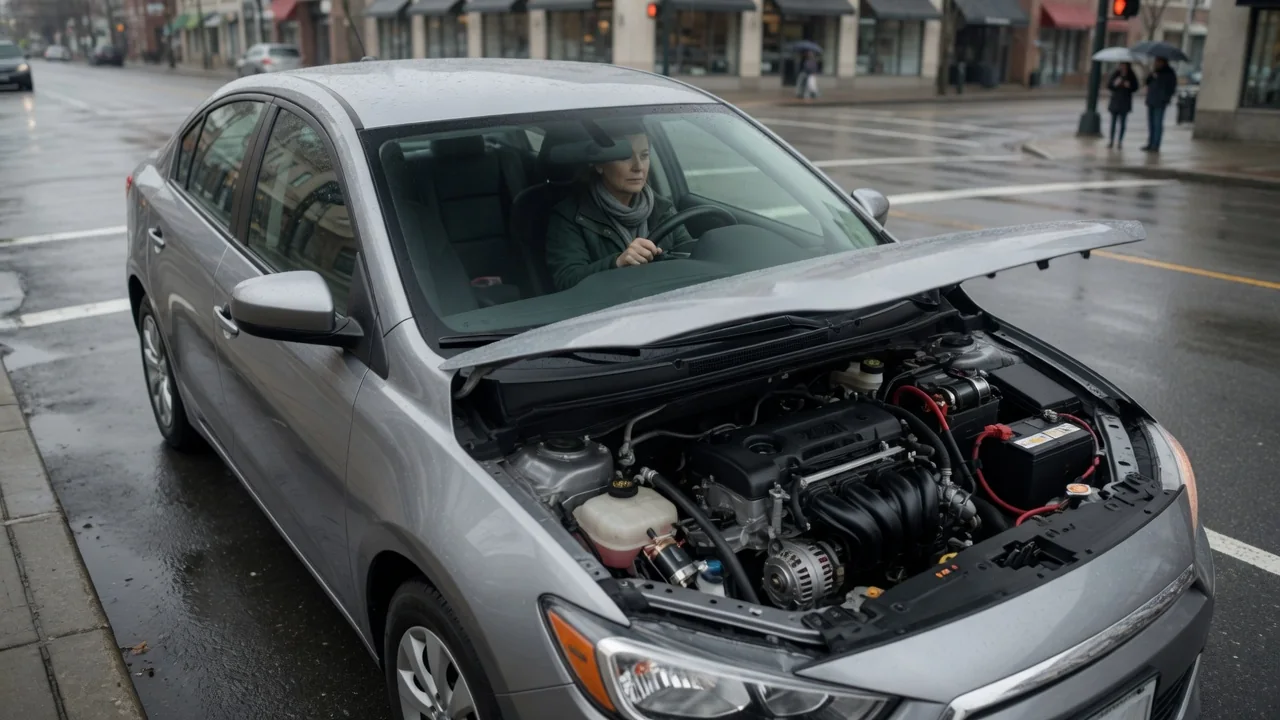
When a car with automatic start-stop shuts its engine off at a red light, the vehicle stays awake. The control system keeps tracking the crankshaft position, monitors a range of signals, and waits for the right moment to fire the engine again. How an engine restarts after an auto stop comes down to three things: the device that turns the crankshaft, the conditions the control unit evaluates, and what the driver feels from the seat.
Starter or motor
Most conventional start-stop systems use an electric starter motor. It is the same basic device found on any gasoline or diesel engine, but it is built for many more start cycles. Typical upgrades include more durable brushes, bearings, and solenoid contacts, along with a pinion designed for frequent meshing with the flywheel ring gear. On a restart command, the solenoid engages the pinion and closes the high-current circuit, the motor spins the crankshaft, and the engine fires within a few revolutions. Some designs can re-engage the starter while the engine is still coasting down, which allows a restart if the driver changes their mind just as the engine begins to stop.
Other vehicles use a belt-driven starter-generator mounted where the alternator would normally sit. It charges the electrical system while driving and, when commanded, turns the crankshaft through the accessory belt. With no pinion to engage, restarts tend to be quieter. In mild hybrid systems, often running at 48 volts, the unit has more power available and can bring the engine up to speed quickly, although many such vehicles keep a conventional starter for cold starts. In full hybrids, a motor-generator integrated with the drivetrain usually spins the engine, so there is no distinct cranking event at all.
Turning the crankshaft is only half the job. For a quick, clean start, the engine control unit must know where each cylinder is in its cycle. Crankshaft and camshaft position data retained from the moment of shutdown let it schedule fuel injection and spark almost immediately instead of waiting several revolutions to synchronize. Some systems manage the shutdown so the crankshaft comes to rest in a favorable position, and some direct-injection engines inject and ignite fuel in a cylinder already positioned on its power stroke to help start rotation. Fueling for the first combustion events is calibrated so the engine catches without stumbling or flaring.
Control conditions
An auto start stop engine restart is decided by the control unit, not only by the driver. Driver-initiated triggers include lifting off the brake pedal in a vehicle with an automatic transmission, pressing the clutch or selecting a gear in a manual, and pressing the accelerator. On some vehicles, turning the steering wheel or moving the shift lever also counts. When the system detects one of these signals, it starts the engine so that it is running by the time the driver asks for power.
System-initiated restarts happen even when the driver does nothing. The engine may restart because battery state of charge has dropped below the level the energy management software considers safe, because cabin heating, cooling, or windshield defogging demand more than the system can support with the engine off, or because brake vacuum or brake system pressure needs replenishing. Coolant, exhaust aftertreatment, and transmission fluid temperatures can also prompt a restart. Exact thresholds and their combinations differ between manufacturers and are rarely published in detail.
There are also situations in which the system will not restart the engine automatically. If the driver's seat belt is unfastened, the driver's door is opened, or the hood is opened while the engine is stopped, many systems block the automatic restart and require a normal start with the brake pressed and the start button or key. This prevents the engine from starting when the driver may not be in control of the vehicle. The specific logic varies, so the owner's manual is the reference for a particular car.
Driver feel
With a conventional starter, the restart is usually audible and felt as a brief crank followed by a small shake through the body as the engine fires. The engine is normally running by the time the foot moves from the brake to the accelerator, though a quick pedal transition can reveal a slight hesitation. Belt-driven starter-generators generally feel smoother and quieter because there is no pinion engagement and engine speed can be raised more evenly. In hybrids, the engine often starts in the background with little more than a change in sound or vibration.
Several other sensations reflect system design rather than faults. Cranking briefly pulls system voltage down, so many vehicles use a voltage stabilizer or DC-DC converter to keep the radio, display, and lights steady. On an incline, hill-start assistance or brake pressure holding keeps the vehicle from rolling back while the engine restarts and drive is reestablished. Automatic transmissions may rely on an electric auxiliary oil pump or a hydraulic accumulator to maintain pressure while the engine is off, so the gear engages promptly once combustion resumes. A restart while stationary with no driver input is usually one of the system-initiated events.
Practical implications and limits
The most significant ownership consequence concerns the battery. Start-stop vehicles commonly use an enhanced flooded battery or an absorbent glass mat battery designed for repeated cycling, and a current sensor on the battery feeds the energy management system. Fitting a conventional battery or the wrong type can shorten its life and stop the function from working. On many vehicles, a replacement battery must also be registered or coded so the charging strategy matches its type and age. An aging battery is a common reason the engine stops less often or restarts sooner than it used to.
An engine that does not shut off is often behaving normally. In cold weather, in heat with the air conditioning working hard, shortly after a cold start, or during diesel particulate filter regeneration, the system may stay inactive. Repeated refusal to stop in mild conditions, a warning message, or a restart that is noticeably slow or harsh justifies checking the battery, the related sensor data, and the starter or starter-generator, ideally with a scan tool that can read the stop-inhibit reasons recorded by the vehicle.
Many vehicles provide a button to switch the function off, and on many of them it returns to the default on state each time the car is started. Manufacturers design start-stop engines and components for the higher number of starts, but the fuel benefit depends heavily on how much time the car would otherwise spend idling. In stop-and-go city traffic the effect can be meaningful; on open roads the system rarely activates. Settings, behavior, and service requirements are vehicle-specific, so the owner's manual and the model's service information remain the authoritative sources.