Why Does a Hybrid Engine Restart at a Stop?
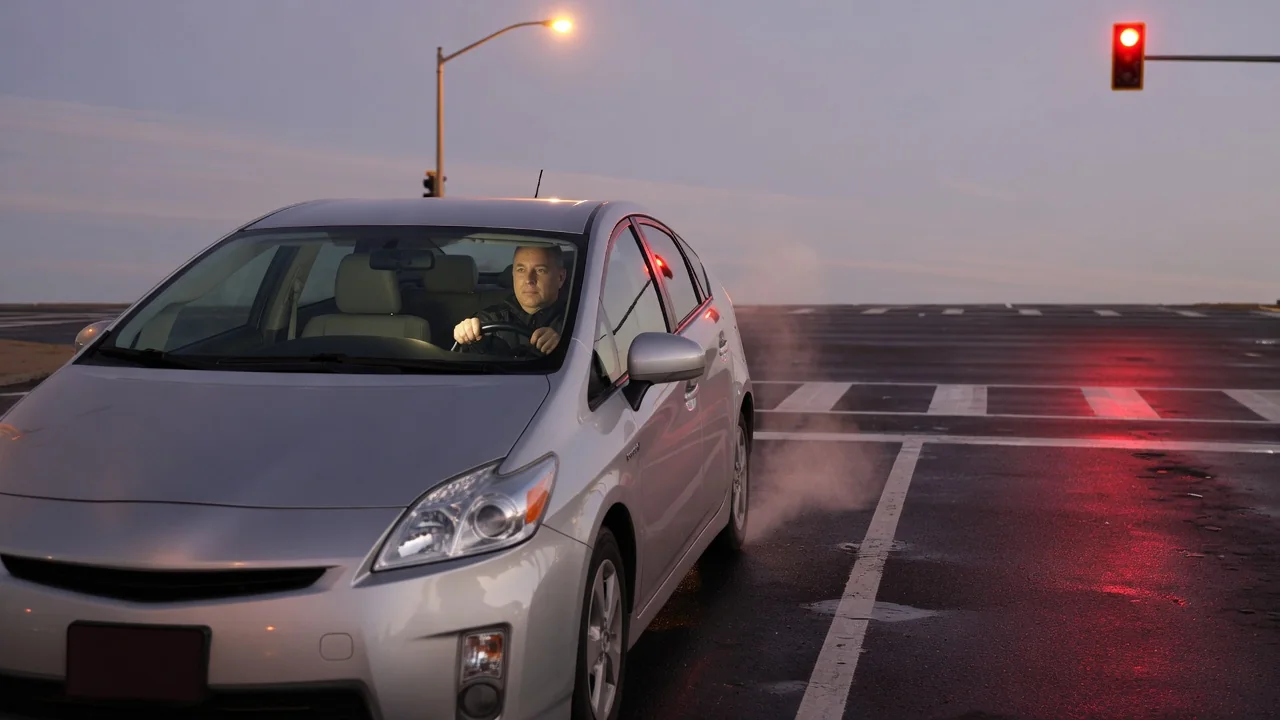
Many hybrid owners notice that the gasoline engine starts while the car is stopped at a red light, even though nobody touched the accelerator. This is usually normal, not a malfunction. A hybrid control system constantly balances comfort, stored energy and the condition of its own components. Sometimes running the engine at a stop is the simplest way to meet those needs. The reasons fall into three main groups: cabin heat, battery charge and broader system requirements.
Cabin heat
In many hybrids, the heater works the same way it does in a conventional car. Hot engine coolant flows through a heater core behind the dashboard, and a blower pushes air across it into the cabin. When the engine shuts off at a stop, that coolant gradually cools. Once its temperature drops below the level the control system considers sufficient for the requested heat, the engine may restart just to warm the coolant again. The car is not moving and needs no propulsion, yet the engine runs because the climate system asked for heat.
This is why the behavior tends to appear more often in cold weather. A higher temperature setting, a high fan speed or a request to clear a fogged windshield all increase heat demand. Defrost modes deserve special mention because visibility is a safety issue. Many systems treat a defrost request as a reason to keep coolant hot, so the engine may run more often or longer while defrost is selected. On the other hand, a fully warmed engine in mild weather can often stay off for a reasonable time before coolant temperature falls far enough to trigger a restart.
Not every hybrid relies only on engine heat. Some designs add electric heating elements or a heat pump, which can supply warmth without the engine. Even then, the controller may still choose the engine if electric heating would drain the battery too quickly or cannot keep up in very cold conditions. Which hardware a given vehicle uses, and how it prioritizes these heat sources, is vehicle-specific, so the owner's manual is the reliable reference.
Battery charge
A hybrid's high-voltage battery is managed within a target range of charge rather than run from full to empty. Keeping the state of charge inside that window protects battery life. It also keeps energy available for the next acceleration, for electric assist and for restarting the engine itself. Electrical loads continue while the car is stopped: climate fans, lights, infotainment, cooling pumps and, in many hybrids, an electrically driven air conditioning compressor. All of this draws down the battery while the car recovers no energy from braking.
When the charge drops toward the lower edge of the allowed range, the control system can start the engine and use it to drive a generator, even with the vehicle stationary. In this mode the engine is not moving the car; it is acting as a charging source. Once the battery returns to a comfortable level, the engine usually shuts off again, unless another condition is keeping it on. This is why a long wait in traffic with heavy accessory use can produce a restart that would not happen during a short stop.
Mild hybrids add another layer. Their smaller battery and belt-driven starter-generator offer less reserve, and their engine-stop function at idle works much like the start-stop systems in conventional cars. If battery charge is not sufficient, including in the 12-volt system that powers many accessories, the controller may restart the engine or decline to stop it in the first place.
System needs
Beyond heat and charge, the engine also serves the hybrid system's own technical requirements. Emissions control is a major one. A catalytic converter works effectively only when it is hot. After a cold start, the controller often runs the engine for a period to bring the converter and the engine up to operating temperature. If the car stops during this warm-up phase, the engine may keep running or restart, because shutting it down too early would delay the point at which emissions are properly controlled. Engine oil and coolant temperature matter in a similar way, since a cold engine wears more and burns fuel less efficiently.
Component temperatures can also trigger engine operation. The high-voltage battery performs best within a certain temperature range, and in some designs engine operation supports thermal management in extreme conditions. Some vehicles also run the engine to carry out self-diagnostic routines, such as checks related to the evaporative emissions system. When and how these routines run depends on the manufacturer.
Finally, certain driver inputs or vehicle states can require the engine. Depending on the design, these may include a particular drive mode, a belt-driven accessory that needs engine power, an open hood, or a detected fault that prevents electric-only operation. The specific list differs between vehicles and is usually described in the owner's manual, in the section on hybrid system operation.
Practical implications and limits
For most drivers, an engine that starts at a stop is a sign that the control system is doing its job, not a reason for concern. Several conditions often overlap, so a restart cannot always be traced to a single cause from the driver's seat. A cold morning, a short trip and a defrost request together can keep the engine running through nearly every stop. The same car on a warm day after a longer drive may shut the engine off at almost every light and keep it off. Fuel economy follows the same pattern, which is one reason hybrid efficiency is usually lower in winter and on very short trips.
Drivers have some influence. Moderate climate settings, using seat heaters where fitted, and letting the engine finish its warm-up on longer drives can reduce how often the engine runs while stationary. These choices should never come at the expense of a clear windshield or safe cabin conditions. It is also unwise to defeat the logic through unofficial modifications, because the restart conditions exist to protect the battery, the emissions system and the engine.
There are limits to what can be judged without diagnostic tools. Manufacturers rarely publish exact temperature or charge thresholds, and these can vary with software versions and operating conditions. A restart at a stop is ordinarily normal. Some signs do justify an inspection by a qualified technician: a dashboard warning light, an engine that never shuts off even when fully warm in mild weather, unusual noises, or a noticeable change from the car's previous behavior. The owner's manual remains the best first reference for what to expect from a particular vehicle.