Why Does a Home EV Charger Stop and Restart?
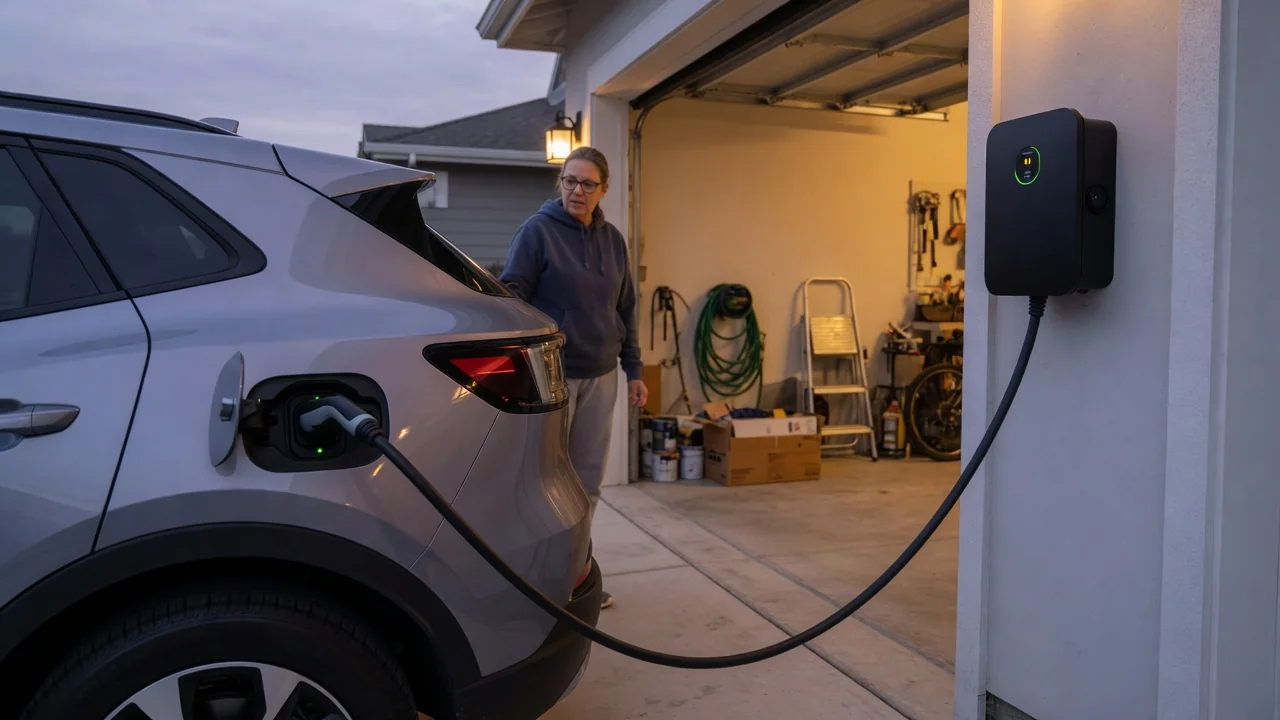
A home charging session that pauses and resumes on its own can look like a malfunction, yet it is often deliberate behavior. If you are wondering why does a home EV charger stop and restart, the answer usually falls into one of three groups: a programmed schedule, heat management, or a detected fault. Telling them apart starts with careful observation.
Look at status
The wall unit and the car both report what they are doing, and those reports rarely agree by accident. Most home charging stations use indicator lights or an app screen to show whether they are idle, connected and waiting, actively delivering power, or holding a fault. The vehicle adds its own view through the charge port light, the instrument display and its companion app. Reading both at the moment of an interruption tells you which side decided to stop, and that single detail narrows the possibilities considerably.
A unit showing a waiting or ready state while the car is plugged in usually means the vehicle has asked for the pause, which points toward a timer or a full battery. A fault indication on the charger itself points toward the equipment, the wiring or the supply. Light colors and blink patterns are not standardized across brands, so the meaning of a particular signal must be confirmed in the manual for that exact unit. The same applies to messages on the car, which differ between manufacturers.
Check vehicle schedule
Scheduled charging is among the most common explanations for a session that starts, stops and starts again later. Many electric vehicles let the owner set a charging window to match cheaper overnight electricity rates, or a departure time the car works backward from. Plug in outside that window and the car may draw power briefly, pause, and resume hours later. Many chargers have their own scheduling feature as well, and when both are active with different times, the two can produce interruptions that seem random but follow the clock.
Other vehicle settings create similar patterns. A charge limit below full will end the session early, and the car may top up again later if the battery level drifts down while it remains plugged in. Cabin preconditioning before departure can also wake the charger for a short burst. Some utility programs and smart chargers pause delivery during periods of high grid demand. Menu names and locations vary by model, so check both the vehicle settings and the charger app, and consider leaving scheduling active in only one place.
Seek service
Some patterns should not be watched for long. A circuit breaker that trips repeatedly, a plug or wall outlet that feels hot, discoloration or melting around the connector, a burning smell, or buzzing from the unit or the electrical panel all call for stopping use and contacting a licensed electrician. Heat at a connection often indicates resistance from a loose or worn contact, and that condition tends to worsen with continued use. Resetting the breaker and carrying on does not address whatever caused it to trip.
Fault messages deserve a measured reading. A ground fault or overtemperature warning on the charger, or a charging error stored by the vehicle, is evidence that a protective system intervened, not proof that a specific component has failed. The cause may lie in the charging unit, the cable, the household circuit, or the car's onboard charger, and manufacturer-specific codes need confirmation against information for that vehicle. An electrician is the right contact for the supply side, while a dealer or qualified EV technician should assess the vehicle side.
Everyday Use and Observations
Heat-related pauses tend to follow recognizable conditions. Charging equipment monitors its own temperature, and many units reduce current or pause when they get too warm, then resume once they cool. A charger mounted in direct afternoon sun, in a closed garage during a hot spell, or with its cable left tightly coiled is more likely to behave this way. The car also manages battery temperature, so you may hear fans or pumps running and see charging power rise and fall in very hot or very cold weather.
Keeping simple notes makes a pattern visible. Record the time of each interruption, the outdoor temperature, how long the pause lasted, and whether large household loads such as a dryer or air conditioner were running. Stops at the same clock time each night suggest a schedule. Stops that appear on hot afternoons suggest thermal protection. Interruptions that coincide with other appliances may reflect a load management feature or a voltage dip on the supply. Charging history in the app, where available, often shows these events more precisely than memory.
Limits and Next Steps
Observation has limits. Status lights and apps report that something happened, but they rarely identify a root cause with certainty, and two different problems can produce the same symptom. An owner can safely review settings, look over the cable and connector for visible damage, and make sure the plug is fully seated and latched. Opening the charging unit, working inside the electrical panel, or bypassing a protective feature is not appropriate, since these circuits carry high current for hours at a time.
A sensible sequence starts with the least invasive checks. Review and simplify the schedules, then watch whether the pattern changes over several sessions. If the interruptions continue, trying a different charging location can help show whether the behavior follows the car or stays with the home equipment. Bring your notes, any fault messages and the charging history to the charger manufacturer's support line, an electrician or the dealer. Many units are covered by warranty, and clear documentation usually shortens the diagnosis.