What Is a Belt-Starter Generator? Belt Drive, Restart and Regeneration Explained
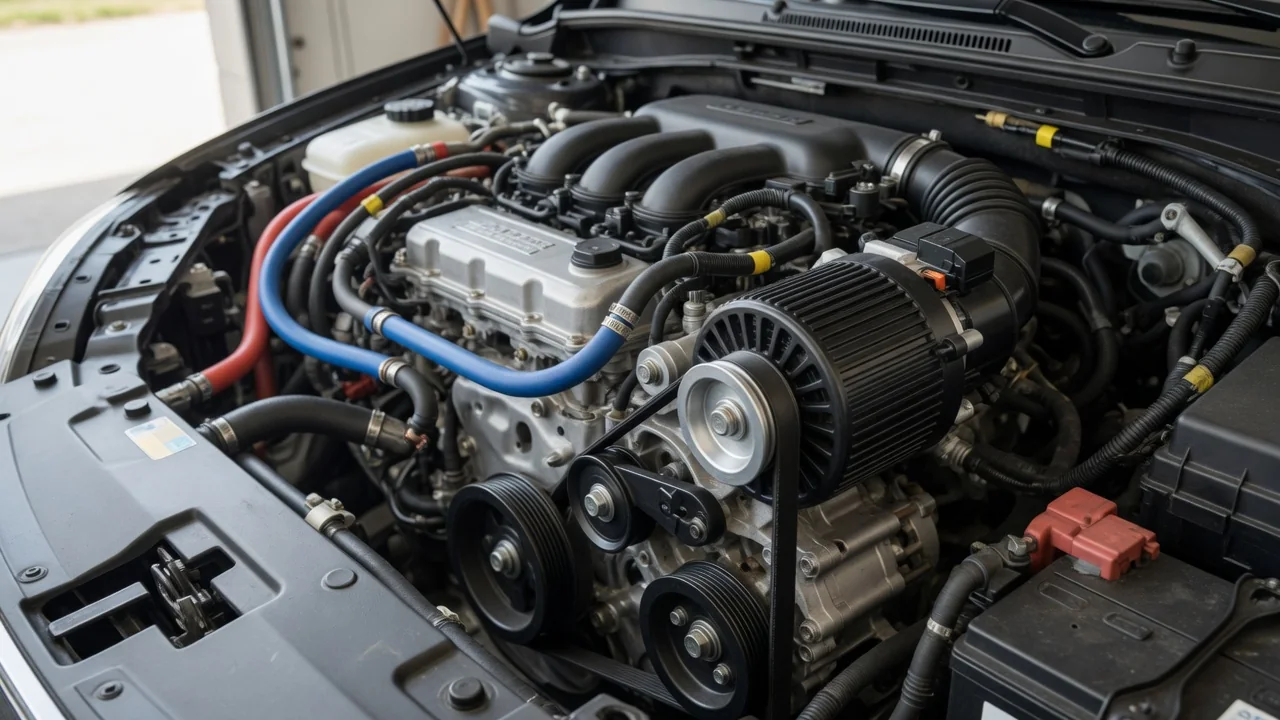
A belt-starter generator, often shortened to BSG, is an electric machine that replaces the conventional alternator and connects to the engine crankshaft through the accessory drive belt. Unlike an alternator, it works in two directions: it generates electricity when driven by the engine, and it delivers torque back to the engine when powered by a battery. That dual role makes it a common foundation for mild hybrid systems, enabling smooth engine restarts, energy recovery during deceleration, and modest torque assistance.
Belt drive
The belt-starter generator sits on the front of the engine, usually in roughly the place an alternator would occupy, and turns with the same serpentine belt that drives other accessories. A pulley ratio lets the machine spin faster than the crankshaft, which helps the motor-generator work in an efficient speed range and multiplies the torque it can apply to the engine. Because the connection is made through the accessory drive rather than inside the transmission, a belt starter generator hybrid can keep a largely conventional engine, gearbox, and driveline layout.
The key mechanical difference from an alternator is that torque now flows both ways. When the machine generates, the engine pulls on the belt; when it motors, the machine pulls on the belt instead. That reversal swaps the tight and slack sides of the belt, so a simple tensioner designed for one-way loads is often not sufficient. Belt-starter generator systems commonly use tensioners that can respond to load in either direction, along with belts and pulleys built to carry higher and more rapidly changing forces. Keeping enough tension is essential, because any slip wastes energy, generates heat, and reduces how much torque can be transferred.
On the electrical side, the machine works with power electronics that switch it between generating and motoring and control how much torque it produces. Many systems run at 48 volts and use a DC-DC converter to supply the vehicle's 12-volt network, while some simpler designs operate at 12 volts. A control unit, either built into the generator assembly or located elsewhere in the vehicle, coordinates the machine with engine management, the battery, and the brakes. The belt itself sets a practical ceiling on transferable torque, so the system is sized to support the engine rather than to replace it.
Restart
In a conventional engine, a starter motor engages a small pinion with the ring gear on the flywheel, cranks the engine, and then disengages. A belt-starter generator restarts the engine through the belt instead, so there is no gear engagement and the familiar starter whine is absent. Because the electric machine can spin the crankshaft quickly, the engine can be brought close to its running speed before fuel and ignition resume. The result is usually a faster, quieter, and less abrupt restart, which matters because a stop-start system may restart the engine many times during a single trip.
The restart function is managed by control logic that decides when the engine may shut down and when it must run again. Typical inputs include vehicle speed, brake pedal position, engine temperature, battery state of charge, and cabin heating or cooling demand. When conditions allow, the controller stops the engine, and some systems can also shut it off while the vehicle is still rolling at low speed. When the driver releases the brake or presses the accelerator, the controller commands the machine to restart the engine. A belt-driven unit can also re-engage while the engine is still slowing to a stop, a so-called change-of-mind restart that is difficult for a gear starter.
Whether the belt-starter generator handles every start depends on the vehicle. Some designs keep a conventional starter for the first start, especially in cold weather, when thick oil raises cranking resistance and belt slip becomes more likely. Others use the belt-driven machine for both cold and warm starts. Owners should treat the exact strategy as vehicle-specific and check the owner's manual or service information.
Regeneration
Regeneration is the generating side of the machine used deliberately. When the driver lifts off the accelerator or applies the brakes, the controller raises the electrical load on the belt-starter generator. The machine then resists engine rotation, converting part of the vehicle's kinetic energy into electricity that is stored in the battery instead of being lost as heat in the brakes. The amount recovered is limited by the electrical rating of the machine, the force the belt can carry, and how much charge the battery can accept at that moment, which depends on its state of charge and temperature.
Because the machine is coupled to the crankshaft, regenerative braking reaches the wheels through the engine and transmission, much like engine braking. Mild hybrid systems typically recover energy at a moderate rate and leave most stopping to the friction brakes. Depending on the calibration, the driver may notice slightly stronger deceleration when lifting off the accelerator, or the effect may be blended so smoothly that it is hard to detect. How regeneration interacts with the brake pedal varies by design.
The stored energy is then put back to work. It can power electrical loads while the engine is stopped, supply the next restart, and provide short bursts of torque assistance during acceleration, which can reduce the load on the engine. The control logic can also favor charging during deceleration and reduce generating load when the engine is working hard, so the engine spends less fuel producing electricity at inefficient moments.
Practical implications and limits
A belt-starter generator does not turn a car into a full hybrid. Because it is tied to the crankshaft, using it to move the vehicle also turns the engine, so sustained electric-only driving is generally not part of what this architecture provides. The efficiency benefit depends heavily on how the car is used: frequent stops, urban traffic, and regular deceleration give the system more chances to shut the engine down and recover energy, while steady highway cruising offers fewer opportunities. Fuel economy expectations should come from the manufacturer's data for the specific vehicle, not from the presence of the system alone.
Ownership also shifts some maintenance priorities. The accessory belt, tensioner, and pulleys carry more demanding loads than in an alternator-only layout, so following the scheduled inspection and using parts that match the specification matter more. A worn belt or weak tensioner can show up as squealing, reduced charging, or rough restarts. Systems operating at 48 volts include a separate battery and wiring that call for the manufacturer's service procedures, including correct isolation steps before work begins.
When something seems wrong, it helps to separate normal control decisions from faults. An engine that keeps running at a stop may simply reflect a cold engine, high climate-control demand, or a battery the controller is protecting, rather than a defect. Persistent warning messages, charging problems, or restart hesitation are better diagnosed with the vehicle's specific service information and scan data, because thresholds and strategies differ between manufacturers.