How Did Hatchbacks Change Small-Car Packaging?
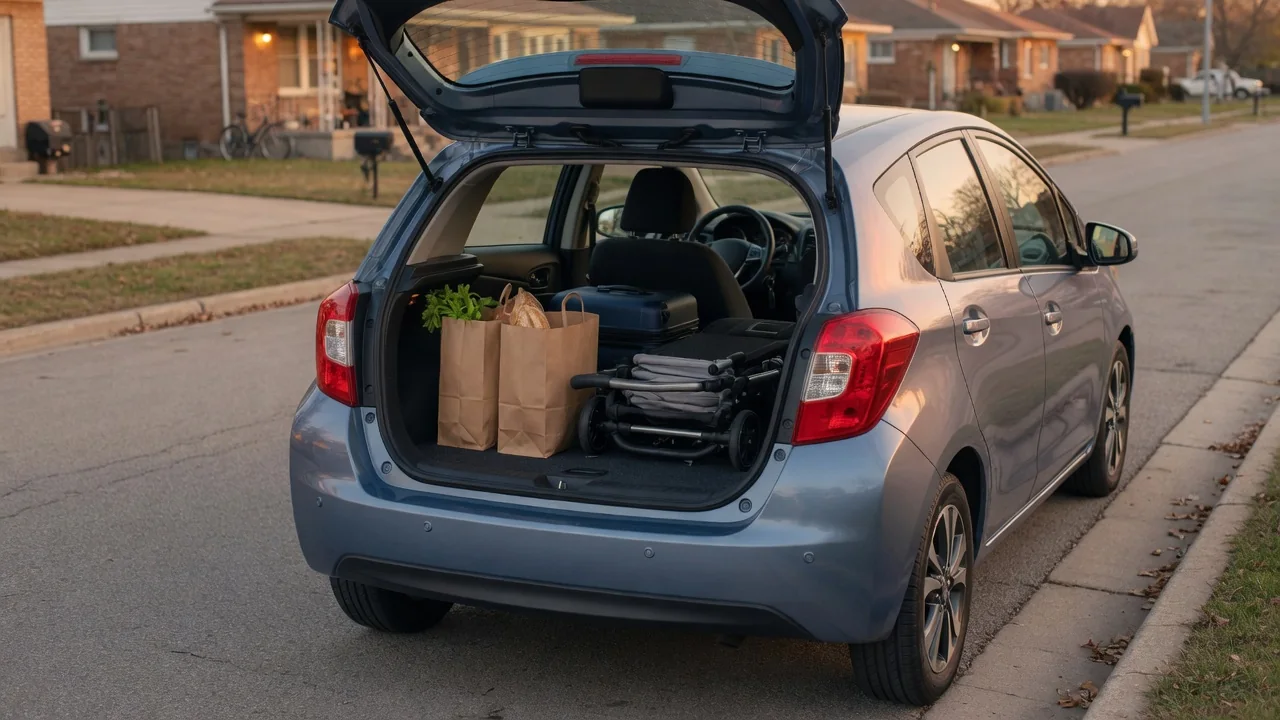
The hatchback is one of the most influential ideas in small-car design. It did not add space through sheer size. Instead it changed how the interior space is divided and accessed. Hatchback development history is about three connected decisions: replacing a trunk lid with a full-height rear door, making the rear seat part of the cargo system, and fitting all of it into a body short enough for city driving. Together they changed what buyers expect from a compact car.
Rear Opening: Turning the Trunk Lid Into a Door
A conventional sedan keeps luggage in a separate box behind the passengers. A fixed bulkhead or parcel shelf divides the box from the cabin, and the trunk lid is hinged below the rear window. The opening is bounded by the window above and the bumper below, so loading means lifting items over a sill and through a fairly narrow slot. A hatchback moves the hinge to the roof and makes the rear window part of the door. The opening then runs from the roofline down toward the bumper, and the whole back of the body becomes an entry point.
This had direct packaging consequences. Designers no longer had to place a separate trunk volume behind the passenger compartment, so a car could be shorter overall for a given cabin size. The cargo area became an extension of the interior rather than an add-on. Item height was limited by the roofline instead of the trunk lid, so tall or awkward objects that would never fit through a sedan trunk opening could slide straight in. The flexibility of the car came from accessible volume, not from added length.
The large opening also brought engineering tasks. Cutting a big aperture into the rear of a body removes structure that a fixed bulkhead would otherwise provide, so the frame around the opening and the rear pillars must be reinforced to keep the body stiff. The heavier door needs gas struts or springs to stay open, plus hinges and seals that can withstand frequent use. Because the cargo area shares air space with the cabin, many hatchbacks use a removable or hinged cargo cover to hide luggage and reduce some of the noise coming from the rear.
Folding Seats: Making the Cabin Reconfigurable
A wide rear opening is only half the idea. Its real value appears when the cargo area can grow into the passenger space. A folding rear seatback turns the area behind the front seats into a load floor, so a small car can switch between carrying people and carrying things. Split folding backrests, often divided unevenly, take this further. One side can fold for a long object while a passenger still rides on the other. The rear seat stops being a fixed assumption and becomes an adjustable part of the package.
Designing a seat that folds well is a compromise. In the simplest arrangement the backrest folds onto the cushion, which often leaves a step or slope in the load floor. Other designs flip the cushion forward first so the backrest can lie lower and flatter, at the cost of more steps and hardware. Everything under and around the rear seat limits these choices. The fuel tank, the rear suspension, the wheel arches and the spare wheel or repair kit all compete for the same space. Headrests may need to be removed or tilted before the seat will fold fully.
Once the rear seat was treated as a variable, designers began exploring further options. Some cars use sliding rear seats, adjustable load floors or extra storage under the floor. These features vary widely from one vehicle to another, so the folding procedure, latch positions and any load limits for a particular car belong in its owner's manual rather than in general rules.
Urban Use: Small Footprint, Flexible Volume
City driving rewards short cars. Tight parking spaces, narrow streets and frequent maneuvering all favor a compact footprint, and the hatchback body suits these conditions. Because there is no trunk extending behind the rear wheels, the rear overhang can stay short. A shorter car is easier to fit into a curbside gap, and the back of the car sits close to the rear window, which can make it easier to judge where the vehicle ends. Hatchback packaging has commonly been paired with a transversely mounted front engine and front-wheel drive. That layout keeps the drivetrain compact at the front and frees floor space for people and cargo.
Daily urban life also suits the hatchback's flexibility. A typical week might include commuting, grocery runs, a stroller, sports gear and the occasional bulky purchase. A sedan of the same length handles some of these well and others poorly. A hatchback lets one small car cover nearly all of them by folding a seat or opening the rear door wide. That versatility is a large part of why the hatchback became a default small-car body style in many markets. Small cars no longer had to be judged only on how many people they seated, but on how many different jobs they could do.
Practical Implications and Limits
For owners and shoppers, the hatchback layout changes what is worth checking. A single cargo volume figure says little about usability, because measurement methods differ and the number does not describe the shape of the space. The width of the opening at its narrowest point, the height of the load lip, the flatness of the floor with the seats folded and the gap between the seatbacks and the front seats often matter more in daily use. Securing cargo matters more too. Without a fixed bulkhead between the luggage and the occupants, loose heavy items can move forward under hard braking. Tie-down points, cargo nets and a sensible loading order are part of using the design safely.
The design also has limits that come from the same features that make it useful. A rear door that swings upward needs clearance behind and above the car, which can be awkward in a tight parking space or a low garage. Support struts can weaken over time, so the hatch may no longer stay open on its own, and worn seals can let in water or noise. Cargo is harder to keep out of sight than in a closed trunk, and items in the cargo area can transmit noise and temperature changes into the cabin. How strongly any of these affect a specific car depends on its design and condition, so the owner's manual and the vehicle's own specifications remain the reference for maintenance intervals, load ratings and operating procedures.