How Did Car Wheel Designs Change With Manufacturing?
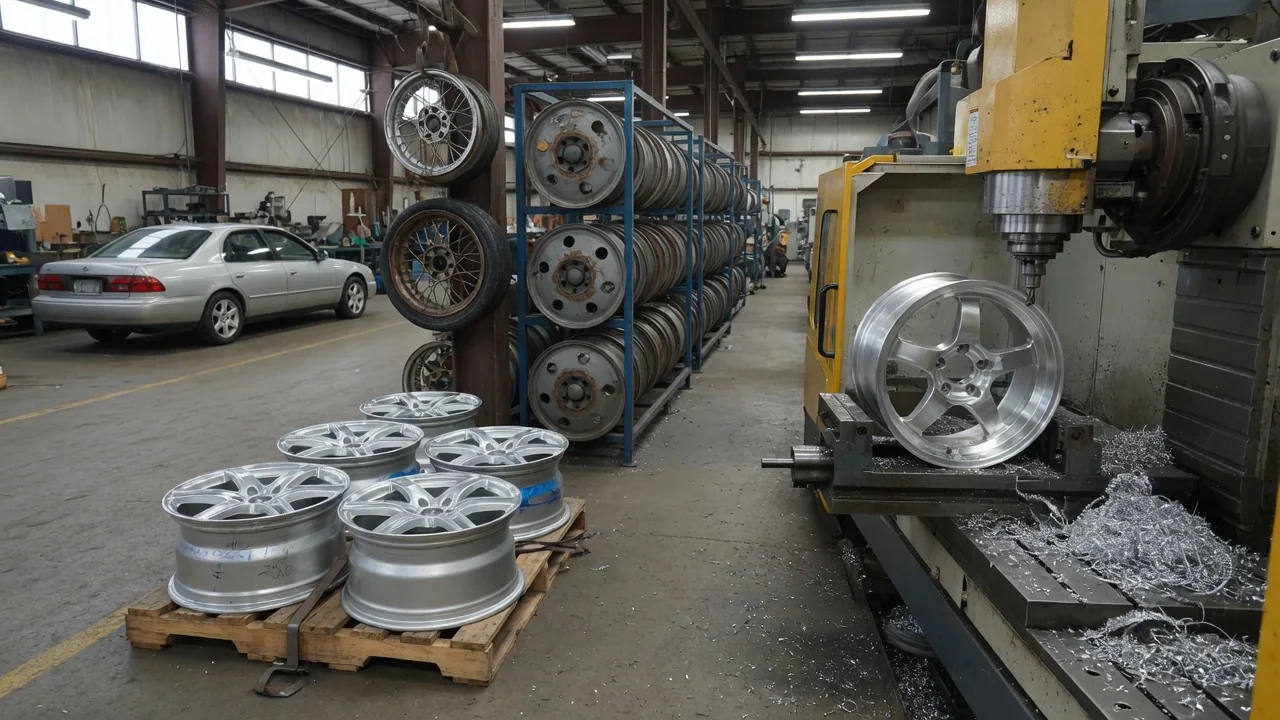
How did car wheel designs change with manufacturing? In short, each new way of making a wheel opened new possibilities for its shape, weight and finish. Wheels moved from carriage-style construction to stamped steel, then to cast and forged aluminum alloys. Every shift changed what engineers could build affordably and what designers could draw. This overview of automotive wheel design history follows that path and explains what it means for owners today.
Steel to alloy: how materials reshaped the wheel
The earliest cars borrowed wheel technology from horse-drawn carriages and bicycles. Wooden-spoke wheels and tensioned wire-spoke wheels took a lot of labor to build and needed regular attention, so they were a poor fit once cars were produced in large numbers. The answer was the pressed steel wheel. It has a center disc stamped from sheet metal, joined to a rolled steel rim, usually by welding or riveting. Stamping presses could make these parts quickly and consistently. The steel wheel became the standard for high-volume production, and it remains common on base trims, commercial vehicles and spare wheels.
Steel suits this role because it is inexpensive, strong and ductile. When a steel wheel takes a hard impact, it tends to bend rather than crack, and a bent rim can sometimes be straightened. The trade-off is weight. A heavy wheel adds unsprung mass, which is the part of the vehicle not supported by the springs. More unsprung mass makes it harder for the suspension to keep the tire in contact with uneven pavement. A heavy wheel also adds rotating mass that the engine must speed up and the brakes must slow down.
Aluminum alloys, and in specialized cases magnesium alloys, addressed those drawbacks. An alloy wheel can be designed to weigh less than a comparable steel wheel while staying stiff. Aluminum also conducts heat well, which helps carry heat away from the brakes. For a long time, alloy wheels were associated with racing and expensive cars because the material and processing cost more. As aluminum production and wheel-making processes became more efficient, alloy wheels spread across mainstream vehicles. Today they are standard equipment on many trims.
Casting: the process that made alloy wheels common
Most aluminum wheels are cast, meaning molten metal is poured or pushed into a mold shaped like the finished wheel. In gravity casting, the metal fills the mold under its own weight. The method is relatively simple, but it is more prone to porosity, which means small voids that weaken the metal. Gravity-cast wheels therefore often need thicker sections to reach the required strength. Low-pressure casting uses controlled pressure to force the molten aluminum up into the mold. This tends to fill the mold more completely and produce denser metal. Denser metal allows thinner spokes and less material for the same strength, and low-pressure casting is now a widely used process for factory wheels.
Casting is only the start. Wheels are typically heat-treated to strengthen the alloy. They are then machined on lathes and drilling equipment to create precise mounting surfaces, the center bore, the lug holes and the tire bead seats. Manufacturers commonly inspect castings for internal defects and test wheel designs for fatigue and impact resistance before production. These steps explain why two wheels that look similar can differ in weight and durability. The process behind a wheel matters as much as its shape.
Other methods go beyond basic casting. Flow forming, sometimes called rotary forging, starts with a cast wheel. The barrel is spun while rollers press and stretch it, which thins the rim and aligns the metal's grain for added strength. Forging shapes a solid aluminum billet under very high pressure. It produces dense, strong metal that allows lighter designs, though at a higher cost. Multi-piece wheels join separate centers and rim sections with bolts or welds. This allows custom widths and offsets but makes assembly more complex.
Styling: what new methods let designers do
Stamped steel limited what a wheel could look like. The press could form ventilation holes, slots and simple ridges, but not deep, open spokes. Designers therefore styled steel wheels indirectly, using paint colors, chrome trim rings, hubcaps and full wheel covers. The wheel cover became a styling element in its own right. It lets a plain, economical steel wheel carry a distinctive look, and many base-model and fleet vehicles still use it.
Casting changed the relationship between structure and appearance. A mold can produce almost any shape that can be filled with metal and removed cleanly, so the spokes themselves became the design. Multi-spoke, split-spoke, mesh and turbine-like patterns all became practical. Machining added more options. A painted wheel can be put back on a lathe so its face is cut to bright metal, which creates the two-tone, diamond-cut look. Finishes such as powder coating, polishing and chrome-like coatings expanded the choices further.
Manufacturing improvements also supported a long trend toward larger wheel diameters paired with lower-profile tires. Larger wheels leave room for bigger brakes, and they fill the wheel arches in a way many designers favor. More recently, aerodynamics has influenced styling, especially on vehicles where efficiency is a priority. Flatter faces, smaller openings and plastic aero inserts attached to alloy wheels reduce air turbulence around the wheel. Wheel design now balances appearance, weight, cooling and airflow rather than looks alone.
Practical implications and limits for owners
These manufacturing differences show up in everyday ownership. Many drivers keep a set of steel wheels for winter because they are inexpensive to replace if damaged, and their covers can be swapped cheaply. Alloy wheels can suffer from curb rash. They can also corrode where the protective clear coat has been chipped, and machined faces may be more vulnerable to this kind of cosmetic damage. Alloy can crack under a severe impact rather than simply bend. A wheel that has hit a deep pothole is worth having inspected, and some types of damage are not considered safely repairable.
When replacing or upgrading wheels, correct fitment matters more than the material or process. The bolt pattern, center bore, offset, width, diameter and load rating must suit the vehicle. Lug hardware may also differ between steel and alloy wheels. This information is typically found in the owner's manual, on the tire placard and in markings cast or stamped into the wheel itself.
General rules have limits. A lighter wheel does not automatically make a specific car faster or more comfortable, because suspension tuning, tire choice and wheel size all interact. Larger wheels with low-profile tires can sharpen steering response, but they leave less sidewall to absorb bumps. Manufacturers rarely advertise the exact production method of factory wheels. A wheel's appearance alone is therefore not reliable proof of whether it was cast, flow formed or forged.