How Are New Car Windshields Checked for Proper Fit?
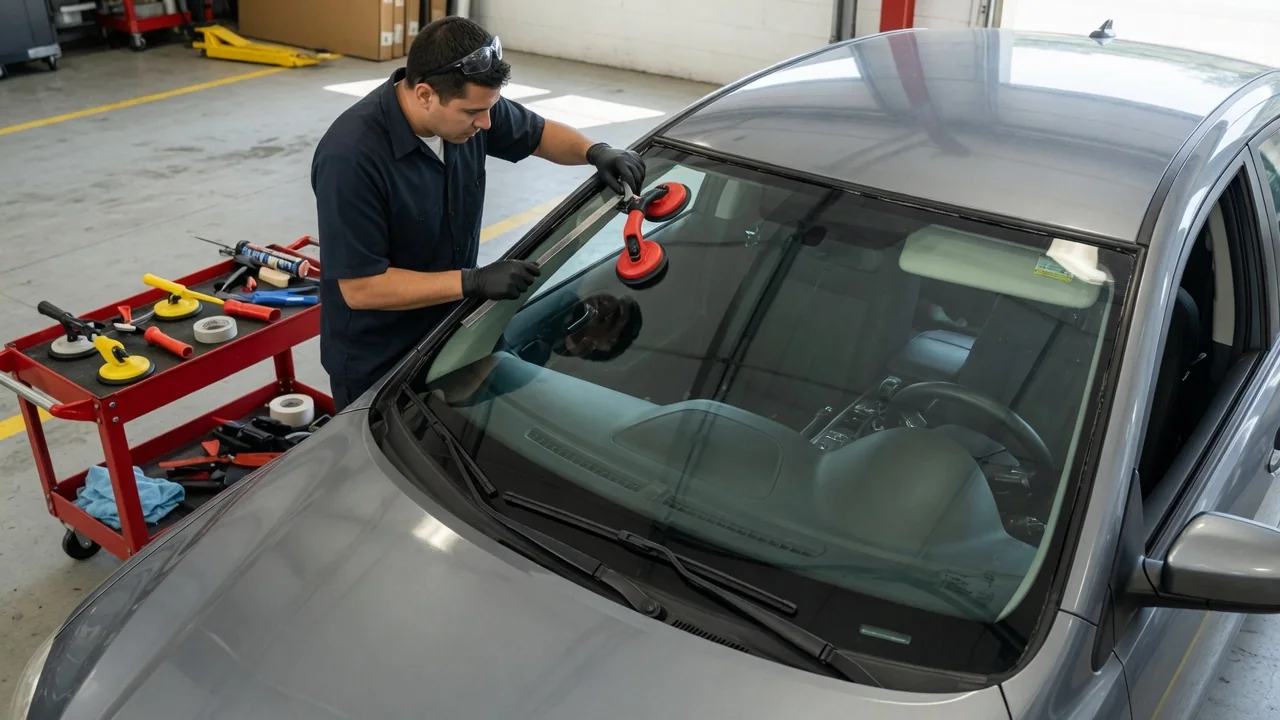
A windshield on a modern car is more than a window. It is bonded directly to the body, keeps rain and wind noise out, and on many vehicles contributes to roof support and passenger-side airbag performance. Because of that, a factory windshield fit inspection usually looks at three linked things: whether the adhesive went down in the right place, whether the glass sits correctly in its opening, and whether the finished seal keeps water out.
Adhesive placement
On most current passenger vehicles, the windshield is held in place by a structural urethane adhesive rather than by a rubber gasket alone. On an assembly line, this adhesive bead is commonly applied by a robot, either to the glass itself or to the body flange around the opening, often called the pinchweld. Before the bead goes on, the bonding surfaces are typically cleaned and treated with primers or activators so the urethane can grip both the painted metal and the dark ceramic band printed around the edge of the glass. That band, known as the frit, also shields the adhesive from sunlight, which can degrade urethane over time.
Checking adhesive placement focuses on continuity, position, and shape. A break in the bead can become a leak path or a weak spot. A bead that drifts too far inboard may show through the glass or interfere with interior trim, while one that drifts outboard can squeeze out past the exterior molding. Many plants use camera-based vision systems mounted near the dispensing nozzle or at a downstream station to compare the applied bead with its programmed path and flag gaps, thin sections, or misplaced segments. Bead profile matters as well; the adhesive is often laid in a tall or triangular shape so it compresses evenly when the glass is pressed into place. Exactly which parameters are monitored, and whether every vehicle or only a sample is also checked by hand, varies by manufacturer and plant.
Glass alignment
Once the adhesive is applied, the glass has to be set into the opening before the urethane begins to skin over, which limits how long the operation can take. Automated cells commonly use cameras or sensors to locate the edges of the glass and reference points on the body, then correct the placement path so the windshield is centered rather than simply set down at a fixed position. This compensates for small variations in both the glass and the body structure. Setting blocks, spacers, or locating features built into the opening or attached to the glass may help hold the windshield at the correct height and keep it from sliding while the adhesive cures.
After installation, alignment is usually judged by gap and flush. Gap is the space between the glass edge and the surrounding roof and pillars, and flush describes whether the glass surface sits level with those panels rather than standing proud or sitting sunken. Inspection may rely on handheld gauges, laser measuring heads, or inline vision stations, with results compared against tolerances the manufacturer sets for that body. Visual checks also cover the moldings, which should seat evenly along every edge, and the position of the glass relative to the cowl at the bottom and the roof at the top. Uneven gaps can point to a misplaced windshield, a body opening that is slightly out of shape, or trim that was not fully engaged.
On vehicles that mount driver-assistance cameras or sensors behind the windshield, glass position also matters for those systems. That is one reason such vehicles typically go through a camera aiming or calibration step later in assembly or at the end of the line.
Leak check
The final question is whether the bonded joint actually seals. The most familiar method in vehicle assembly is a water test booth, sometimes called a monsoon or rain test, where the finished car passes through heavy sprays aimed at the roof, pillars, and glass edges. Afterward, inspectors check inside the cabin around the A-pillars, the headliner edges, the top of the dashboard, and the footwells for any sign of moisture. Some plants add moisture-sensing tools or targeted blotting checks in known problem areas to make small seepage easier to detect.
Water testing is not the only approach. Air-based methods can find openings that a spray test might miss or that would first show up as wind noise. A common technique places an ultrasonic emitter inside the closed cabin and scans the exterior seams with a receiver; sound escaping through the joint indicates a gap in the seal. A leak found at this stage is usually traced to its source, such as a break in the adhesive bead, a lifted molding, or an unsealed body seam near the windshield, and corrected before the vehicle leaves the plant.
Practical implications and limits
For owners, these factory steps explain why a windshield problem on a new car is more often a fit or sealing issue than a flaw in the glass itself. Signs worth noting include water spots on the upper dashboard or headliner after rain or a car wash, a whistle that appears at highway speed, a molding that lifts or sits unevenly, or a visibly different gap from one side of the glass to the other. None of these symptoms proves a bad installation by itself, because door seals, sunroof drains, and cowl panels can produce similar effects, so a dealer or body technician normally confirms the source before resealing or replacing anything.
An owner also cannot directly verify which inspections a particular car went through. Manufacturers do not publish the details of every station, sampling practices differ between plants, and a car that passed the line can still be affected later by shipping damage, body repairs, or a replacement windshield. When glass is replaced outside the factory, the same principles still apply: correct primers and adhesive, a continuous bead, centered placement, and enough cure time before driving, as specified by the adhesive maker. Vehicles with windshield-mounted cameras may need recalibration afterward. The owner's manual and official service information for the specific vehicle remain the authority on those requirements.