Home EV charging: installation and everyday use
The short answer
Charging an electric vehicle at home in the US usually means one of two things: plugging into an ordinary household outlet (Level 1) or installing a dedicated higher-voltage charger (Level 2). Which one makes sense depends on how far you drive, what your electrical service can support, and, most importantly, whether you control the parking space and the wiring that serves it. If you live in a detached house with your own driveway or garage, home charging is mostly a matter of choosing equipment and hiring an electrician. If your parking is shared, as in many apartments, condos and townhome communities, the deciding factor is usually permission and power access rather than hardware.
Level 1 and Level 2 compared
The terms Level 1 and Level 2 describe the power supply rather than a particular brand of charger. Level 1 uses the standard 120-volt outlet found throughout US homes. Level 2 uses a 240-volt circuit, the same type of supply used by appliances such as electric dryers and ranges. Exact charging speeds vary by vehicle, by the onboard charger built into the car, and by the circuit, so no specific figures are given here.
Feature | Level 1 | Level 2; Power source | Standard 120-volt household outlet | Dedicated 240-volt circuit; Equipment | Often a portable cord supplied with or sold for the vehicle | Wall-mounted or portable unit rated for 240 volts; Installation | Usually none if a suitable outlet already exists near the parking spot | Typically requires an electrician, and often a permit; Relative speed | Slowest option | Considerably faster than Level 1; Best suited to | Short daily driving, plug-in hybrids, long overnight parking | Longer commutes, larger batteries, households sharing one charger
Connector type also matters. Many vehicles sold in the US have used the J1772 plug for Level 1 and Level 2 charging, while a growing number use the NACS connector, standardized as SAE J3400. Adapters exist, but check which connector your specific model and model year uses before buying equipment.
Installing a charger at a single-family home
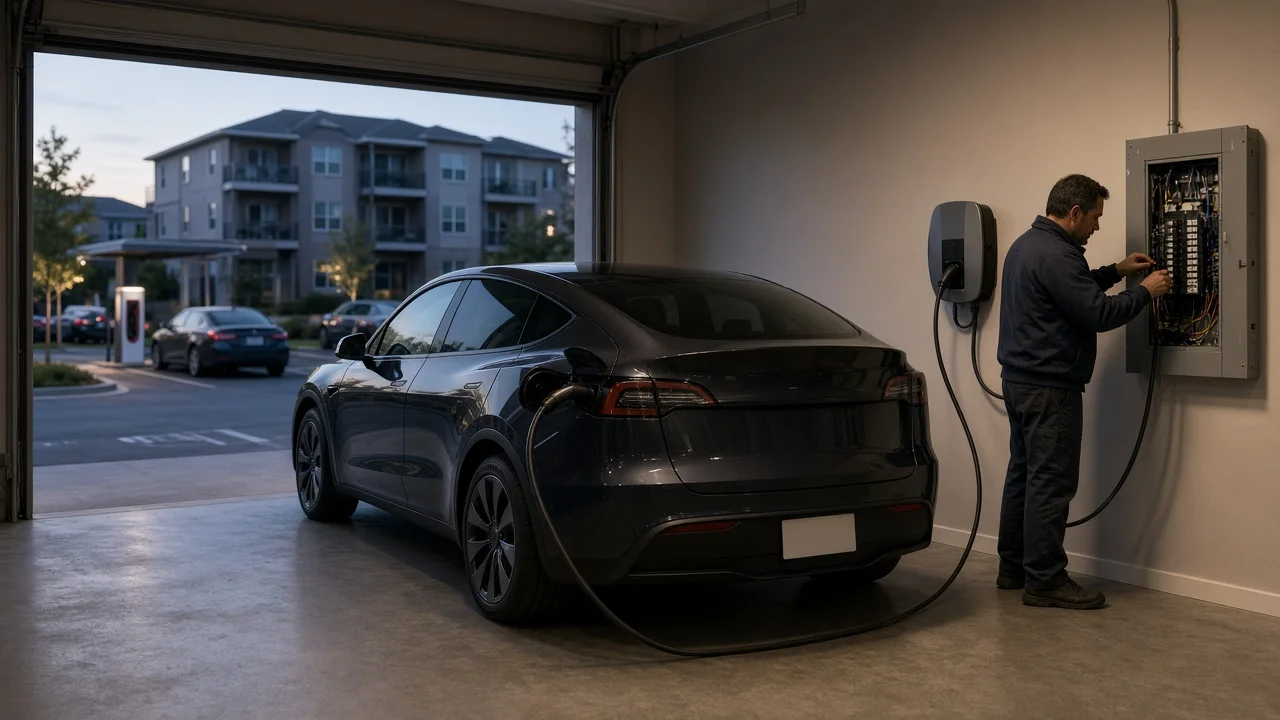
Level 2 installation is electrical work, and in most jurisdictions it should be done by a licensed electrician, with a permit and inspection where local rules require them. The typical sequence looks like this:
Confirm your vehicle's connector type and the maximum charging power its onboard charger accepts, since a charger more powerful than the car can use offers no speed benefit. Have an electrician assess your electrical panel and perform a load calculation to determine whether the existing service can support a new 240-volt circuit or whether a panel upgrade or load-management device is needed. Decide between a hardwired charger and one that plugs into a 240-volt outlet, and choose a mounting spot that lets the cable reach the car's charge port without strain. Pull any required permit, complete the installation, and have it inspected if your locality requires it. Ask your utility whether it offers EV-specific rate plans, and check for federal, state or utility incentives that may apply to the equipment or installation.
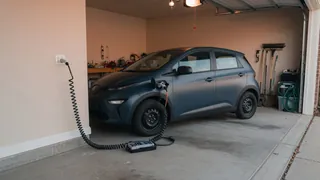
For Level 1 charging, the main precaution is using a properly grounded outlet in good condition, ideally on a circuit not heavily loaded by other devices. Many automakers advise against using household extension cords with charging equipment; follow the guidance in your vehicle's owner's manual.
When parking is shared: apartments, condos and townhomes
Shared residential parking changes the question from 'which charger should I buy?' to 'who owns the wiring, who pays for the electricity, and who has to approve the work?' Common parking areas are usually controlled by a landlord, property manager or homeowners association, and the electrical supply may run through a common meter rather than your own.
Residents in shared buildings typically end up with one of these arrangements:
Shared chargers installed by the property, often in a set of designated spaces, with access managed through an app, card or reservation system and usage billed per session. A private charger at an assigned space, installed with the owner's or association's approval, sometimes wired to the resident's own unit meter and sometimes to a common meter with separate submetering for billing. A standard outlet at an assigned space that the property permits residents to use for Level 1 charging, with an agreed method of paying for electricity. No on-site option, in which case drivers rely on workplace or public charging.
Some US states have adopted so-called right-to-charge laws that limit how far landlords or associations can refuse a resident's reasonable request to install charging at their own expense. Whether such a law applies, and what conditions it sets regarding insurance, cost responsibility and installation standards, depends on your state and your type of housing. Check current law in your state and review your lease or association rules before making a request.
When approaching a landlord or association, it helps to arrive with specifics: which space you would use, where the nearest electrical supply is, who would perform and pay for the work, how electricity use would be measured and billed, and who would be responsible for maintenance and liability. A written agreement covering these points protects both sides, particularly if you move out and the equipment stays.
Everyday charging habits
Most home charging happens overnight, which suits both convenience and cost. Many vehicles and Level 2 chargers let you schedule charging, which is useful if your utility offers time-of-use pricing with lower rates at certain hours. In shared buildings, scheduling and etiquette matter more: moving the car once charging finishes and following any posted time limits keeps shared spaces available to other residents.
Most EVs also let you set a maximum state of charge. Recommendations on daily charge limits differ between manufacturers and battery chemistries, so use the guidance for your specific model rather than a general rule.
What this guide does not cover
No confirmed figures were available for this article, so it does not give charging speeds, equipment or installation prices, electricity costs, incentive amounts, or the details of specific state laws. These vary by vehicle, utility, location and date. For numbers that apply to you, consult your vehicle's documentation, a licensed electrician's assessment, your utility, and your state's current rules on charging in rented or shared housing.