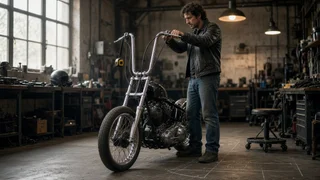
High-Rise Motorcycle Handlebars: Choosing a Comfortable Fit
High-rise motorcycle handlebars can make a bike far more comfortable, but only when the bars suit your body and your specific motorcycle. A good fit puts your wrists roughly straight, your elbows slightly bent and your shoulders relaxed, with full steering lock available and no strain on cables or lines. The main condition that changes the answer is compatibility. Taller bars often need longer clutch and throttle cables, brake lines and wiring, and that can turn a simple accessory into a larger, more expensive installation. Your state's handlebar height rules can also limit how tall you can legally go.
What High-Rise Bars Change About Your Riding Position
Handlebar geometry is usually described by a few dimensions. Rise is how far the grips sit above the clamping point. Pullback is how far the grips come back toward the rider. Width is the overall span from end to end. Center width is the length of the straight section where the bar clamps to the risers. Together these set where your hands land relative to your seat and shoulders.
Raising the grips generally sits the rider more upright, which can ease pressure on the lower back and wrists. The trade-offs are more wind pressure on the chest at highway speeds, a different steering feel because your arms work at a new angle, and possible fatigue in the shoulders if the grips end up too high. Very tall bars with little pullback can leave the arms stretched upward and forward, which many riders find less comfortable than a moderate rise.
How to Judge Fit Before You Buy
Start with your current position rather than a style you like. Sit on the bike in your normal riding gear and posture, with feet on the pegs or floorboards, and note what feels wrong. Reaching forward, bent wrists, locked elbows or hunched shoulders each point to a different change.
Reaching too far forward: look for more pullback before more rise. Shoulders hunched or hands too low: a moderate increase in rise may help. Wrists bent: grip angle and bend shape matter as much as height. Elbows locked or arms splayed: overall width may be too wide for your frame. Knees touching the bars at full lock: pullback or drop may be excessive for your seating position.
A practical way to test is to have a helper hold your hands at the position you want while you sit in riding posture, then measure from the current grips to that point. Compare those changes with the rise, pullback and width listed by the bar maker. If a dealer or friend has a similar bike with different bars, sitting on it is often more useful than any chart.
Compatibility Checks for Your Motorcycle
Compatibility depends on model identification: confirm the exact make, model, model year, trim and market of your bike before ordering. Manufacturers sometimes change the handlebar clamp size, switch housings, wiring routes or brake systems between years or trims, so a bar listed for one version may not fit another without extra parts.
Clamp diameter: bars come in different diameters, and some taper or step down at the grips. The bar must match your risers or you will need new risers or adapters. Control diameter: your switch housings, master cylinder and clutch perch must fit the bar where they mount. Internal versus external wiring: some bars are drilled so wiring runs inside the tube. Check whether your bike's harness is routed internally and whether the new bar supports that. Cable and line length: taller bars usually need longer clutch, throttle and brake lines or cables, and sometimes extended wiring. Electronic throttle and ABS: bikes with ride-by-wire throttle, ABS or cruise control may need specific extension harnesses or lines; confirm what your system requires. Steering clearance: turn the bars lock to lock and confirm they do not touch the tank, fairing, windshield or instruments. Accessory fit: mirrors, windshields, fairings, handlebar bags and phone mounts may need to be repositioned or replaced.
Brake line routing deserves particular attention. A line that pulls tight at full lock, or a cable that binds when the bars turn, affects how the riding controls respond. Hydraulic brake and clutch lines that are replaced must be bled correctly afterward, and all fasteners should be tightened to the service specification for your model.
Legal Height Limits in the US
Handlebar height rules vary by state. Some states restrict grip height relative to the rider's shoulders when seated, others use a measurement above the seat, and some have no specific limit. Rules can also change over time. Before buying tall bars, check the current motor vehicle code for the state where the bike is registered and where you ride most. Bars that are legal in one state may draw a citation in another.
Total Cost: More Than the Bars Themselves
The bar's price is often only part of the cost. Depending on the bike, a complete swap may involve extended clutch and throttle cables, longer brake lines, a wiring extension kit, new risers, fresh grips, brake fluid and labor. Bikes with internal wiring, electronic throttle or ABS typically have more involved installations. Ask a dealer or shop for a quote that lists every part and the labor time, and confirm whether they plan to reuse or replace your existing controls.
Doing the work yourself can save labor, but it involves bleeding brakes, routing wiring and setting cable freeplay. If you are not confident with hydraulic brakes, consider having at least that part done professionally.
Comparing Your Options
High-rise bars are one of several ways to bring the grips closer and higher. The right choice depends on how large a change you need and how much installation work you will accept.
| Option | What it changes | Typical installation scope | Best suited to |; | Handlebar risers | Raise and sometimes pull back existing bars | Often minimal; may still need cable checks | Riders who need a small adjustment |; | Pullback bars | Bring grips closer with modest rise | Moderate; may need some extended lines | Riders reaching too far forward |; | Moderate high-rise bars | Raise grips noticeably with some pullback | Often needs longer cables, lines or wiring | Riders wanting an upright position for touring or commuting |; | Tall high-rise bars | Large increase in grip height | Usually the most involved; check legal limits | Riders prioritizing a specific style and upright stance |
If you only need a small change, risers are usually the least disruptive starting point and are easy to reverse. If the problem is mostly reach rather than height, pullback bars may solve it with less wind exposure than tall bars. Moderate high-rise bars suit riders who want a clearly upright position for longer rides. The tallest bars make most sense when the style matters to you and you have confirmed legality and budgeted for the full installation.
Passenger Considerations
Taller bars change the rider's posture, and that can change the passenger's space. A more upright rider may sit slightly farther back, and a different arm position can affect how a passenger's knees and hands fit around the rider. If you regularly ride two-up, sit on the bike with your passenger before finalizing the bar choice, and recheck mirror visibility with both of you aboard.
A Simple Decision Path
Identify what is uncomfortable in your current position and which dimension needs to change. Confirm your bike's exact model, year and trim, plus clamp size, control fit and wiring type. Check your state's handlebar height rules. List every extra part the swap needs, including cables, lines and wiring extensions. Get a full installation quote or plan the DIY work, including brake bleeding. After installation, check full-lock clearance, control function and fastener torque before riding.