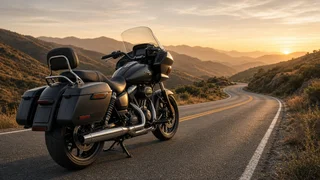
Motorcycle Ape Hangers: How to Choose Bars That Fit You and Your Bike
Ape hangers can be a comfortable, controllable choice, but only when three things line up: the rise and pullback suit your body, the bars are compatible with your motorcycle's clamps, controls and wiring, and the height is legal where you ride. Comfort comes from the shape that puts your hands in a relaxed position with a slight bend at the elbows, not from the tallest bar available. If any of those three conditions fails, a taller bar usually makes the bike harder to ride rather than easier.
What ape hangers change about riding position
Ape hangers are handlebars with tall vertical uprights that raise the grips well above the clamp point. Raising the grips moves your hands up and often back toward you, which changes how your weight sits on the seat, how much your arms carry, and how much of your upper body is exposed to the wind.
For some riders, especially on cruisers with forward controls, a moderate rise opens up the chest and relieves pressure on the lower back. For others, raised arms lead to tired shoulders, numb hands and reduced leverage in tight turns. The same bar can feel very different on two riders with different arm length, torso height and seat position, which is why a bar that suits a friend may not suit you.
Rider fit: the measurements that matter
Handlebar listings usually describe several dimensions. Knowing what each one does helps you compare bars and predict how they will feel.
Dimension | What it means | How it affects fit; Rise | Vertical height from the clamp area to the top of the bar | Sets how high your hands sit; the biggest factor in arm and shoulder load; Pullback | How far the grips come back toward the rider | Shortens or lengthens reach; too little stretches you forward, too much crowds your elbows; Overall width | Distance between bar ends | Affects leverage, shoulder spread and whether the bar suits your frame and lane position; Center width | Width of the straight section that sits in the risers | Must suit your riser spacing and leave room for gauges, switches or a fairing; Grip length | Straight section available for grips and controls | Must accept your grips, levers, switch housings and any heated grips or bar-end parts; End rise or grip angle | Angle of the grip section relative to the ground | Determines whether your wrists sit straight or bent up or down
A widely used rule of thumb is that your hands should sit at or below shoulder height when you are seated in your normal riding posture, with elbows slightly bent and wrists roughly straight. Hands above the shoulders reduce blood flow to the fingers on longer rides and make it harder to pull and push the bar firmly during slow maneuvers.
How to estimate the right rise before you buy
Sit on the bike in your usual riding posture, wearing the boots and jacket you normally ride in, with your feet on the pegs or floorboards. Have a helper measure from the top of the handlebar clamp or riser to the height where your hands naturally want to rest with relaxed shoulders. Compare that height with the rise listed for the bars you are considering, remembering that rise is typically measured to the top bend, and grips may sit a little lower depending on the shape. Check reach by extending your arms toward where the grips would be; your elbows should not lock straight and your hands should not crowd your chest. Turn an imaginary bar to full lock in both directions and confirm you would still reach the outer grip without leaning off the seat.
If you are unsure, a mid-height bar is generally more forgiving than a very tall one. Changing the riser height or rotating the bar slightly in the clamps can fine-tune the position afterward, within what the bar design and control routing allow.
Compatibility checks for your motorcycle
Fitment depends on the exact model, model year, market and trim. Two bikes that look alike can differ in bar diameter, control types and wiring. Confirm the details below against your specific motorcycle rather than the model family in general.
Bar diameter and risers
Common handlebar diameters include 7/8 inch, often seen on many metric motorcycles, 1 inch, common on many American V-twins, and 1-1/4 inch, often called fat bars. Some bars taper from a larger center to a smaller grip section. Your risers and clamps must match the center diameter, and your controls must match the grip-section diameter. Mismatched sizes require different risers, adapters or control assemblies, which adds cost and work.
Cables, hoses and wiring
Taller bars need longer connections between the controls and the bike. This is often the largest hidden cost of an ape hanger swap.
Throttle cables: a cable-operated throttle usually needs longer cables; an electronic throttle (ride-by-wire) uses a wiring harness that may need extending or a model-specific kit. Clutch: a cable clutch needs a longer cable; a hydraulic clutch needs a longer line and bleeding afterward. Front brake: the hydraulic line must be replaced with a longer one, and the system must be bled correctly. On bikes with ABS, line routing and the bleed procedure can be more involved. Switch and control wiring: handlebar switch harnesses often need extending, either by splicing or with plug-in extension harnesses made for your model. Internal versus external routing: bars drilled or dimpled for internal wiring give a cleaner look but make installation more labor-intensive; external routing is simpler to service.
Some manufacturers and aftermarket brands sell complete kits matched to particular models and years. These reduce guesswork, but still verify that the kit lists your exact model year and options such as cruise control, heated grips or audio controls.
Clearance and accessories
Fuel tank and dash clearance at full lock, including the length of cables and hoses as they bend. Windshield or fairing: tall bars may not suit a fairing-mounted setup, and a windshield may need a different height or mounting. Mirrors: the new bar position can change the angle and visibility of bar-mounted mirrors. Knurling: some bars have a textured section where they meet the risers to resist slipping; check whether your riser clamps are designed to work with it. Gauges and phone mounts attached to the bar need room on the center section.
Legal height limits in the US
Many US states regulate handlebar height, and the rules differ. Some states set the limit relative to the rider, such as grips not above shoulder height when seated, while others use a fixed height above the seat, and some have no specific limit. Rules can change, so check the current vehicle code or licensing agency guidance for your state and any state you plan to ride through. A bar that is legal at home can still draw a citation elsewhere, and illegal modifications may complicate an insurance claim.
Handling and comfort trade-offs
Wind load: at highway speed your upper body acts like a sail, and tall bars place your arms in the airflow, which can tire you faster on long rides. Low-speed control: raised hands give less leverage for tight U-turns and parking-lot maneuvers until you adapt. Fatigue and circulation: hands held high for long periods can tingle or go numb, which is a sign the rise is too tall for you. Upright posture: a well-chosen moderate rise can reduce lower-back strain for riders who otherwise slump forward toward low bars. Visibility: an upright stance can improve your view over traffic, though very tall bars may block your view of the gauges.
Effect on passengers
Ape hangers mainly change the rider's position, but they can affect a passenger indirectly. A rider sitting more upright or slightly farther back on the seat may leave the passenger with less room, especially on a stepped or compact two-up seat. If your posture shifts, test the seat and footpeg arrangement with your usual passenger before committing. A windshield change made to suit the new bars can also alter how much wind the passenger feels. If you ride two-up often, a moderate rise that keeps you in your normal seat position tends to be the safer choice.
Installation: DIY or shop
A bar swap on a bike with cable controls and simple switch wiring is within reach of many experienced home mechanics. The job becomes more demanding when it involves hydraulic brake and clutch lines, ABS, electronic throttle, CAN-bus or other networked wiring, or internally routed bars. Use the torque values and bleeding procedures in your motorcycle's service manual, check that the throttle snaps closed at full lock in both directions, and confirm that the brakes feel firm before riding. If you are not confident with brake hydraulics or wiring, a professional install is worth the cost.
Also consider warranty: on a newer bike, aftermarket parts and modified wiring may affect coverage for related components. Ask your dealer how they handle this before making changes.
Pre-purchase checklist
Measure your seated hand height and reach on your own bike, in riding gear. Choose a rise that keeps your hands at or below shoulder height with relaxed elbows. Confirm center and grip diameters match your risers and controls for your exact model year. Identify whether your throttle, clutch and brakes are cable, hydraulic or electronic, and price the required longer cables, lines or harnesses. Check clearance with the tank, dash, windshield and any accessories at full lock. Verify current handlebar height rules for your state and anywhere you regularly ride. Think about how your posture change affects your passenger and seat space. Decide whether you will install the bars yourself or budget for a shop install. Keep your original bars and parts in case you want to return to stock or sell the bike.
Choose ape hangers by fit first and style second. A bar that matches your body, your bike's controls and your local rules will look right and still be comfortable at the end of a long day in the saddle.