Motorcycle T-Bar Handlebars and Rider Fit: What to Check Before You Buy
The short answer
T-bar handlebars can suit riders who want a more upright, arms-raised posture on a cruiser or bagger. Whether a specific set fits depends on two separate checks. The first is your body: the bar's rise, pullback and width have to suit your torso height, arm length and shoulder comfort. The second is your motorcycle: the bars have to match its mounting system, bar diameter, controls, wiring, fairing (if fitted) and steering clearance for that exact model year. A bar that looks right in photos can still be uncomfortable or incompatible if either check is skipped.
Three conditions change the answer most often. A handlebar-mounted fairing usually limits you to bars designed for that fairing. Electronic throttle control, internal wiring or hydraulic lines can require model-specific extensions or a different bar. Handlebar height rules differ from state to state, so a tall set that is legal in one place may not be legal in another.
What a T-bar is
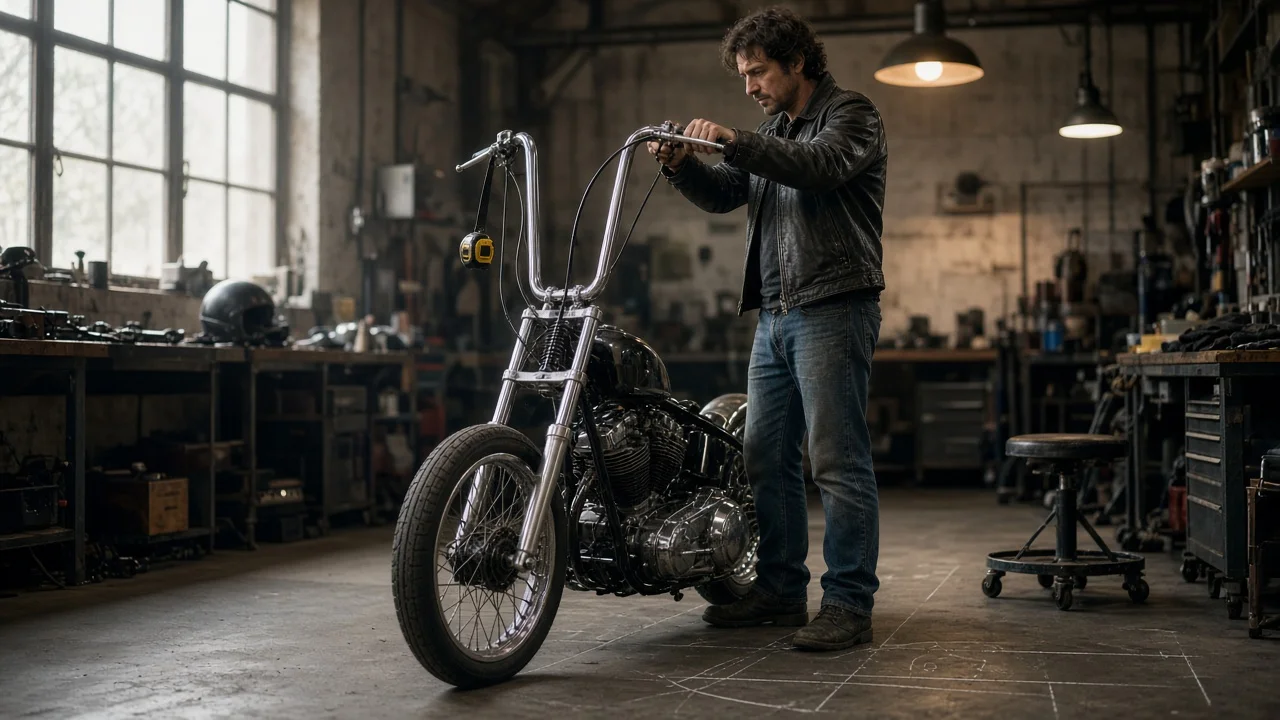
A T-bar is a handlebar with a tall central upright section that joins a horizontal crossbar, forming a T shape when viewed from the front. The upright section often replaces separate risers or is built as one piece with them. The design puts the grips higher than many stock cruiser bars and gives a distinctive custom look.
How T-bars affect rider fit
Handlebar fit comes down to where the grips end up relative to your seat and shoulders. These are the dimensions to compare between your current bars and any T-bar you are considering:
Rise: how far the grips sit above the mounting point. More rise raises your hands and can open up your posture, but it can also load the shoulders and make your upper body take more wind. Pullback (sweep): how far the grips come back toward you. Too little and you stretch forward. Too much and your elbows can feel cramped, especially at full lock. Width: the distance between grip ends. Width affects leverage at low speed and how far apart your shoulders and elbows sit. Grip angle: the angle of the grip sections relative to your forearms. A poor angle shows up as wrist strain on longer rides. Center section: the height and shape of the T upright, which affects clearance to the tank, gauges and fairing.
A practical way to judge fit is to sit on the bike in your normal riding position, with your feet on the controls you actually use, and note where your hands naturally fall with relaxed shoulders and a slight bend in the elbows. Compare that position with your current grips. If you can, try the same or a similar bar on another motorcycle before buying, because rider height, seat position and footpeg or floorboard placement all change how a given bar feels. Reach to the levers, switches and throttle at full steering lock deserves its own check, since a bar that feels fine straight ahead can be awkward when turning.
Compatibility checks for your motorcycle
Confirm each item against your motorcycle's make, model, model year and trim. Fitment can change between model years even when the bikes look the same, and catalogs sometimes list a range of years with exceptions.
Item to check | Why it matters; Mounting type and spacing | The bar has to match how your motorcycle clamps the handlebar, including riser or clamp spacing. Bar diameter | Clamps, controls and grips are made for a specific diameter; a mismatch may need different hardware or may not work. Throttle type | Cable throttles need cables of the right length; electronic throttle systems may need model-specific wiring extensions. Clutch and brake lines | Taller or wider bars usually need longer cables or hydraulic lines; hydraulic systems also need correct bleeding after the change. Switch and control wiring | Wiring may need extending or rerouting; some bars are drilled for internal wiring and some are not. Fairing and dash | Handlebar-mounted fairings often need a bar shaped specifically for them; frame-mounted fairings and dashes need clearance at full lock. Tank and steering stops | The bar, controls and lines must not contact the tank or bind when turned fully in either direction. State height rules | Many states limit how high handlebars or grips may sit; check the current rule where the motorcycle is registered and ridden.
What to confirm before you buy
The listing names your exact model, model year and trim, not just the model family. The rise, pullback and width are stated, so you can compare them with your current bars. The bar diameter and mounting style match your motorcycle. You know which cables, lines and wiring extensions will be needed, and whether they are included or sold separately. The bar is compatible with your fairing, if your motorcycle has one. The finished height complies with the rules in your state. You have a plan for installation; work involving brakes, hydraulic clutches or electronic throttles is a common reason to use a qualified technician.
Gaps in the available information
No confirmed product evidence was available for this guide, so it does not list specific brands, prices, dimensions, fitment tables or state height limits. Treat the checks above as a framework. Confirm the figures for any particular bar with the manufacturer's fitment information for your exact motorcycle, and confirm the handlebar height rule with your state's current regulations.