Short Motorcycle Rider Guide: Fit, Setup and Riding with a Passenger
The Short Answer
A short motorcycle rider can ride safely and comfortably. Not being able to plant both feet flat at a stop is common and manageable. What matters is whether you can hold the bike upright at a stop, reach the controls without stretching, and move the motorcycle around at walking pace with confidence. Published seat height is only a starting point. Seat width, bike weight, where that weight sits, and how much the suspension compresses under you all change how tall a motorcycle feels.
One condition changes the answer. If a bike is heavy and top-heavy, and you can only touch down on your toes, small mistakes at low speed become hard to recover from. In that case, choose a different bike or change the setup before you ride it regularly, especially before you carry a passenger.
Why Seat Height Alone Is Misleading
Manufacturers list seat height as one measurement taken at a point on the seat. Your real reach to the ground depends on several other factors:
Seat width: a wide seat or wide frame at the front of the seat pushes your legs apart, so your feet land higher than on a narrow seat of the same height. Engine configuration: the engine layout affects how wide the bike is where your legs hang. A wide engine or airbox can force your legs outward, while a narrow engine lets them drop straight down. Suspension sag: suspension compresses when you sit on it. A soft or long-travel setup may settle noticeably, while a firm setup stays taller. Weight and its position: a light bike or one with a low center of gravity is easier to hold at an angle with one foot down. A tall, top-heavy bike punishes even a slight lean at a stop. Your inseam and footwear: your leg length matters more than your overall height. Boot soles also change your reach.
In practice, a bike with a slightly higher listed seat but a narrow profile can feel easier to manage than a lower but wider, heavier bike. The only reliable test is to sit on the exact motorcycle.
Step-by-Step: Checking Whether a Motorcycle Fits You
1) Confirm the exact model and version. Model identification matters because some models come in factory-lowered versions, optional low seats, or different suspension depending on trim, model year and market. A used bike may also have been modified by a previous owner. 2) Wear your riding boots for the test, since your normal shoes will not give the same reach. 3) Sit on the bike with it upright. Have someone hold it or use a stand, then put your feet down. Note whether you reach with the balls of both feet, one flat foot, or only tiptoes. 4) Check the effect of seat width. Slide forward on the seat and notice whether your legs drop more directly to the ground. 5) Lift the bike off its side stand and hold it upright yourself, then let it lean slightly to each side and bring it back. This shows whether you can control its weight. 6) Reach for the riding controls. Without stretching, you should be able to pull the clutch and front brake levers fully, reach the handlebars with a slight bend in your elbows, and operate the shift lever and rear brake pedal without lifting your foot awkwardly. 7) Walk the bike forward and backward a short distance. Backing out of a parking space is often harder for a short rider than riding itself. 8) If possible, take a test ride that includes slow turns, stops on uneven ground, and stops on a slope.
Verify the result honestly. If you finished these steps feeling in control, the fit is workable even without flat feet. If holding the bike upright or walking it felt strained, adjustments may help, but a different motorcycle may be the better choice.
Riding Techniques That Help Short Riders
Stop with one foot down: As you come to a stop, shift slightly in the seat and put one foot down firmly, usually the left so your right foot can keep the rear brake applied. You only need one solid contact point. Plan your stopping spot: Look ahead for where your foot will land. Avoid potholes, drains, gravel, painted lines in the wet, and the crown of the road, where the ground may drop away under your foot. Use the brakes, not your legs: Come to a complete stop with the bike upright before putting a foot down. Let the brakes hold the bike while your foot only steadies it. Think about slopes: On a hill, put your foot down on the uphill side where the ground is closer, and hold the bike with the brakes. Park facing out: Choose parking spots you can ride out of instead of having to push the bike backward up a slope. Practice low-speed control: Clutch control, steady throttle and a light rear brake reduce how often you need to dab a foot during slow maneuvers.
Setup Changes and Their Trade-Offs
Several changes can make a motorcycle easier to manage. Each has limits, and how much it helps depends on the specific bike.
Change | What it does | Trade-offs to consider; Lower or narrower seat (factory accessory or aftermarket) | Reduces seat height and/or width at the front so legs reach down more directly | Less padding can reduce comfort on long rides; may change your position relative to the controls; Reshaping the existing seat foam | Removes material where your legs pass | Results depend on the work done; overdoing it can make the seat uncomfortable; Suspension preload adjustment | Changes how much the bike settles under your weight, within the bike's adjustment range | Too little preload can reduce cornering clearance and suspension performance; follow the service specification for your load; Rear lowering links | Lower the rear by changing the suspension linkage geometry | Reduce ground and lean clearance, alter handling, may make the side stand angle too upright, and may change rear suspension behavior; Lowering the front (fork adjustment) | Usually done together with rear lowering to keep the bike's geometry balanced | Lowering only one end changes steering behavior; should be done to the manufacturer's or a qualified technician's guidance; Shorter side stand | Restores a safe parking lean after lowering | Needed so the bike does not stand too upright and tip over; Adjustable levers and repositioned controls | Bring the clutch, brake and shifter within easy reach | Lever adjustment depends on the model; aftermarket parts must be compatible with your bike; Boots with thicker soles | Add reach without modifying the bike | Must still allow good feel on the shift lever and rear brake pedal
Equipment compatibility matters for lowering kits and control parts. Parts are usually specific to a model and sometimes to a model year or version. Changing the suspension can also affect the drive system on chain-driven bikes, because chain tension and slack are set relative to the swingarm position. Recheck chain adjustment against the service specification after any suspension change. Suspension work that affects safety is best done or checked by a qualified technician.
Choosing a Bike as a Short Rider
Instead of starting from brand or style, look for these traits:
A narrow seat and slim frame or engine where your legs hang. A weight you can hold at an angle and push around without strain. A low center of gravity, which many cruisers and some standard bikes offer, though cruisers can be heavy. Adjustable levers and a handlebar position you can reach comfortably. Factory low-seat or lowered-suspension options for that specific model, if available. Moderate suspension travel. Long-travel dual-sport and adventure bikes usually sit tall, although some have lowered versions.
Lighter and smaller-displacement bikes are often easier for a new short rider to manage, but this is a general tendency, not a rule. Some larger bikes sit low and carry their weight well, and some small bikes are tall.
Carrying a Passenger as a Short Rider
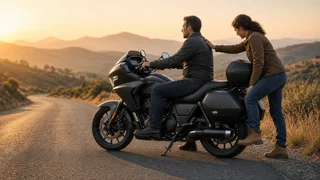
A passenger adds weight that you must hold up at every stop, and their movements affect balance. A short rider can carry a passenger well, but the margin for error is smaller. Get comfortable on the bike alone before adding a passenger.
Adjust the suspension for the load. A passenger compresses the rear suspension. The owner's manual usually explains how to set preload for carrying a passenger. Adding preload restores ride height and suspension performance, but it can also make the seat slightly taller than when you ride alone, so check your reach after adjusting. Control how the passenger gets on and off. Hold the bike upright with both brakes applied and your feet as firmly planted as possible. Tell the passenger to mount and dismount only when you say you are ready, and to use the passenger peg as a step without swinging their weight sideways. Brief the passenger. Ask them to keep their feet on the pegs at stops, sit still, look over your shoulder in the direction of turns, and avoid shifting their weight suddenly. Be stricter about stopping spots. With extra weight, a dip in the road or a slippery surface under your foot is harder to recover from. Check equipment. The bike should have passenger pegs and a passenger seat, and tire pressures should be set for the load as shown in the owner's manual. Make sure the combined weight of rider, passenger and luggage stays within the bike's load limit.
Passenger laws vary by state in the US. Some states set rules for passenger footrests, seating or a minimum passenger age. Check the rules in the state where you ride.
When to Reconsider the Bike
Adjustments have limits. If, after a reasonable setup, you still struggle to hold the bike at stops, cannot reach the controls without stretching, or feel uneasy every time you move it at slow speed, the motorcycle does not fit you. Choosing a better-fitting bike is usually safer and cheaper than heavy modifications that reduce clearance and change handling. A rider training course can also improve low-speed skills and confidence, whatever bike you choose.