Motorcycle Monkey Bars and Rider Fit: What They Are and How They Differ
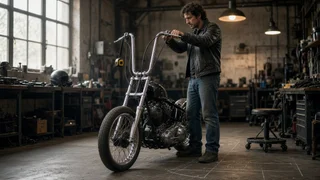
Motorcycle monkey bars are tall, raised handlebars that put the rider's hands well above the level of standard bars. They are most closely associated with cruisers and custom V-twins. The name is informal and overlaps with "ape hangers" or "apes." Some riders use it for very tall bars, and others use it for moderate-rise mini apes. Whether monkey bars suit you depends less on the bars than on your body, your motorcycle, and the riding you do. A bar that feels natural to one rider can feel awkward or tiring to another.
The short answer
Monkey bars change your riding posture by raising and often widening your hand position. Your back moves upright and your arms reach up instead of forward. Some riders find this comfortable and like the look. Riders with shorter arms or torsos, or anyone who rides long distances or carries a passenger, may find their arms and shoulders tire quickly. Fit is personal. It also depends on how the bars match your seat height, footpeg or floorboard position, and torso length.
Installing tall bars is rarely a simple bolt-on. Taller bars usually need longer cables, brake lines, and wiring. Depending on the model, they can also affect electronics such as ABS, cruise control, or ride-by-wire throttle. In the US, handlebar height is regulated differently from state to state.
How monkey bars differ from other handlebar styles
Handlebar styles are usually described by three dimensions:
Rise: how far the grips sit above the mounting point. Width: the distance from grip end to grip end. Pullback: how far the grips sweep back toward the rider.
Monkey bars sit at the high end of the rise range. The table below compares them with other common styles in general terms. Exact dimensions vary by manufacturer and product.
Style | Typical hand position | General character; Monkey bars / ape hangers | High, often at or near shoulder level or above | Upright back, arms raised, strong custom styling; Mini apes | Moderately raised | A compromise between stock bars and tall apes; Stock cruiser bars | Mid height with pullback | Relaxed, neutral reach for a wide range of riders; T-bars | Raised, with a built-in riser section | Tall look with an integrated center post; Drag bars | Low and flat | Forward lean, sportier stance; Beach or buckhorn bars | Wide with strong pullback | Arms swept back, relaxed cruising feel
Rider fit: what actually matters
Good fit puts your hands where you can hold the grips with relaxed shoulders and a slight bend at the elbows. You should be able to reach full steering lock without stretching or locking an arm. When you judge whether tall bars will work for you, look at these factors.
Shoulder height when seated: many riders find bars comfortable when their hands sit at or a little below shoulder level. Hands held well above the shoulders can cause fatigue and numbness on longer rides. Arm length and torso height: a taller rider can use a given rise more easily than a shorter rider on the same motorcycle. Seat position: a lower or more rearward seat increases the reach to tall bars. Changing the seat can change how the same bars feel. Foot position: forward controls, mid controls, and floorboards each change how your weight is spread. Tall bars combined with forward controls create a very open posture with little support from your core. Width and pullback: wide bars with little pullback can stretch your arms. Too much pullback can crowd your knees or the tank at full lock. Ride length: a posture that feels fine around town may wear on you over hours of highway riding, especially into a headwind.
If you can, sit on a motorcycle with a similar setup before you buy. Reach to full lock in both directions and hold the position for a while. That tells you more than any rise measurement does.
Effects on riding controls and handling
Tall bars change how you work the riding controls.
Steering leverage: raised hands change the angle at which you push on the bars. Some riders find low-speed turns and quick steering inputs feel less precise until they adapt. Wind: an upright posture with raised arms catches more wind at speed. This adds fatigue. Reaching the controls: switch housings and levers move with the bars. Check that you can still operate the turn signals, horn, starter, clutch, and front brake comfortably. Clearance: check that the bars and controls clear the tank, fairing, windshield, and instruments at full lock.
Passenger accommodation
Monkey bars mainly change the rider's position, but they matter on two-up rides too. An upright rider with raised arms has less leverage to brace against a passenger's weight shifting during braking or acceleration. A tired rider is also a less smooth rider.
If you often carry a passenger, consider the full setup. That includes passenger peg or floorboard position, the passenger seat, and back support such as a sissy bar. Many riders who ride two-up choose a moderate rise over the tallest bars available.
Equipment compatibility and model identification
Handlebar fitment depends on the exact motorcycle, so start by identifying your model. Note the make, model, model year, and trim, and whether it has ABS, cruise control, heated grips, or an electronic throttle. The same model name can change between years or generations, and those changes can affect bar fitment. Check these points before you buy.
Bar diameter: the clamp and grip diameter must match your risers and controls. Many American cruisers use 1-inch or 1-1/4-inch bars, and many other motorcycles use 7/8-inch bars. Confirm the size for your specific model. Riser compatibility: tall bars may mount to existing risers, need different risers, or come as a one-piece design such as a T-bar. Cable and line length: throttle and clutch cables, hydraulic brake and clutch lines, and wiring usually need extending or replacing for taller bars. Electronic throttle and ABS: on ride-by-wire models, throttle-by-wire wiring may need extending. On ABS models, brake lines may be specific parts. Use the parts or extensions intended for your exact model. Internal or external wiring: some bars have holes for routing wiring inside the tube. This gives a cleaner look but takes more work to install. Accessories: windshields, fairings, mirrors, and handlebar-mounted bags may need repositioning or may not fit at all.
Installation and service specifications
Fitting tall bars means rerouting controls that are critical to safety, especially the front brake. If you do the work yourself:
Follow the torque values and procedures in the service specification for your model. Bleed any hydraulic system you have opened. Make sure cables and lines are routed so they do not bind, stretch, or pinch as you turn the bars from lock to lock. With the engine running, confirm the throttle returns fully closed in every steering position.
Engine configuration and drive system do not directly affect bar choice. However, some models have extra handlebar wiring or hydraulics, which can make the job more complex. If you are unsure about any of these steps, have a qualified technician do the installation.
Legal considerations in the US
Several US states limit handlebar height. Limits are commonly tied to the rider's shoulder height or to a set distance above the seat, and some states have no specific rule. Requirements vary and can change, so check your state's current vehicle code before installing tall bars. Also check the rules in states you plan to ride through.
Are monkey bars right for you?
Monkey bars suit riders who want an upright, open posture and a classic custom look, and who fit the bars well. If you ride long distances, carry a passenger often, or are shorter than average, mini apes or another moderate rise may be a better choice. When you choose, start with how the bars fit your body. Then confirm compatibility with your exact model, plan for the cables, lines, and wiring the job requires, and make sure the setup is legal where you ride.