Hidden Kill Switches as Additional Protection Against Relay Theft
A hidden kill switch for cars is a concealed control that interrupts an electrical circuit the engine needs to start or keep running. Against keyless relay theft, it adds a layer that the attack does not defeat on its own. A relay attack tricks the car into believing the key fob is nearby, so the doors unlock and push-button start is enabled. If a circuit the thief does not know about is still open, the car may unlock but will not start or drive away. A kill switch is not a complete solution, though. It does not stop the car from being opened. Its effectiveness depends heavily on where and how it is installed, and on modern vehicles it has to be added carefully to avoid creating electrical faults or safety problems.
How relay theft works and where a kill switch fits
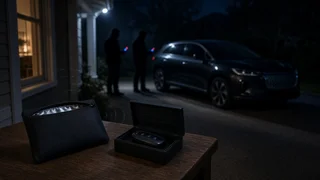
Passive keyless entry systems let the car detect the fob when it is close, without any button press. In a relay attack, one device picks up the fob's signal, for example near the front door of a house, and a second device near the car rebroadcasts it. The car sees what looks like a valid key in range and allows entry and starting. No physical key is copied and no lock is forced, which is why this method can be quick and quiet.
A kill switch works at a different level. The factory immobilizer and keyless system decide whether the key is authorized. A kill switch adds its own form of access control: even with a convincing key signal, the circuit it controls stays electrically isolated until the owner closes it. The thief must first realize the switch exists, then find it, then work out how to bypass it. Each step adds time and uncertainty, and that delay is the main source of its deterrent value.
Common types of hidden kill switches
Kill switches differ mainly in which circuit they interrupt and how the owner turns them on or off. Which design suits a given car depends on vehicle compatibility, especially the age and complexity of its electrical system.
Type | What it does | Practical considerations; Starter circuit cut | Prevents the starter motor from cranking | Comparatively simple concept; the engine cannot be started while the switch is off, but an engine that is already running is unaffected; Fuel pump circuit cut | Removes power to the fuel pump so the engine will not run, or will stall shortly after starting | Must never be switched off while driving; can confuse a thief because the engine may crank normally; Ignition or other control circuit cut | Interrupts a circuit the engine management needs | On modern vehicles this can trigger warning lights or stored fault codes and is best left to an experienced installer; Battery disconnect | Isolates the battery from the vehicle's electrical system | Can reset clocks, radio presets and learned settings; some vehicles need relearning procedures after reconnection; Remote or wireless switch | Uses a fob, keypad, app or proximity device to enable the car | Convenient, but it adds another electronic system that should itself be resistant to signal attacks
Switches can also be activated in different ways: a toggle or push button tucked out of sight, a magnetic or reed switch triggered by a small magnet, a sequence of existing controls such as pressing certain buttons in order, or a code entered on a keypad. The less a switch looks like an aftermarket add-on, the harder it is for a thief to spot.
Installation position and concealment
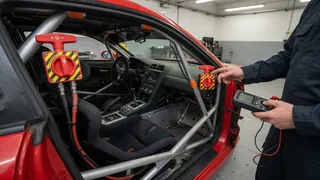
Installation position matters as much as the switch itself. A kill switch mounted in an obvious spot under the dashboard near the steering column is among the first places an experienced thief will look. Good installations share a few traits:
The control is reachable by the owner without unusual effort, but is not visible from the driver's seat or obvious when the interior is searched. Wiring is routed and wrapped to match the factory harness rather than standing out as new wire. The interrupted circuit is not easy to locate by tracing from the switch. The installation does not disturb airbags, airbag wiring or other safety systems. Circuit protection, such as correctly rated fuses and relays, matches the load being switched, so the added parts do not become a failure or fire risk.
Because concealment is the point, the details of an effective installation are specific to each vehicle and each owner. Copying a widely shared location for a popular model reduces the benefit.
Vehicle compatibility on modern cars
Older vehicles with simpler wiring are generally the most straightforward candidates. Newer cars present more complications. Many functions run through networked control modules, and interrupting the wrong circuit can cause warning lights, stored diagnostic codes, limp-home behavior or problems with other systems. Push-button-start vehicles, hybrids and electric vehicles differ significantly in how starting and power delivery are controlled. A method that works on one model, model year or powertrain may be unsuitable or unsafe on another. For this reason, the specific approach should be chosen for the exact vehicle rather than assumed from a general guide.
Aftermarket electrical modifications can also affect ownership in other ways. A poorly done installation can make it harder to diagnose unrelated faults. It may also complicate warranty claims involving the affected systems, and some insurers ask about added security devices. Owners of vehicles under warranty, or with complex electronics, generally benefit from a professional installer who works on that make and can explain what is being interrupted and why.
Safety rules for using a kill switch
Only operate the switch with the vehicle parked and switched off; cutting fuel or ignition power while moving can cause a sudden loss of power and, on some vehicles, affect power-assisted steering and braking. Make sure anyone else who drives the car knows the switch exists and how to use it, so they are not stranded or tempted to tamper with wiring. Avoid designs where a failing switch could cut power unexpectedly; build quality and secure connections matter. Keep a note of the installation details for future repairs, stored somewhere other than the car.
How a kill switch compares with other anti-relay measures
A kill switch works best as one part of layered protection rather than a replacement for other measures. Each option addresses a different stage of a theft.
Measure | What it addresses | Limitation; Signal-blocking pouch or box for the fob | Stops the fob's signal from being picked up and relayed | Only works if used every time; worn pouches can lose effectiveness; Disabling passive entry or using fob sleep modes, where the vehicle supports it | Removes or reduces the signal the relay attack depends on | Availability varies by manufacturer, model and model year; Hidden kill switch | Prevents the car from starting or running even after a successful relay | Does not stop entry, so belongings and the interior remain exposed; Steering wheel lock or other mechanical deterrent | Physically hinders driving and is visible from outside | Visible deterrent value, but determined thieves may attempt removal; Aftermarket immobilizer or tracking system | Adds authentication or helps with recovery | Cost and installation complexity vary; tracking aids recovery rather than prevention
Blocking the fob signal deals with the cause of relay theft. A hidden kill switch covers the case where that fails or is forgotten. A visible locking mechanism such as a steering wheel lock can discourage an attempt before it starts. Together they make the car a slower, less predictable target, which is often what pushes a thief toward a different vehicle.
Is a hidden kill switch worth it?
For owners of keyless-entry vehicles who are concerned about relay theft, a hidden kill switch is a reasonable additional layer. It targets the outcome that matters most, the car being driven away, and does not rely on the factory keyless system being secure. Its value is highest when it is well concealed, matched to the specific vehicle and installed without compromising safety systems or reliability. It is less suitable if the owner is unlikely to use it consistently, if the vehicle's electronics make a clean installation difficult, or if simpler steps, such as consistently storing the fob in a signal-blocking container and using any available setting to disable passive entry, would cover most of the risk. A sensible next step is to check which anti-relay features the vehicle already offers. Then discuss with a qualified installer which circuit and switch type would suit that exact model.