Steering Wheel Locks as Additional Protection Against Relay Theft
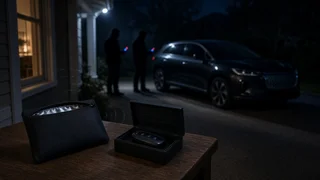
If your car has keyless entry and push-button start, you have probably read about relay theft, where thieves capture and extend your key fob's signal so the car believes the key is nearby. A steering wheel lock is one of the simplest answers people reach for. This guide explains what it can and cannot do against that kind of attack, and what to check before you buy one.
The short answer
A steering wheel lock does not stop a relay attack itself. Thieves using relay equipment can still unlock the doors and start the engine, because the lock has no connection to the car's keyless system. What the lock does is add a separate physical barrier: once the car is running, the thief still has to defeat the lock before the car can be steered away. That costs time, often makes noise, and is visible from outside, which is why many thieves skip a car that has one.
Two conditions change that answer. First, a lock is only as strong as its weakest point. A low-quality lock cylinder, a thin bar, or a steering wheel rim that can be cut through can let a prepared thief remove it quickly. Second, a steering wheel lock does nothing against theft methods that don't require driving the car, such as towing or loading it onto a flatbed. Treat it as one layer of protection, not a complete solution.
Why a mechanical lock helps against an electronic attack
Keyless entry is a form of access control: the car decides whether to unlock and start based on whether it detects a valid key signal. A relay attack fools that decision. Anything that also relies on the car's electronics, including some factory alarms and immobilizers, can be bypassed in the same session if the car believes the genuine key is present.
A steering wheel lock works on a different principle. It is a mechanical deterrent with complete electrical isolation from the vehicle: no wiring, no signal and no software for an attacker to exploit. Defeating it requires tools and physical effort inside the car, which is exactly the part of a theft that thieves want to keep short and quiet.
Main types of steering wheel locking devices
Type | How it works | Main strengths | Things to weigh; Bar style (rim hook) | A bar with hooks clamps across the steering wheel rim; the extended end hits the windshield, dash, door or seat if the wheel is turned | Familiar, quick to fit, highly visible | A thief may cut the rim to slip the lock off; fit depends on wheel diameter; Wheel-to-pedal (crook lock) | A long bar links the steering wheel to the brake or clutch pedal | Blocks both steering and pedal use; hard to work around without removal | Bulkier to store and fit; pedal layout and footwell space matter; Full-face or cover style | A shell covers much of the wheel and hub, sometimes including the airbag area | Harder to grip, cut around or tamper with | Larger to store; must suit the wheel shape and spoke layout; Twin-hook or dual-bar | Hooks grip opposite sides of the rim | Spreads the load across the rim | Still relies on rim strength; check fit on flat-bottom wheels
The term crook lock is often used generically in the US and UK for older bar-style designs, but the name originally referred to a wheel-to-pedal pattern. When shopping, look at how the device actually attaches rather than what it is called.
What to check before buying
Locking mechanism quality
The lock cylinder is a common weak point. Look for a mechanism the seller describes as resistant to picking and drilling, and prefer designs where the cylinder is shielded or recessed rather than exposed. Be cautious with very cheap units that use simple wafer-style locks, since these are generally easier to manipulate. If the listing doesn't describe the lock type at all, treat that as a gap in information rather than assuming it is secure.
Body material and construction
Hardened steel bars and hooks are harder to cut than plain or hollow tubing. Pay attention to how the hooks attach to the bar, as a strong bar with weak joints doesn't add much. Some designs cover the rim where they clamp, which makes cutting the steering wheel itself to free the lock more difficult.
Vehicle compatibility
Compatibility depends on your specific wheel, not just the make and model, because steering wheels can differ between model years, trims and markets. Check these points against your own car:
Wheel diameter and the lock's adjustment range; Rim thickness, especially on sport or heated wheels with thick grips; Wheel shape, including flat-bottom or squared designs that some hooks won't seat on; Spoke layout and the location of buttons and paddle shifters; Footwell and pedal layout if you are considering a wheel-to-pedal lock; Whether the bar can reach a solid stop point (windshield pillar, dash, seat or door) when the wheel is turned
If a seller lists your vehicle as compatible, confirm the listing matches your model year and trim. Measuring your wheel yourself is the most reliable check.
Installation position and interior protection
Think about where the lock will sit in daily use. A good installation position prevents the wheel from turning far enough to steer, keeps the device away from the airbag cover, and doesn't press on buttons or trim. Padded or coated contact points reduce the risk of marking leather, wood or soft-touch rims. Clear, specific fitting instructions are a good sign.
Visibility and ease of use
Part of the value is deterrence, so a brightly colored lock that is obvious through the windshield helps. Equally important is whether you will actually use it every time. A lock that is fiddly to fit or awkward to store tends to stay in the trunk. Consider how quickly it attaches, where you will keep it while driving, and whether it fits under a seat or in a door pocket.
Keys and replacement
Check how many keys come with the lock and whether replacements are available from the maker. Keep the lock key separate from your car key so a single lost bundle doesn't give access to both.
Limitations to keep in mind
It does not prevent the car from being unlocked or started by relay equipment, so items inside the car remain at risk. It does not stop towing or flatbed theft. A determined thief with cutting tools can defeat many locks; the goal is to make your car slower and riskier to take than the alternatives. It only works when fitted, so consistent use matters more than marginal differences between designs.
Layering it with other relay theft measures
A steering wheel lock is most effective as part of a layered approach that addresses the relay attack directly as well as the getaway:
Store key fobs in a signal-blocking pouch or box at home, away from doors and windows. Check your owner's manual or dealer to see whether the fob has a sleep mode or whether keyless entry can be disabled. Consider an OBD port lock, since the diagnostic port can be used to program new keys. Ask an installer about aftermarket immobilizers that require a separate code or tag, or a GPS tracker to aid recovery. Park in a garage or a well-lit, visible spot where possible.
Safe use
Fit the lock only when the car is parked with the engine off, and remove it fully before starting to drive. Store it where it can't slide under the pedals or move around in a sudden stop. Avoid positioning any part of the device over the airbag cover.
Choosing your next step
If your main concern is keyless relay theft, start by protecting the key signal at home, since that addresses the attack itself. Then add a steering wheel lock as a visible, independent barrier. Measure your steering wheel, decide whether a bar, wheel-to-pedal or full-cover design suits your interior and routine, and choose a model with a well-protected lock cylinder and solid steel construction that you will be willing to use every time you park.