Handle an overfilled engine oil level

The short answer
If the dipstick shows oil above the full mark, first confirm the reading. If it is still high, remove the excess before you drive normally again. How serious the problem is depends on how far over the mark the oil is and on the specific engine. A level slightly above full is generally less urgent than a large overfill. However, no single safe margin applies to every vehicle. The owner's manual for your model, engine and model year is the authority on the correct range and how to check it.
Why an oil level that is too high is a problem
Engine oil sits in the sump, the reservoir at the bottom of the crankcase. When the level is too high, the rotating crankshaft can dip into the oil and whip it into foam. This is called aeration. Foamy oil carries air bubbles and does not lubricate or cool as well as solid oil. Excess oil can also raise pressure inside the crankcase. That pressure may push oil past seals and gaskets, causing leaks. Oil can also be drawn through the crankcase ventilation (PCV) system into the combustion chambers, where it burns. Oil burned this way may contaminate spark plugs and the catalytic converter over time. These are possible outcomes, not certainties. The risk grows with the size of the overfill and how long the engine runs that way.
Confirm the reading first
Park on level ground. A slope can make the dipstick read high or low. After shutting the engine off, wait for the oil to drain back into the sump before checking. The recommended wait varies by vehicle and is given in the owner's manual. Pull the dipstick, wipe it clean, push it fully back in, then pull it out again and read the level. Some vehicles have an electronic oil level sensor instead of a dipstick, or alongside one. On these, follow the manual's procedure for reading it. A reading taken right after an oil change, or while the oil is still draining back, may not reflect the true level. Recheck once conditions match the manual's guidance.
How to remove the excess oil
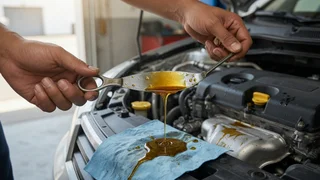
Fluid extractor: a hand or powered pump draws oil out through the dipstick tube. This avoids working under the car, but not every engine's tube allows it. Drain plug: loosening the plug briefly lets a small amount escape. It is messy, oil may be hot, and some plugs require a new sealing washer when reinstalled. Oil filter: on some engines, loosening the filter releases oil. Whether this is practical depends on the filter's location and design. Workshop: a service shop or the shop that did the oil change can correct the level. If the shop overfilled it, raise this with them. Whichever method you use, remove a little at a time and recheck the dipstick after each step until the level is within the marked range. Collect used oil and take it to an approved recycling or disposal point.
Signs that call for an inspection
If you have already driven with the oil overfilled, watch for warning signs. These include blue-grey exhaust smoke, a burning-oil smell, new leaks around seals or gaskets, rough running, or an oil pressure warning. If any appear, stop driving the car and have it inspected. Correcting the level alone may not resolve damage that has already occurred.
Limits of this guidance
This guide is general and does not cover a specific vehicle. Oil capacities, overfill tolerances and check procedures differ by engine, model year and market. No model-specific figures were available here, so none are given. Whether an engine was harmed by running with too much oil cannot be judged from symptoms alone. Use the owner's manual, a dealer or a qualified technician for answers specific to your vehicle.